Authorities in the USA publish two kinds of press release about telecoms fraud.
- The authorities congratulate themselves for doing a great job of protecting the public from scams. These press releases get recycled by the comms industry a lot.
- The authorities congratulate themselves for identifying and punishing telcos that defrauded them for years. These press releases get quoted less.
Unlike other experts in telecoms fraud, I keep writing about the latter press releases because they tell me something valuable about the competence of the authorities at tackling fraud. The similarities between these press releases across an extended period of time tell me that the authorities lack competence at fighting fraud.
Long-standing readers of Commsrisk will know the general formula for these articles about subsidy fraud. They will recognize the formula because I have been writing articles about telcos abusing Lifeline and other US government subsidy programs since 2012. For the uninitiated:
- The Federal Communications Commission (FCC) is responsible for administering subsidies paid to telcos when they provide services to low-income Americans.
- One of the oldest subsidy programs was called Lifeline, which was instigated under President Reagan in 1985. The program was expanded to also provide mobile phone services in 2005, when George W. Bush was President. Opponents later disparagingly referred to it as ‘Obamaphone’ after there was a large increase in the number of people who qualified for mobile phones. Not everybody treated ‘Obamaphone’ as a slur; a video of one voter enthusiastically praising her Obamaphone went viral on YouTube.
- There was later another big expansion of spending when new subsidy programs were introduced in response to the pandemic. The names of these various programs are unimportant; they all were defrauded.
- Because there are no real checks on the claims submitted by telcos to any of these subsidy programs, many telcos have claimed subsidies for customers who do not qualify. They may claim subsidies for individuals or households that have too high an income, or they may make multiple claims for the same person or household, or they may just invent fictitious customers.
- Years after the fraud has begun, somebody will tell the FCC that there was fraud, and several years after that, the FCC will issue a press release explaining how they take fraud very seriously.
Now I will recount the specific case of Q Link Wireless, but I want to comment on the way I have structured this article first. I started by writing about the general problem with fraudulent abuse of government subsidies to telcos before covering the specifics of yet another case because these abuses are going to keep happening, over and over and over. They will keep happening because nobody in power is imposing effective controls on the way that subsidies are handed out. Their approach is far too reliant on trusting telcos and then catching fraud after it occurs instead of preventing fraud before it can occur. This is true despite Julie Veach, who was then Chief of the Wireline Competition Bureau at the FCC, telling Congress in 2013:
Our rules now require that low income consumers prove eligibility at the time of enrollment.
I guess Julie spoke too soon. The tendency for people in authority to overstate what they are doing to tackle telecoms fraud makes me cynical about the pretense that the same authorities will protect the public from fraud. Why should we believe they will successfully mandate telcos to reduce the amount of fraud suffered by the public if they cannot even stop hundreds of millions of dollars of taxpayer money being handed to telcos that commit fraud?
2012 is the year I started writing about US telecoms subsidy fraud and it is coincidentally the year that Q Link is said to have begun stealing from Lifeline. We know it did not begin stealing much earlier because it was only founded in 2011. A press release from the US Attorney’s Office in the Southern District of Florida says the fraud continued until ‘at least 2021’ but there was also an FCC Notice of Apparent Liability for Forfeiture that asserted fraud had occurred under a newer subsidy program as recently as March 2022.
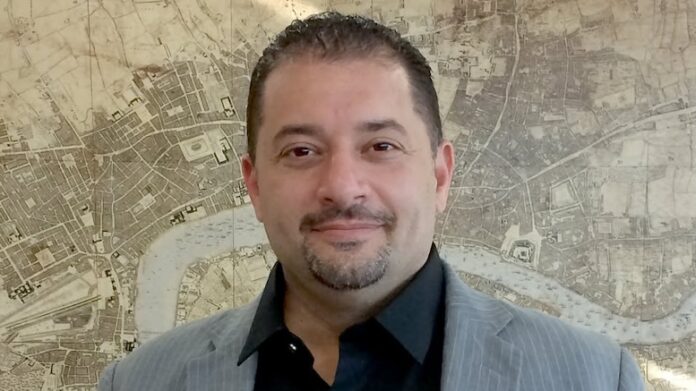
To avoid boring you all with endless tedious details, in much the way the authorities prefer to discuss stories like this, the summary is that the authorities have published different calculations at different times about how much was stolen by Q Link from the various subsidy programs administered by the FCC. And while he was at it, Q Link CEO Issa Asad (pictured) also stole from a different government program, the Paycheck Protection Program (PPP), because why profit from only one kind of fraud when taxpayers can afford several? Eventually the government lawyers will have reached a point when they must have wanted to end the calculations and claim some kind of victory. Whatever was the true total of the amounts stolen, Q Link and Asad have agreed to pay USD128mn in restitution, made up as follows:
- Asad and Q Link agreed to jointly pay USD109,637,057 in restitution to the Federal Communications Commission (FCC).
- Asad separately paid USD1,758,339.25 in restitution to the United States Small Business Association.
- Asad paid a forfeiture judgment against him of USD17,484,118.
Note that the FCC admits:
The claims resolved by the settlement are allegations only and there has been no determination of civil liability.
I take this to mean that, in typical FCC fashion, the lawyers saved themselves some work by cutting a deal instead of working out exactly how much taxpayer money went astray.
Asad is evidently a show-off, boasting on social media about the mainstream media coverage he has received. His LinkedIn profile lists CNBC, ABC, CBS, NBC, MSNBC, The Wall Street Journal and The New York Times as news outlets that have mentioned him. Presumably this list was compiled before the news coverage related to his life of crime. He received even more coverage from newspapers and TV stations in Florida, where he normally resides, but he will now be residing in prison after receiving a sentence of 5 years for money laundering and conspiring to commit fraud and steal government money. Perhaps, when his sentence is over, he may choose to move abroad. He admitted that over USD50mn of the stolen Lifeline funds were transferred to bank accounts that he and a family member controlled in Jordan. After paying his restitution, perhaps there may still be a nest egg waiting for him when he is released.
A press release issued by the US Attorney’s Office for the Southern District of Florida summarizes the facts surrounding this prison sentence and the total restitution to be paid. There are also various other official press releases and notices about this case that you could read and which I could write about. However, I will stop now because I dislike the sound that my head makes when banging against a wall.