
There have been multiple reports of arrests by the Milli İstihbarat Teşkilatı (MIT), Türkiye’s national intelligence organization, of seven foreigners who operated three separate SMS blasters from vehicles driven around different parts of the country. The fake base stations were said to have been used in Istanbul, İzmir, Bursa and Yalova.
Many of the reports included contradictory details, suggesting either speculation or confusion from the journalists that covered the story. Nevertheless, the following assertions were consistent across multiple reports.
- The investigation was prompted by complaints from phone users about SMS messages they received.
- The SMS messages appeared to come from legitimate businesses or public institutions.
- The messages were actually sent by fake base stations.
- The arrested men are not Turkish nationals.
- Nothing else was said about their nationalities except that one is a Chinese national accused of supplying the equipment via an electronics business in Istanbul.
- The equipment they used is Chinese in origin.
- They operated in three separate groups, each carrying a fake base station in a different rented vehicle.
- All of the men received their instructions from an unnamed individual referred to as ‘Boss’.
- The authorities have tasked themselves with investigating customs controls to determine how the equipment entered Türkiye.
Many aspects of this case will be familiar to Commsrisk readers who have been following the surge of stories about SMS blasters being used for crime in other countries. However, the reports surrounding these arrests also included some peculiarities. For example, multiple reports referred to data being transmitted to Chinese servers in order to scam phone users, but it is unclear if this data was obtained from a victim’s phone or after they were lured into typing personal information into a phishing website. It is possible that journalists confused the different ways fake base stations can be used either for covert surveillance of phone users or as a method of broadcasting messages which may contains links to phishing websites. Several reports suggested the data sent to China was later used to enable spearphishing attacks. However, I struggle to understand why anyone engaged in highly sophisticated covert surveillance would also alert phone users to their criminal activities by sending bogus SMS messages.
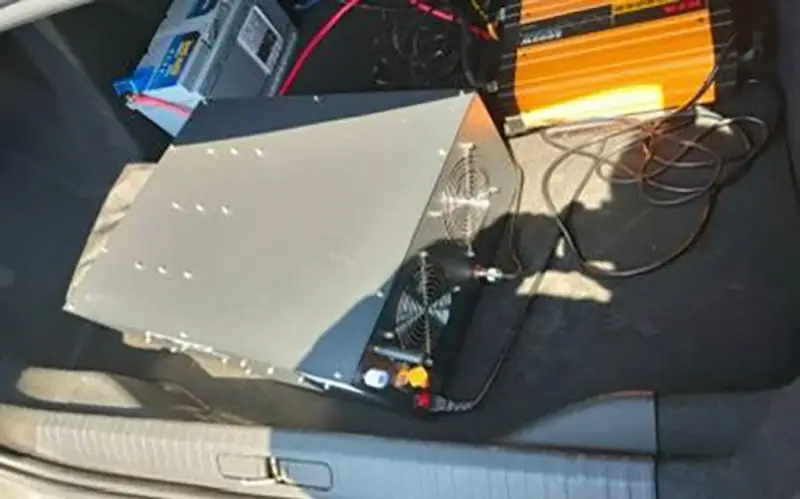
Most of the photographs of the confiscated equipment were of a low quality but the best picture included a device that regular readers will recognize. In this image we see the same distinctive orange power inverter also used by SMS blaster gangs in a growing number of other countries.
For comparison, the following image shows power inverters found in conjunction with fake base stations in (clockwise, from top left) Hong Kong, Malaysia, Thailand, Manila in the Philippines, Bulacan in the Philippines, and Japan.