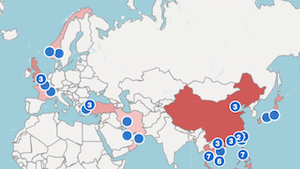

The UK has spent the last 12 months or so (I lose track because these things take so long) reviewing the UK regulations for billing accuracy. As a result, a regulation that used to be written as a long document looks set to become a regulation written as a very long document. What stands out, though, is not the alterations to the UK approach, which in the end have been minor, but how different the approach of the UK is to almost every other country. In short, intervention to audit and prove metering and billing accuracy is the exception, and not the norm. Furthermore, national regulations for telecoms retail billing accuracy rarely need to be backed by legal force. Germany and India have taken a stance that is based on classic regulatory intervention, of imposing rules because the industry cannot be trusted to manage itself. In contrast, Australia’s approach is based on a cooperative agreement that was created by the industry without waiting for the regulator to prod them into action. In Hong Kong a mandatory regulation lasted just a few years and then was dropped, to be replaced by a completely voluntary code in 2006. The Hong Kong regulator, OFTA, justified this in a statment in December 2005 which said:
“OFTA has been monitoring consumers’ complaints in respect of the services provided by various telecommunications operators and providers… Among the cases that complainants requested OFTA to intervene or investigate, only 15% were related to billing disputes. Further examination revealed that those related to billing and metering inaccuracies occupied only an insignificant portion of these disputes.”
The conclusion seems pretty final. In Hong Kong, mandatory auditing is unnecessary because the number of issues are trivial. In contrast, the UK continues to act like mandatory auditing is essential for customer protection. Hong Kong copied their mandatory code from the UK’s, after taking advice from the UK’s former monopoly auditor for metering and billing, BABT. We are confronted with two improbable scenarios: (1) that both regulators have got the balance right, because UK telcos are inherently bad, and HK telcos are inherently good, or that (2) one of the regulators has got the balance wrong. Given that the UK stands in relative isolation in requiring mandatory audits, and that HK tried mandatory audits but concluded they were not necessary, I think national regulators like the UK’s Ofcom need to do a better job of explaining why regulatory intervention is necessary when other regulators see no need.