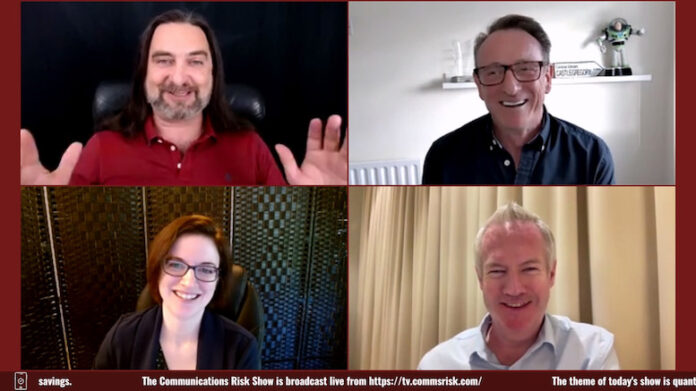
Our guest for yesterday’s episode of The Communications Risk Show was Ian Deakin (pictured, top right) who serves as the Principal Technologist at the Alliance for Telecommunications Industry Solutions (ATIS). Ian told us about efforts already being made to switch electronic communications to ‘quantum safe’ encryption algorithms that will remain secure as quantum computers become common. Quantum computers have a radically different architecture which means they can rapidly solve some mathematical puzzles that would defeat regular digital computers. The most important of these puzzles is the cracking of cryptography used to protect electronic communications and banking transactions. Businesses like Google are already striving to avoid a ‘quantum apocalypse’ that will occur if the world still relies on current encryption algorithms by the time somebody has worked out how to manufacture quantum processors at scale. The threat posed by quantum computing is so severe that businesses already need to take more thorough steps to safeguard any data protected by algorithms that are not quantum safe because the data could be stolen with the expectation that quantum computers will decrypt it later.
Yesterday’s show also featured a guest presenter: Sarah Delphey, currently a Vice President at Numeracle and formerly Director of Abuse and Risk Operations at Bandwidth. Sarah joined the panel debating current affairs and the risk landscape for the comms industry. Chief amongst those topics was the profound number of job losses amongst providers of traditional telecoms services as prices are squeezed whilst the demand for voice telephony and SMS messaging keeps falling. We debated whether assurance professionals should focus more effort on finding intelligent cost savings. Cost cutting and falling revenues also represent a stark threat to fraud managers who believe they have job security because fraudsters can never be defeated. Executives will have even less interest in stopping voice and messaging frauds if they have decided the revenues from these services are in terminal decline anyway. We discussed whether fraud managers need to overhaul their approach to adding value.
The Communications Risk Show is streamed live so the audience can ask questions and share their opinions too. Watch and interact live every Wednesday at tv.commsrisk.com; each episode begins streaming at 4pm UK time. But if you cannot join us live then recordings are made available soon after each show has finished. You can also watch yesterday’s show below.