
Good auditors know that the wiliest manipulators will sometimes hide the truth in plain sight. And so the US Federal Communications Commission (FCC) has published another in their new quarterly series of ‘transparency’ reports that detail which seemingly bad calls were traced back to their origin in order to better protect American consumers. As befits a regulator that cares more about controlling appearances than being transparent, the report is presented in a format that inhibits independent analysis, excludes any information about traces on calls which were then found to be legal, and provides only obscure descriptions of the calls that were likely illegal. But luckily for you, we do our best to make the report intelligible because the FCC’s commentary on the success of its anti-scam and anti-spam efforts only occasionally coincides with any actual success.
For those of you who want the executive summary rather than a full breakdown of the data, here are the key takeaways from the US traceback report covering Q4 of 2023, the most recent report issued.
- 231 separate telcos were asked to respond to US traceback requests during the quarter.
- These telcos were asked about 1,190 calls or slightly more; the transparency report does not state the precise number, but it is possible to draw an inference from the sequence numbers assigned to each trace.
- After completing the trace, slightly over 21 percent of the traced calls were ultimately thought to have been legal after all; this can be determined by gaps in the reported sequence numbers because information about seemingly legal calls is suppressed.
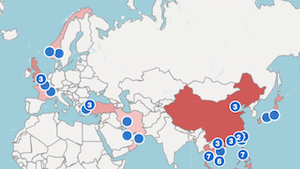
- 37 calls were traced to Deutsche Telekom, three times more than the number of calls traced to any other telco outside of the USA. This is consistent with the number of traced calls that originated with Deutsche Telekom in previous quarters. No other big name foreign telcos were mentioned in the Q4 report.
- Many more calls were traced to originators within the USA than to foreign telcos. Veriwave Telco originated the most calls, at 53. SwiftLink Telco and Nettalk Voice tied for second place, having originated 39 calls each.
- A business called Mada ignored more traceback requests than any other. Mada did not respond to 39 requests, which was almost a quarter of all the traces that were not completed.
- Over one-quarter of the traced calls were labeled as ‘order scams’. The next biggest category was ‘health insurance’, which applied to 12.5 percent of the traced calls. Only crude labels are given in the transparency report instead of proper descriptions of the kinds of scams that were being investigated.
- Despite the level of fuss made about telcos needing to do more to protect banks, fewer than 10 percent of traces were labeled ‘bank scam’, the fourth-highest category. 88 percent of the bank scam traces were attributed to a single campaign, which means the specific content was the same for each call.
- There were further indications that the American media and FCC are underreporting the extent of fraud which targets Americans of Chinese ethnicity. The fifth most common campaign was labeled ‘Chinese-ISP/Cable/Wireless-Impers-P1’, which is the kind of label used when a fraudster impersonates an employee of a comms provider.
Some of you may want to double-check our analysis. Please do! Unlike the FCC, we are going to keep presenting all the data in the traceback transparency report whilst making it easier for you to download and interrogate it. If you find any interesting results, please let us know.
You can view the data from the Q4 2023 traceback transparency report in the form of an embedded spreadsheet below, or click here to open it in a new window, where the menu includes options to download the data in various formats. Do not contact us if you cannot see the spreadsheet; the fault lies with your browser or your corporate firewall, not this website. And if you still prefer to review the FCC’s PDF version of this data then you can obtain it from here.