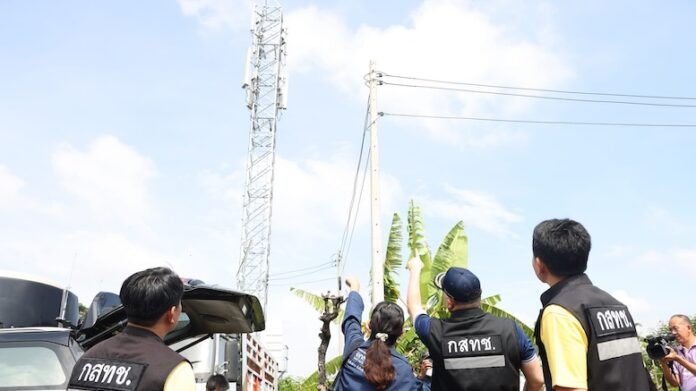
84 cell sites operated by Thai telcos have been shut down and their demolition ordered after a regulatory survey of border regions found the towers were illegally providing connectivity to users in neighboring Myanmar (pictured). The unproven but inevitable conclusion is that the locations of the towers were chosen to satisfy demand created by scam compounds situated over the border. Per their press release, Thailand’s National Broadcasting and Telecommunications Commission (NBTC) admitted that legal permission had been obtained for the construction of the towers but reiterated that it is illegal for Thai telcos to serve customers in other countries. The radio equipment on these 84 towers had been oriented towards the border instead of pointing back into Thailand. NBTC’s announcement, which was dated May 15, also states that mobile operators have between 30 and 45 days to demolish the towers. They promised to return to each site to confirm they are demolished and warned that telcos may lose their licenses if they do not comply.
NBTC has already been working with the Royal Thai Police to ramp up the enforcement of rules that prohibit Thai telcos from serving customers in other countries. Senior officials from the police and the regulator, including the NBTC Chairman Saran Boonbaichaipruk, conducted an inspection visit to the Thai-Cambodian border on April 23 that demonstrated the use of radio equipment designed to identify rogue cell sites. NBTC then called an ‘urgent’ meeting with telcos on May 2 to communicate new expectations for how they should prevent illegal cross-border transmissions of mobile signals. Telcos were told to demolish cell sites if necessary, change the orientation of antennae where applicable, and to reduce the transmission power of any cell site within 200 meters of the border. NBTC promised to inspect any sites which carry unusually large amounts of traffic and demanded regular reporting from Thai telcos on the steps they take to end cross-border communications.
The Thai authorities have long been conscious of the need to tackle telcos and others who corruptly profit by providing network access to scammers in neighboring countries. For example, a December 2022 police raid that cut internet cables running over the border from Thailand to Cambodia resulted in the arrest of Thai government officials. The telecoms traffic generated by serving customers across Thailand’s borders is a source of additional income for Thai telcos but hurts the rest of Thai society because scam compounds often target victims within Thailand.