
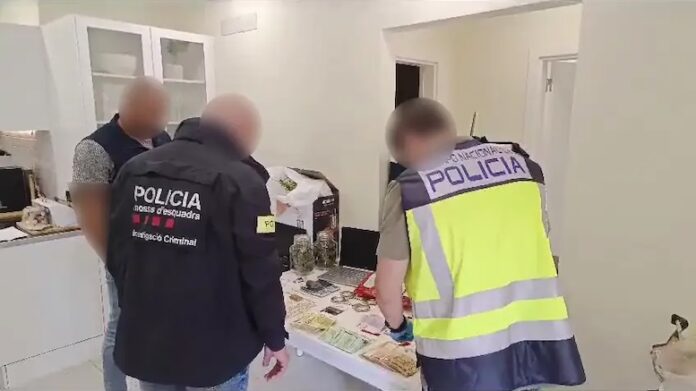
Law enforcement in Spain and Portugal conducted 19 raids last month to tackle a gang of fraudsters that used a combination of phone calls and physical intimidation to steal at least EUR2.5mn (USD2.7mn) from 84 known victims. The raids, one of which is photographed above, resulted in 54 arrests and the seizure of evidence including computers, mobile phones and SIM cards. One of the arrested men was caught in the act of committing crime, with the bank details of his victim on screen at the moment police entered his house.
Spanish citizens were initially hit by phone calls from scammers who pretended to work for the victim’s bank. The victim was told that there was a problem with their bank account, and hence encouraged to reveal personal information. This information was then used by accomplices who visited the homes of targets with the intention of deceiving and pressurizing victims into allowing them inside. Once they were in the victim’s home, they then stole cash, bank cards and valuable items. Any banking details obtained from victims were used to take control of their accounts. A series of money mules assisted with laundering the proceeds through the gangsters’ accounts with Spanish and Portuguese banks.
Telecoms fraud management will remain inadequate if it continues to be focused solely on a narrow subset of technical and network crimes. We should be questioning how crooks are able to obtain large numbers of SIM cards, and can then use them to engage in the unorthodox behaviors involved in running scam call centers that make many outbound calls from a limited number of geographic locations. The historic lack of police action to tackle fraud had the knock-on effect of discouraging telco executives from employing investigators who would support criminal prosecutions and analysts who looked for a wider range of anomalous behaviors that could be indicative of crime. Now there are some signs of law enforcement making a more substantial effort to tie together hybrid crimes where the exploitation of communications networks is just one part of the criminal modus operandi. Police work needs to be backed by expert support from comms providers in order to protect society and to restore confidence in communications.