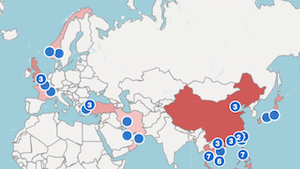
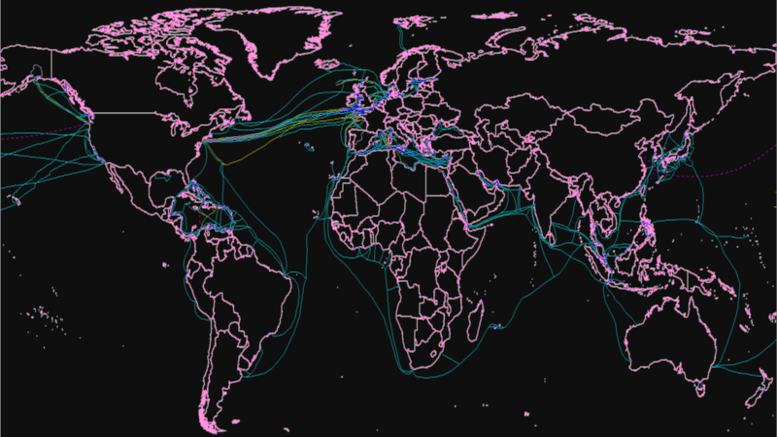
Chinese cargo vessel Yi Peng has been boarded by the Danish Navy following suspected sabotage of two submarine communications cables in the Baltic Sea. A 218km cable from Lithuania to Sweden’s Gotland Island was cut on Sunday and a 1,170km cable linking Finland and Germany was cut on Monday morning. This is only the second time that a ship has been boarded per the rights granted by Article X of the Submarine Cables Convention, which was signed in 1884 and was originally intended to discourage nations from interfering with each other’s telegraph cables. Article X has only previously been exercised once before, when a Soviet trawler was boarded by a US Navy ship in 1959. Danish patrol vessel Y311 Søløven chased down Yi Peng after the Chinese ship sailed close to both cables at the time they were broken. Yi Peng is now anchored just outside Danish territory. The Chinese ship has a Russian captain and had sailed into the Baltic Sea from the Russian port of Ust-Luga.
The seriousness of this incident should not be underestimated. A joint statement from defense ministers of Sweden and Lithuania said “situations like these must be assessed with the growing threat posed by Russia in our neighbourhood as a backdrop”. Both they and Germany’s defense minister responded to the incident by referring to the threat of ‘hybrid’ military activities. Such hybrid activities include the disruption of communications as part of a strategy to undermine another nation’s ability to respond to an assault. Investigations by the authorities in Germany and Sweden are treating the cutting of the cables as a potential act of sabotage, whilst Lithuania’s authorities have categorized the incident as potential terrorism.
Commsrisk has been describing the increased risk of deliberate interference with submarine communications cables in recent years. In 2021, Britain’s Royal Navy commissioned a new ship specifically to protect undersea cables a decision partly motivated by Ireland’s inability to defend transatlantic cables despite the presence of Russian ships loitering offshore. Meanwhile, China appears to be repeatedly testing Taiwan’s defenses by cutting their submarine cables, prompting Taiwan’s government to respond by building hundreds of satellite receivers to maintain communications in an emergency. Just a few months ago, the US State Department warned against using the cable ships belonging to a Chinese-British joint venture.