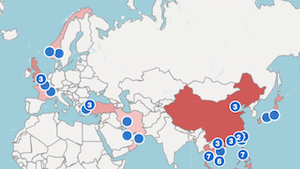

Wangiri frauds involve tricking consumers into phoning numbers listed as ‘missed calls’ on their handsets. It typically relies on the curiosity of a victim that received a call which was too short to possibly answer. The crime is profitable because the fraudster pays nothing for placing calls that are not connected, then receives a share of the termination fee for each return call to an expensive destination. Data provided by the PRISM team of Symmetry Solutions suggests three-quarters of wangiri return calls are short-stopped, increasing the profitability of the fraud by terminating the call at a cheaper destination than the one actually dialed, allowing crooks to pocket the difference. Many telcos, including Swedish operator Telia, have tackled wangiri by blocking traffic from sources of high volumes of very short duration calls. Others prevent consumers from connecting to wangiri numbers. However, there is a way for telcos to punish wangiri fraudsters by choosing to connect their calls, as explained by a new press release from Telia.
Det utökade säkerhetsskyddet verkar både för inkommande och utgående samtal. När de kriminella ringer till Telias kunder i Sverige, möts de först av ett talsvar, med ett personligt meddelande om att de blivit tagna på bar gärning. Om det misstänkta bedrägerisamtalet ändå når fram, varnas kunder om de ringer upp. Telias skydd råder dem att lägga på luren och inte fortsätta samtalet. Inga samtalskostnader debiteras den som lägger på luren direkt efter Telias varning.
The enhanced security protection works for both incoming and outgoing calls. When criminals call Telia’s customers in Sweden, they are first met by a voicemail, with a personal message that they have been caught red-handed. If the suspected fraud call still reaches them, customers are warned if they call back. Telia’s protection advises them to hang up and not continue the call. No call costs are charged to anyone who hangs up immediately after Telia’s warning.
Instead of simply blocking the inbound call, Telia can bill for a call connected to their IVR platform. This also creates an incentive for intermediate carriers to do a better job of blocking wangiri if the originators of the initial call are not going to pay for it.
Amanda Landqvist, Group Fraud Prevention Manager for Telia (pictured) took to LinkedIn to advise how Telia will use the money they collect from the wangiri calls connected to voicemail.
Säkerhetsskyddet integreras gratis och automatiskt för Telias alla mobilkunder nu i mars månad.
Samtidigt skänker vi de pengar vi får in från kriminella till Brottsofferfonden för att ge tillbaka till dem som utsätts för telefonbedrägerier.
Security protection will be integrated free of charge and automatically for all Telia’s mobile customers this March.
At the same time, we donate the money we receive from criminals to the Crime Victim Fund to give back to those who are victims of telephone fraud.
Sweden’s national Crime Victim Fund distributes approximately SEK45mn (USD4.5mn) annually on projects to help victims. The telco refers to their new consumer protection scheme as ‘Telia Payback’. Landqvist aptly observed:
Vi fortsätter kämpa mot de kriminella — och det är payback time!
We continue to fight against the criminals — and it’s payback time!
As an international group, the same tech for diverting wangiri calls to voicemail is also being rolled out across Telia’s other national operations too. One of the key customizations involves recording an IVR response in the national language of each market!
Telia’s press release about new scam protections can be seen here and Amanda Landqvist’s LinkedIn post about Telia Payback is here.