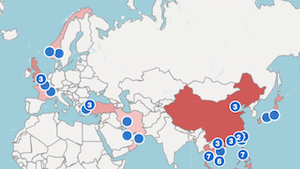

Visitor numbers for Commsrisk shot up during April, thanks in part to one enormous advantage that Commsrisk has over social media: our content continues to be found and read by audiences long after social media algorithms have chewed up, spat out and completely forgotten whichever posts were trending last week.
Most of Commsrisk’s traffic tends to come from people who visit the home page by habit, or who found a particular article through a web search. The former will inevitably read the latest articles while the latter might read articles that were published years ago. This leads to a fairly predictable pattern over time, with all new articles generating interest during their first few weeks, but with some continuing to accumulate views indefinitely. Unlike social media posts, many Commsrisk articles manifest a long tail, a statistical concept that Chris Anderson turned into a popular explanation of the success of new retail business models like Amazon. As Anderson explained, if you have warehouses with effectively unlimited shelf space (or disk space) then you can keep profiting from stock which has lower turnover but which will continue to sell to individuals with specific needs or tastes. Commsrisk similarly welcomes many visitors that peruse a mountain of stock which social media would have eviscerated long ago.
The long tail provides an abbreviated explanation for the deep reservoir of followers that Commsrisk has managed to develop worldwide. However, the curve of the long tail only explains the website’s reach in aggregate; it not a rule that must be followed by all articles at all times. Sometimes the long tail gets punctuated by a sharp spike in demand. A recent event might prompt people to research associated events that occurred in the past, and shocking news in one country might involve the same practices that previously occurred elsewhere. Ironically, new social media posts can magnify the interest in old content simply because nobody else had any relevant stock. That is why the charts will sometimes reflect revived interest in an older article.
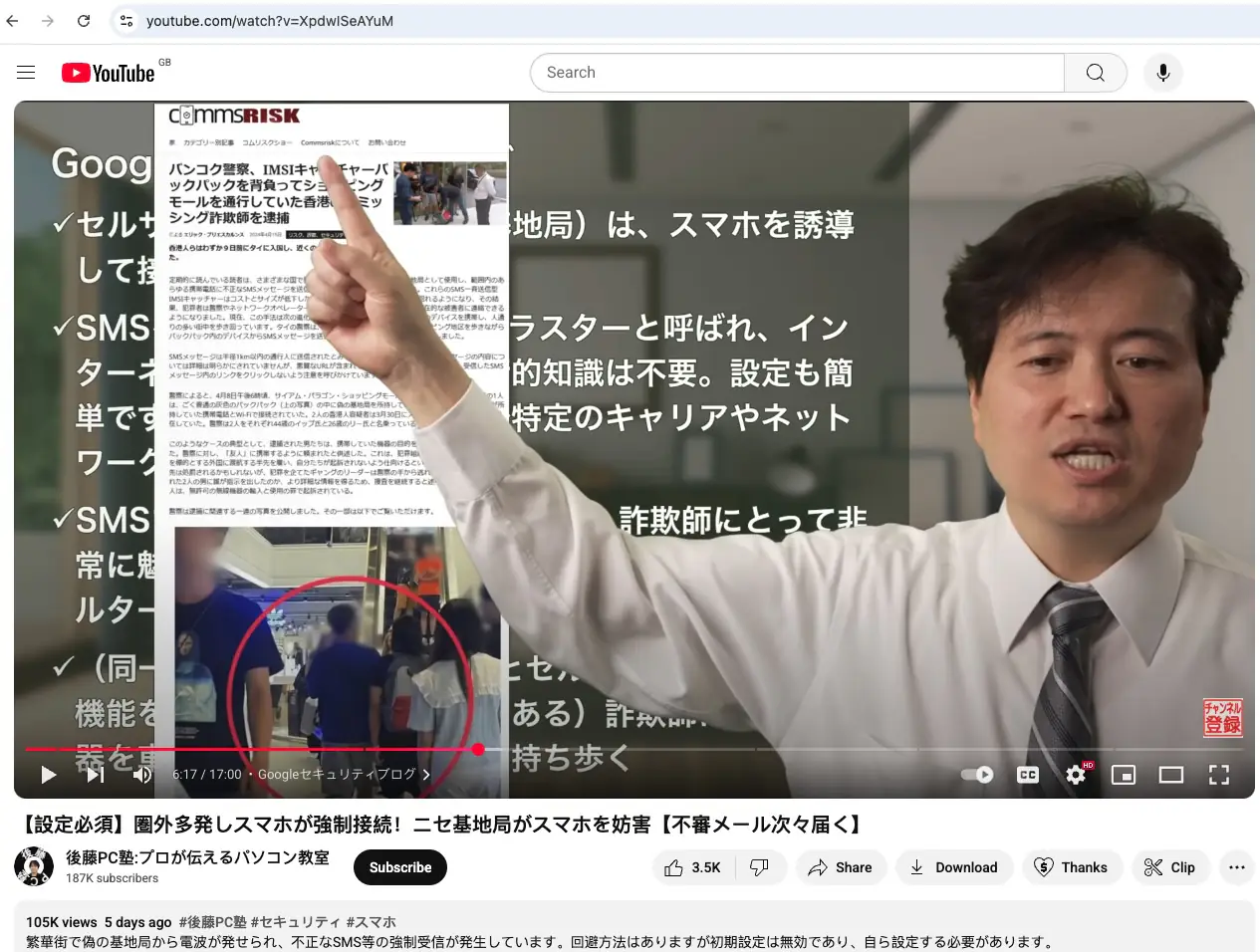
Recent events in Japan and other countries have prompted a flurry of interest in old Commsrisk articles about SMS blasters, the fake base stations that scammers use to send smishing SMS messages. In addition to the 2024 article that ranks second in this rundown, there were several other articles about SMS blasters that sat just outside the top 10. Even so, I was surprised to discover a year-old Commsrisk article had recently been quoted by a popular Japanese YouTuber, as pictured below.
Commsrisk’s burst of traffic from Japan also demonstrates the folly of behaving like all social networks are equally popular everywhere, or that their algorithms all respond to content in the same way. X is usually the source for only 1% of traffic received by Commsrisk, while LinkedIn generates slightly under 10% of Commsrisk’s traffic on average. Put simply, the kinds of professionals who are interested in the topics that Commsrisk cover are rarely found tweeting about them. Commsrisk has only built a modest following on X despite routinely posting new content to X for many years. However, serving that 1% remained a worthwhile activity because X’s algorithms are geared to amplify bigger stories much more than LinkedIn will. As a consequence, X delivered over twice as much traffic to Commsrisk than LinkedIn during April. There were several explanations for why this occurred, but one factor is that X is more popular than LinkedIn in Japan because employees do not like to be seen on a network that is associated with looking for a new job. Most Japanese have learned about SMS blasters by following events on X, prompting heightened interest in some of Commsrisk’s tweets about the subject.
Increased worldwide use of SMS blasters was an inevitable consequence of denying criminals other methods of transmitting links to phishing websites. For example, telcos in many countries have implemented filters on A2P SMS channels or have enhanced controls for registering SIMs and detecting simboxes. Criminals possess a sense of direction; if one path is blocked, they will take a different route to the same destination. I expect to see more chatter on social media about SMS blasters in future. Some self-important person might even decide to give SMS blasters a new name in the hope the name will go viral, and help them to reinforce the impression that they are actively addressing a frightening new risk, as opposed to finally covering an old risk that had previously been ignored. Regular Commsrisk readers may console themselves by observing that they knew the news when it really was new.
These were the 10 most popular Commsrisk articles during April, as ranked by the number of visitors.
- GSMA Call Check vs STIR/SHAKEN: Explaining the Two Competing Models for Validating Caller ID Worldwide
- Chinese Arms Dealer Sold IMSI-Catchers for Huge Paris Drive-by Smishing Scam
- WeDo and SIGOS: Europe Must Learn from Its Mistakes
- Minister Refuses to Answer Questions about Chinese Scam SMS Blasters Circling Japan
- How eSIMs Can Be Used for SIM Swap Fraud
- UK Sets Precedent for Other Countries by Banning Global Title Leasing
- Over 40% of American Scam Calls Traced to AT&T, Verizon and T-Mobile US
- Legal Fight between Mobileum Investors Rumbles On
- Hero Who Hunted Down a Scam Boss Received No Reward or Damages
- AT&T Defeat of FCC over $57mn Data Breach Fine Shows US Regulatory Enforcement Is Broken