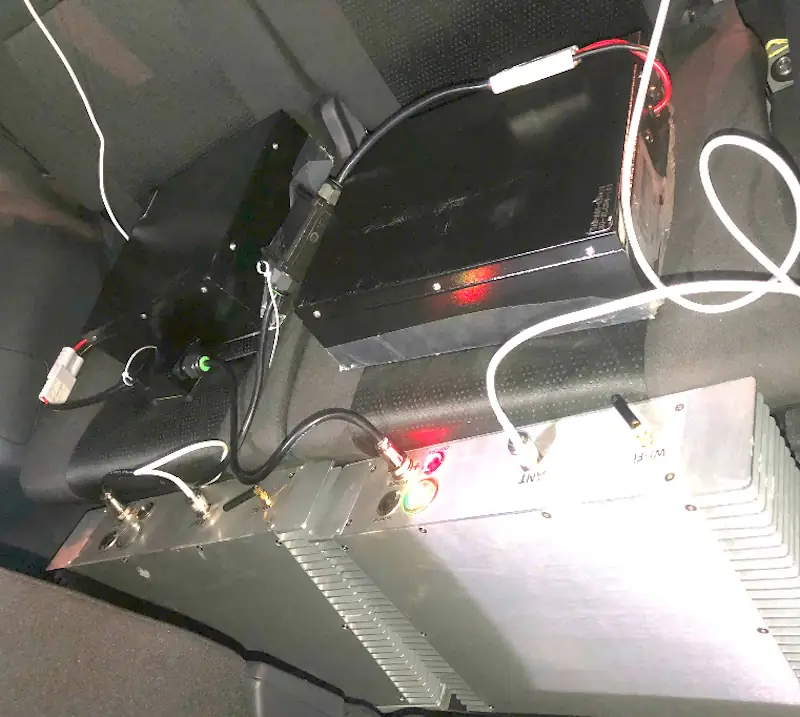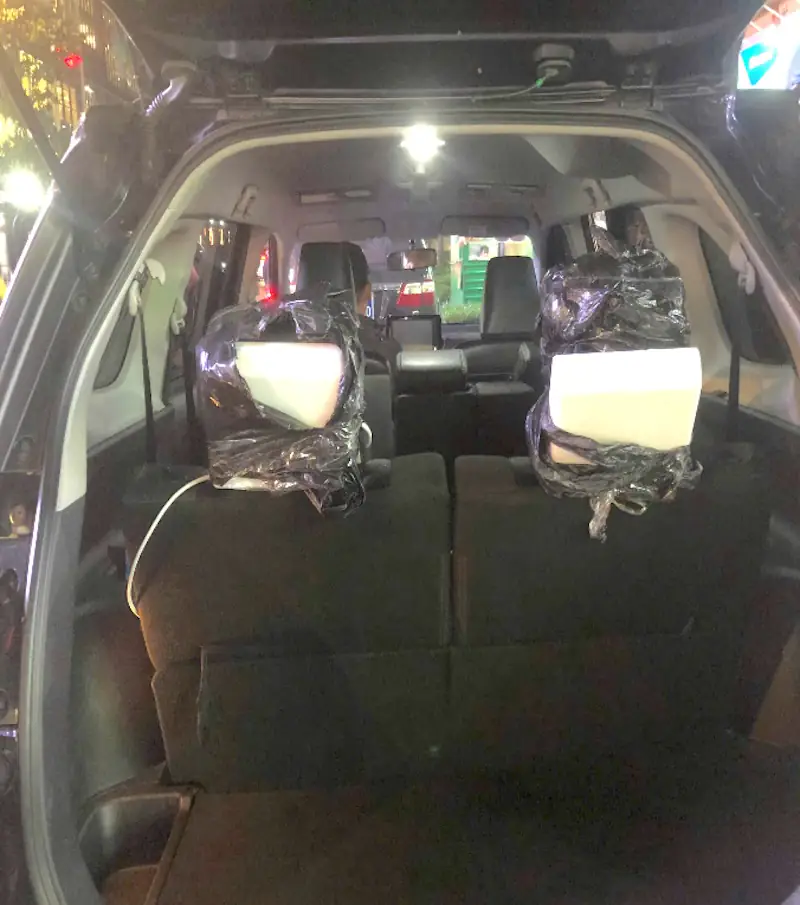
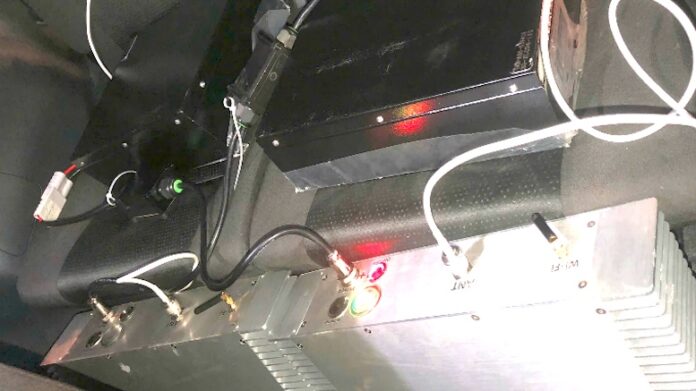
Two SMS blasters were seized by the authorities in Ho Chi Minh City after suspicious radio signals were detected, reports VietNamNet. Both of the fake base stations were carried in the back of the same car, and were being used to send smishing messages that linked to a website impersonating the National Public Service Portal, an online gateway for various administrative services.
The suspicious radio signals were identified on August 7. The authorities are said to have used ‘specialized technical means’ to locate the SMS blasters soon afterwards. This almost certainly means that they have mobile equipment that recognizes the signals sent by apparent base stations and can then be used to pinpoint their location. If the report is accurate then the authorities located the equipment in an impressively short time.
The messages sent by the fake base stations told recipients that they owed a VND10mn (USD381) fine for a traffic violation. Fines like these are commonly paid through the genuine National Public Service Portal. The message contained a link to a phishing website that would have captured the banking details and other personal information from victims. It is notable that the Traffic Police division issued a public warning about SMS messages directing the public to a fake version of the National Public Service Portal on August 7, although that warning did not refer to how the SMS messages were sent. This warning was then relayed by other major news providers including Báo Sài Gòn Giải Phóng (Saigon Liberation Newspaper).
The car was said to have circled various different routes around Ho Chi Minh City. The driver of the vehicle was arrested, and is said to be a citizen of an unnamed foreign country. No further details were given about the driver. Like other cities in East Asia, the roads of Ho Chi Minh City are full of cars and scooters. It makes sense for scammers to adapt their methods by driving through heavy congestion while sending messages that are purportedly about traffic infringements.
Commsrisk’s Global Fraud Dashboard has the most comprehensive global map of reported cases of fake base stations being used to send SMS messages and this incident has been added to it. We know our map is more comprehensive than any other resource because we use AI-powered search to routinely find news stories about the use of SMS blasters that others miss. If another site reports an SMS blaster case that is missing from our map then it is because they have misleadingly labeled technology that is not a fake base station or they have confused the use of fake base stations to send messages in bulk with using them to intercept private communications.
Police photographs of the car and the seized equipment have been reproduced below.