Yet another SMS blaster was identified by the Vietnamese authorities in Hanoi on November 3, resulting in the arrest of a foreign national. The device was used to send smishing messages that impersonated Vietcombank. However, some aspects of how this particular SMS blaster was used differ from the pattern previously established in Vietnam and elsewhere. The authorities shared some technical details that are not normally made public in cases like these.
One particularly impressive statistic is that the relevant radio frequency team provided enough tracking data for the authorities to find the SMS blaster only a little more than 2 hours after they were alerted to scam messages being sent in Hanoi. The device was found in a suitcase which was being carried by hand through crowded parts of the city.
The broadcast range of the device had been deliberately limited to make it more difficult to locate as it was being carried around. The authorities also noted that the Tracking Area Code (TAC) broadcast by the device was frequently altered. The best network operators have learned how to track the movements of rogue base stations by recognizing the transmission of a suspicious TAC. An unnamed Vietnamese telco told VietNamNet that they have developed a ‘real time detection system’ that warns the police about where to find fake base stations.
I speculated that sophisticated criminals may now prefer to limit the range of radio transmissions from SMS blasters following the arrest in October of a Chinese man operating an SMS blaster on a London subway platform. The use of fake base stations to send fraudulent SMS messages is an adaptation that criminals have adopted in response to improved controls elsewhere in the communications ecosystem. Now some telcos have become very slick at tracking down the location of rogue base stations. The criminals will keep adapting their techniques to try to evade detection for as long as they can.
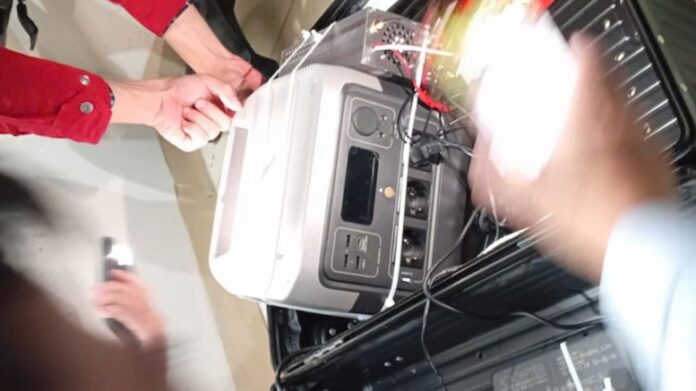
Police shared one photograph of the suitcase and the equipment inside. The image mostly shows the portable power station that supplied the SMS blaster with electricity. It has been reproduced below.