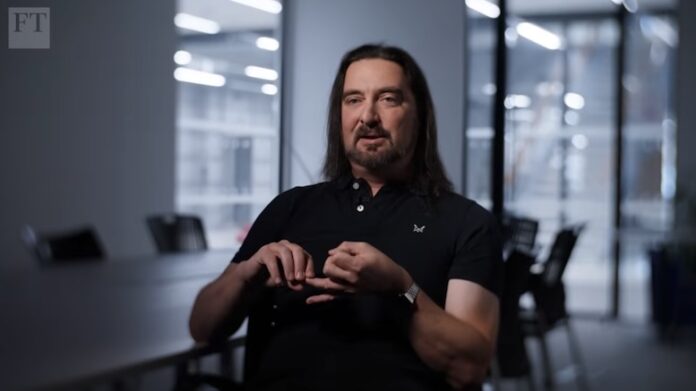
It was November 18, 2024, when I met Ben Marino in the London offices of the Financial Times. He invited me to discuss why rogue base stations and IMSI-catchers are used by Chinese organized crime and the implications for phone users and policing worldwide. The date is indicative of how much research has since gone into the new documentary by Ben and his team, which was released yesterday and is entitled Scammers, spies and triads: inside cyber-crime’s $15tn global empire. Skip to the end of this article if you want to watch the documentary straight away or keep reading if you want a little background information first.
As I explained to Ben, I am not an expert but a generalist. The risks encountered by complex businesses like telcos often need to be analyzed by generalists before they are broken down into constituent parts that can be digested by specialists. Engineers, data scientists, accountants, lawyers and criminologists all have parts to play in understanding and tackling the abuse of networks. Mistakes occur when one group of specialists assumes they know so much that they require no input from the others. Mistakes also occur when one group of specialists fails to appreciate they are taking advice from other specialists who have unwarranted confidence in their beliefs. My goal in speaking to Ben was to outline a map of how networked criminal activity fits together, and to explain why the successful adoption of new controls in one part of the map can prompt changes in criminal behavior across seemingly unrelated parts of the map.
The word ‘collaboration’ can be tossed around too lightly, often in rooms where everybody has the same kind of job, or by people who only value expertise when it affirms their existing prejudices. The trust placed in experts needs to be balanced with skepticism, or else bad advice and misinformation will be given too much credence. The challenge of evaluating the quality of information gets worse as crimes cross the boundaries between industries; it is now impossible to understand some crimes without understanding the relationships between telecoms, social media and financial services. However, we live in societies that value people who give definitive answers to questions, not the people who did all the research required to provide a good answer, or the people who point out our collective ignorance. This means we sometimes value people who jump to bad answers because nobody has done the necessary research.
Thankfully, Ben and his team were thorough in their approach. Journalists also have a specialist role to play in informing how societies tackle crime, but not when ‘journalism’ merely consists of copying pat answers without checking if they were derived from reliable facts. The ability of societies to tackle networked crime has suffered from an excess of lazy journalism that amplifies so-called solutions which are not actual solutions. From my subsequent exchanges with Ben, it is obvious that a lot of the research which informed his documentary was not displayed in the final product. Many hours of interviews were edited down to just an essential few minutes from each. If Ben is willing, he now has the knowledge to influence anti-crime policies for the better. I hope he does.
I know just enough about a broad range of topics — the technology of radio telecommunications, the know-your-customer checks performed by comms providers, supply chains for equipment sold to scammers, how regulations are drafted — to join the dots on the ways that international criminal syndicates exploit weaknesses in networks and laws. I also ask questions, even when people claim the answers have already been established. Readers of Commsrisk are witness to many of those enquiries, and they provide me with valuable feedback when I make mistakes. Ben first reached out to me in October 2024 because he was prospecting a potential new story and wanted to discuss some articles about SMS blasters that he had read on Commsrisk. We chatted by video call while I sat on the stoop of a house I was renting in New Orleans. I am wary of talking to journalists who want quick and easy answers but I respected Ben because he asked probing questions.
It is extraordinary to think how rarely the phrase ‘SMS blaster’ was used at the time I began speaking with Ben, and how much more common the phrase is now. I like to think that Commsrisk’s coverage had some positive influence by drawing attention to the similarities between SMS blaster cases in disparate countries. Commsrisk’s research into the spread of SMS blasters was a starting point for Ben’s investigation but his documentary delves deeply into the way the criminal underworld functions. It should be compulsory viewing, even for professionals who think they know all about networked crime. Seeing the finished documentary has prompted me to think about ways Commsrisk can stimulate more conversations during 2026 by analyzing other aspects of networked crime and the methods being used to mitigate it. It can take a long while for an issue to enter into the public’s consciousness but the process of educating the public needs to start somewhere.
We scheduled our interview for when I returned to the UK. I was working for the Mobile Ecosystem Forum (MEF) at this time, and their Annual General Meeting was being held on the other side of London but I invented an excuse for missing it. MEF CEO Dario Betti proved to be an industry shill as well as a media whore so I wanted him to remain unaware of the FT’s investigation into scam comms traffic, for fear he might adversely influence it. His association’s attitude towards collaboration — and revenue generation — was already apparent from the way a senior manager at Google watered down my submission to a consultation on scam messaging run by Ofcom, the UK’s comms regulator. Google’s representative even had the cheek to claim their YouTube subsidiary was diligent at removing videos that advertise SMS blasters and IMSI-catchers, despite ample evidence to the contrary. I got some revenge by showing Ben a YouTube video that depicts an IMSI-catcher being carried in a backpack through a shopping mall, ostensibly to spy on hundreds of ordinary people. That video features prominently in the FT’s documentary, and it can still be found on YouTube.
Not everybody who works for Google is bad, but it would be foolish to trust everything said by the representatives of businesses. It is also foolish to believe the budgets allocated by organizations like Google to fund associations like MEF, the Global Anti-Scam Alliance (GASA) and the GSM Association’s anti-fraud meetings are solely motivated by a desire to reduce crime. Much of the expenditure is designed to whitewash reputations while discouraging any examination of where these businesses could do more to protect the public. That is why we need more journalists doing thorough research and asking critical questions. People in power need to be held to account. Just because they say they are fighting crime does not mean they are making the right decisions. Criminals are responsible for crime, but so is every business and every association that prioritizes its own income over protecting the public from harm. I hope that Ben’s documentary encourages more deep journalistic research into the causes of the global scamdemic and the reasons societies have failed to respond appropriately so far.
Scammers, spies and triads: inside cyber-crime’s $15tn global empire can be seen below. Subscribers to the Financial Times can also watch the documentary here.