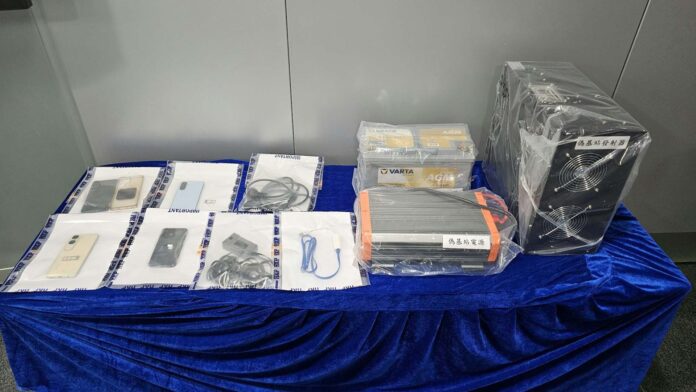
Hong Kong Police arrested a 31 year old local man on July 30 after finding him driving through Tseung Kwan O with an SMS blaster operating inside his car. Officers seized the SMS blaster and a mobile phone used to control it. Initial forensic analysis showed the device had sent more than 6,000 smishing messages.
The messages impersonated official WhatsApp notifications and claimed the recipient’s account would be deleted because it had violated the platform’s rules. A link took victims to a fake WhatsApp website that requested their telephone number and displayed an eight-digit pairing code. Victims were instructed to enter the code into the genuine WhatsApp application, causing their account to be linked to a device controlled by the criminals.
The criminals impersonated the victims when asking their friends and relatives for money. Police linked the SMS blaster to 16 cases involving victims aged between 29 and 71. Their combined losses exceeded HKD300,000 (USD38,500), with one victim losing HKD50,000 (USD6,400).
The case occurred during a surge in WhatsApp account hijacking across Hong Kong. The Hong Kong Computer Emergency Response Team Coordination Centre warned about the same account-pairing scam on June 12. Police subsequently received more than 150 reports between June 17 and 30, causing losses exceeding HKD20mn (USD2.6mn).
Hong Kong Police recorded 1,613 WhatsApp account hijacking cases during the first six months of 2026, averaging more than 260 cases and HKD21mn (USD2.7mn) of losses per month. Approximately 100 cases per month were recorded during the same period last year. There is no evidence that SMS blasters caused the wider increase, but the latest operation shows criminals adapting the scam to a mass-distribution channel that bypasses legitimate mobile networks.
Police said the SMS blaster interfered with legitimate mobile signals and forced nearby phones to connect using 2G. The arrest came exactly one week after police caught another SMS blaster operator in Sheung Shui. Both devices operated after Hong Kong’s last genuine 2G network was switched off on June 23.
Investigators said the driver had been recruited through an intermediary and had never met members of the criminal group. The vehicle and equipment had already been prepared for him, leaving him to drive around populated areas whilst operating the SMS blaster. He received several thousand Hong Kong dollars each time he performed this role.
Police also arrested the 43 year old local man who was the vehicle’s registered owner. He is suspected of registering the car so it could be used by the criminal group. Both men were arrested on suspicion of conspiracy to defraud and remained in custody whilst the investigation continued.
The driver was additionally arrested on suspicion of drug trafficking, unlicensed driving and driving without third-party insurance. Police seized suspected cocaine, ketamine and cannabis from the car and the driver’s home, together with packaging equipment and an electronic scale. The drugs had an estimated value of HKD180,000 (USD23,000).
This is at least the fifth publicly reported Hong Kong SMS blaster bust since February 2025 and the second within one week. Police did not explain precisely how they located the latest vehicle. Dr Silke Holtmanns and Eleanor Holtmanns describe methods that telcos and law enforcement agencies can use to identify these devices in their article about detecting SMS blasters.
The latest incident has been added to the SMS blaster map on the Commsrisk Global Fraud Dashboard. The facts and photographs were reported by HK01. The Hong Kong Police Force published the following video briefing about the arrests.
Look below for photographs of the SMS blaster, its controller and the evidence displayed by police.
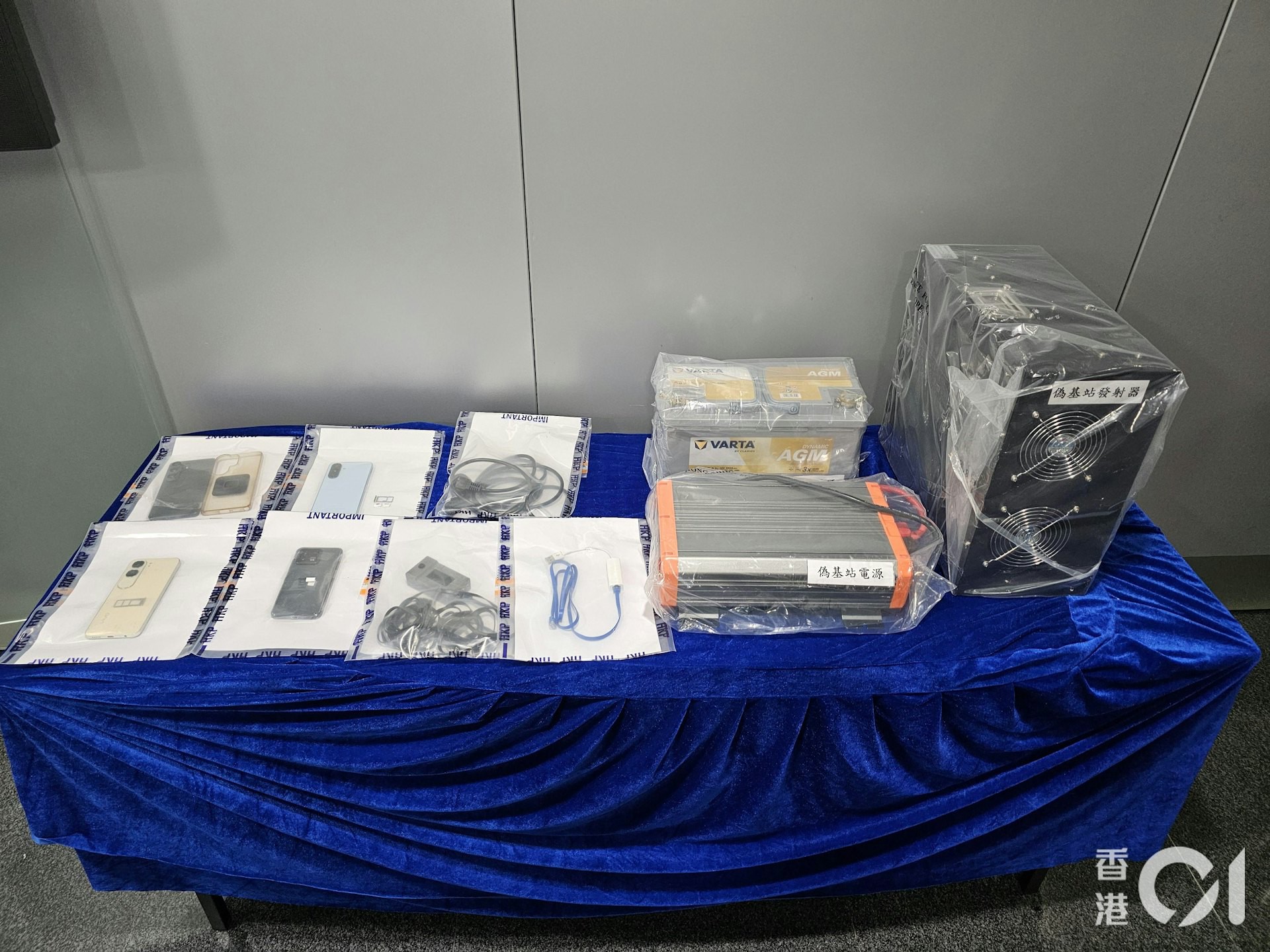
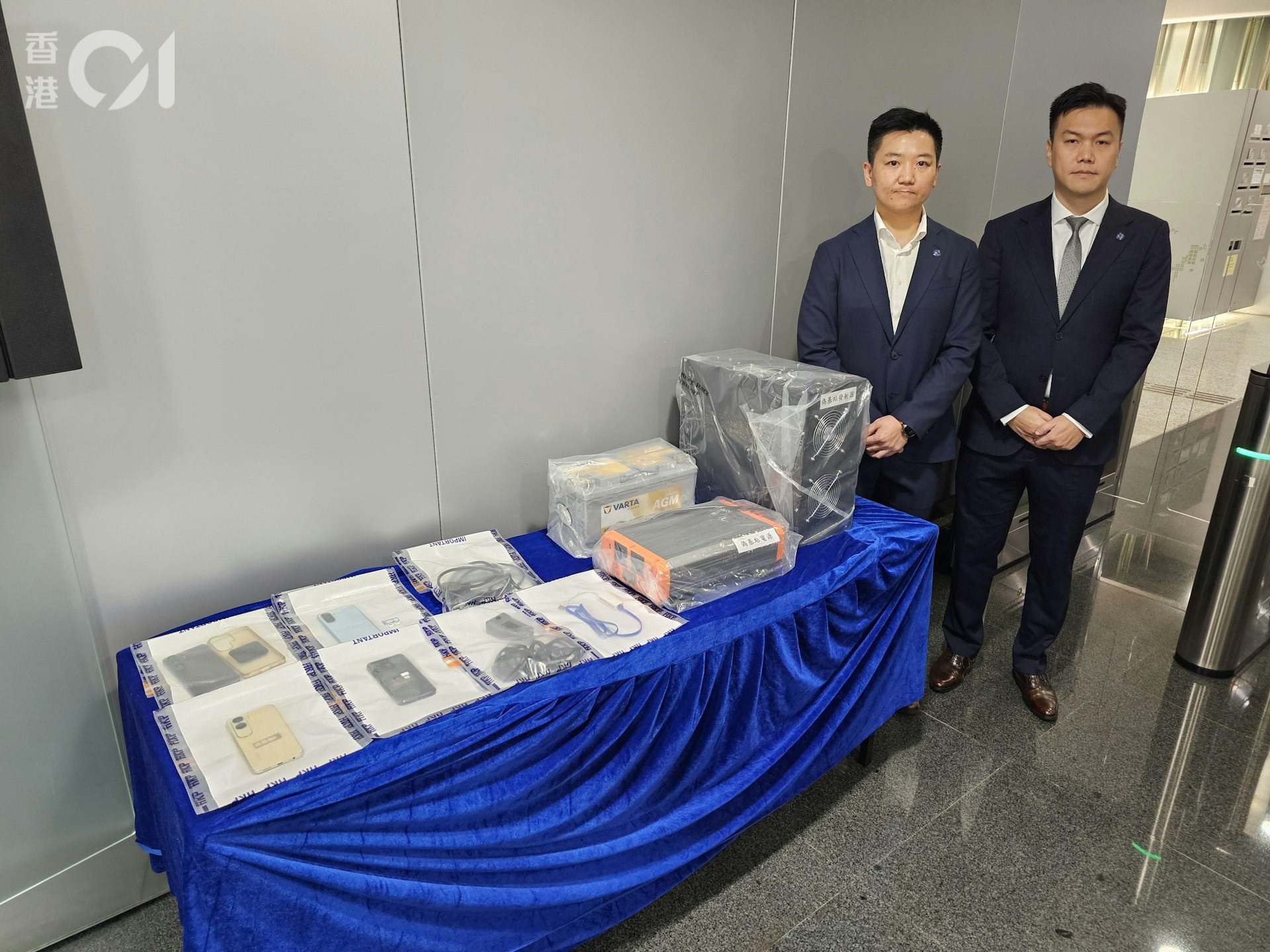
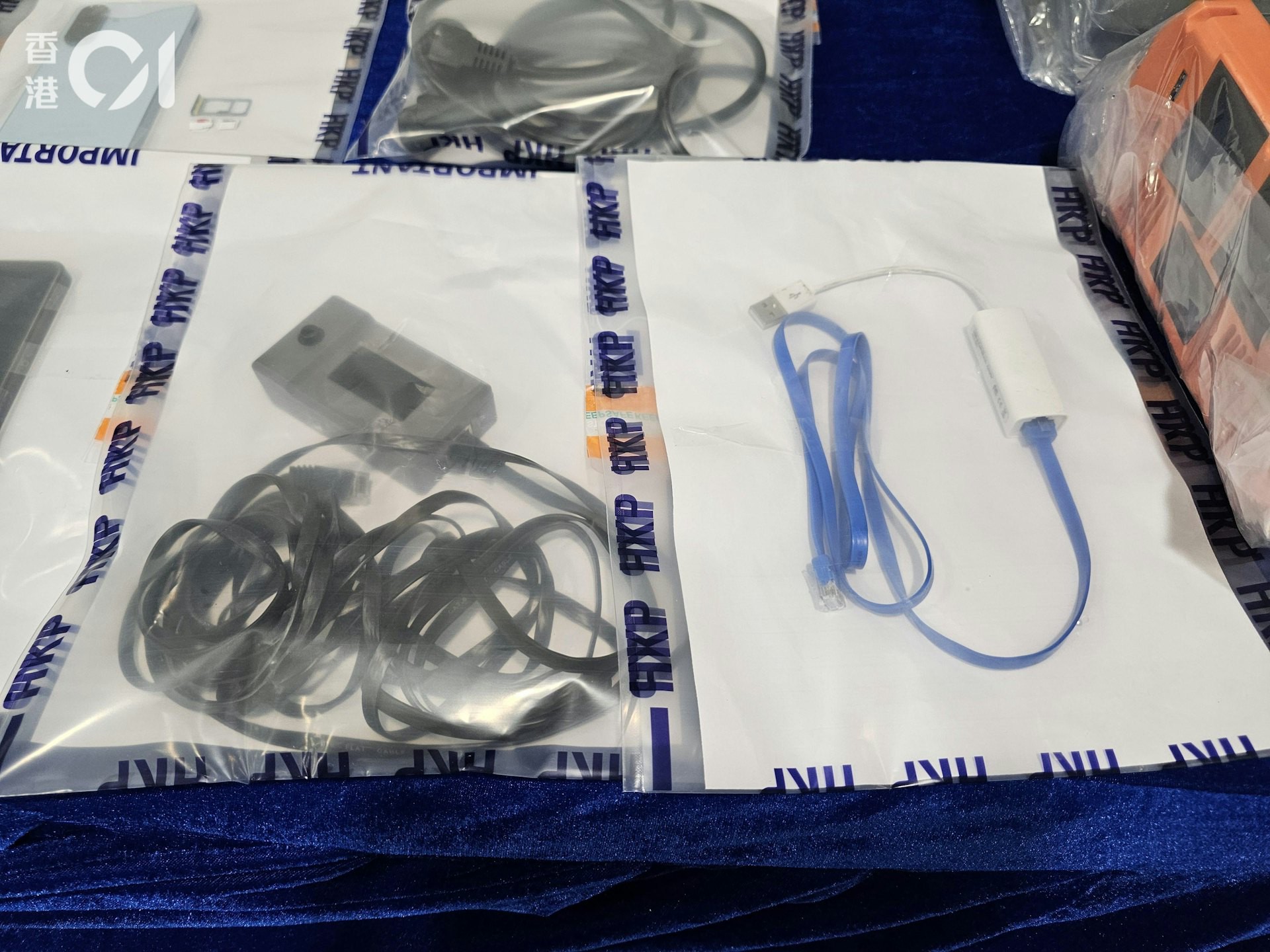
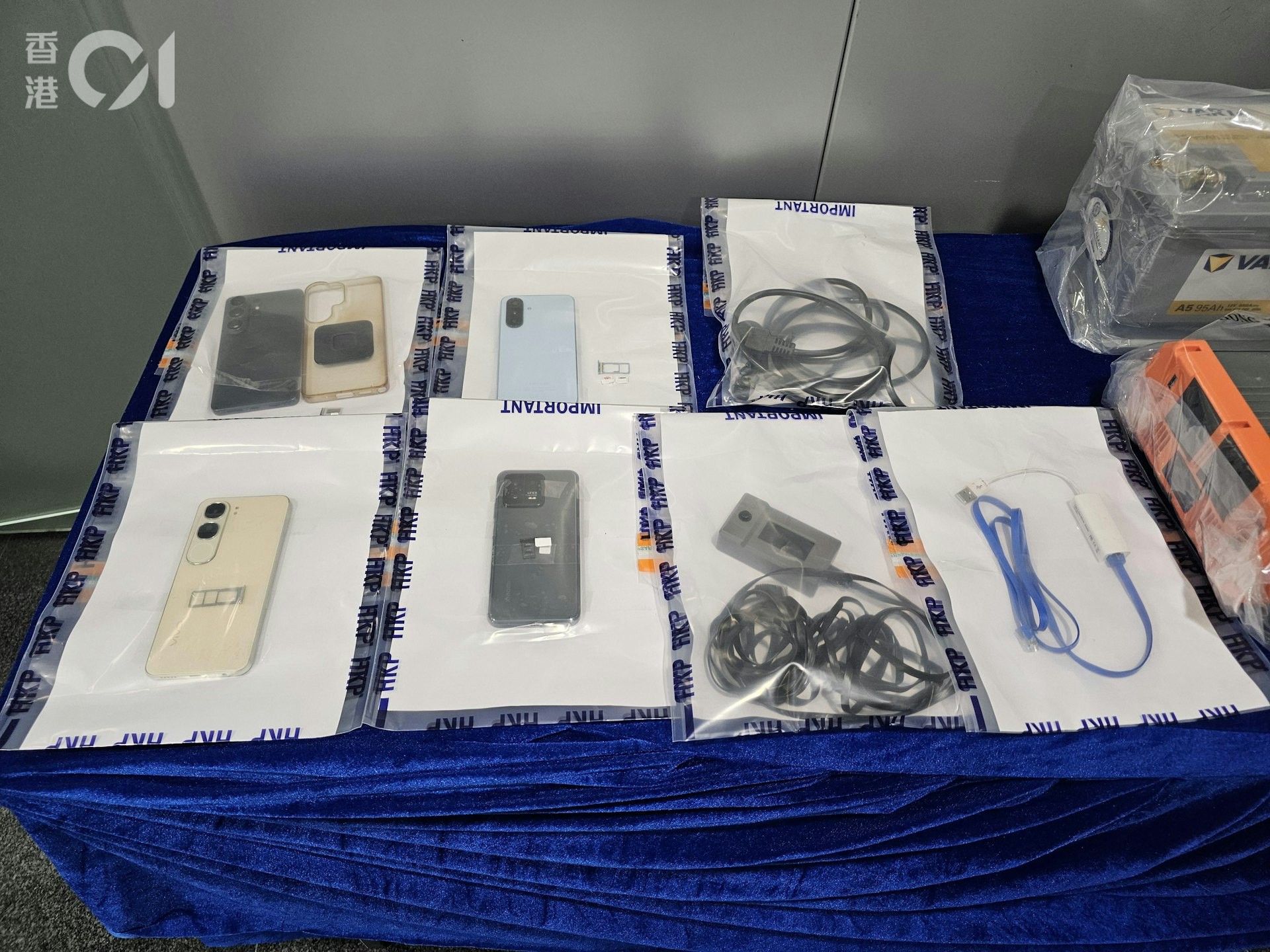
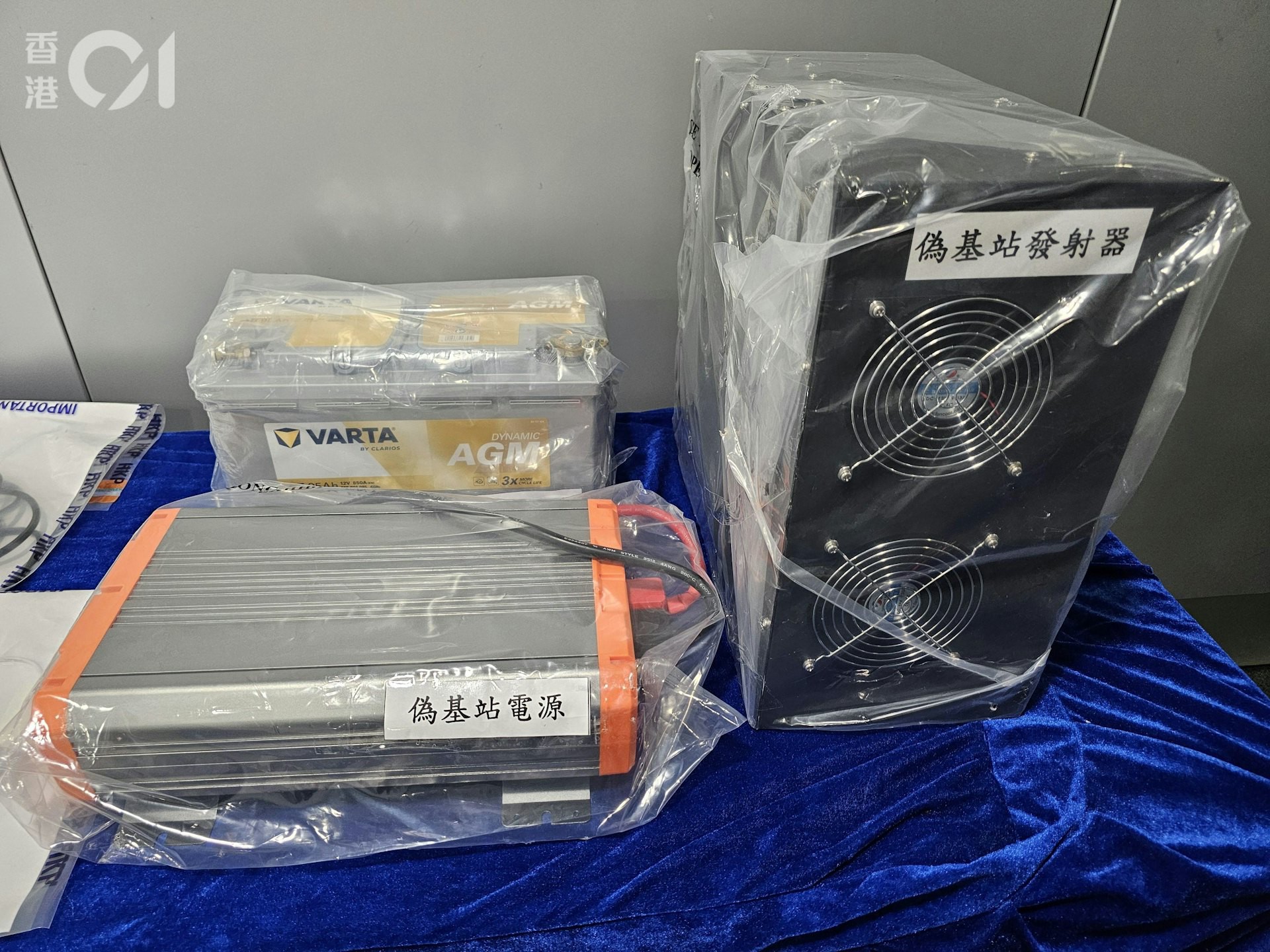
Photographs: 梁偉權/HK01