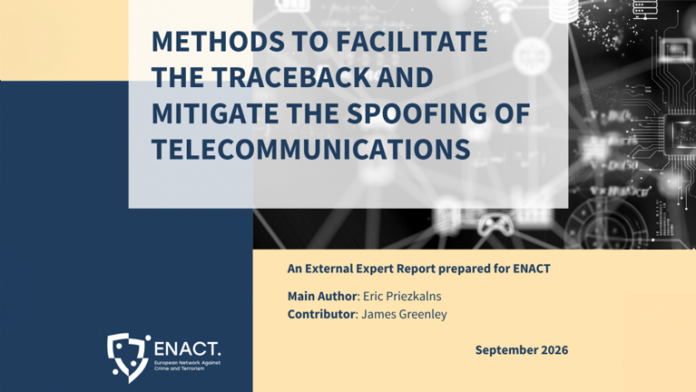
I recently contributed to Methods to Facilitate the Traceback and Mitigate the Spoofing of Telecommunications, a new report written by Eric Priezkalns for the European Network Against Crime and Terrorism (ENACT). The topic was requested by Europol’s European Cybercrime Centre, which wanted an analysis of practical solutions to Caller-ID and Sender-ID spoofing.
My contribution included overseeing the survey we ran through Commsrisk and providing graphs, data, and insights from the Commsrisk Global Fraud Dashboard.
The dashboard was created to encourage a more empirical approach to decision-making, and this report is a case in point. We were able to use its data to make well-supported arguments for low-cost, high-impact solutions in a discussion that is otherwise too frequently muddied by speculation and marketing.
For example, we could point to reported reductions in scam calls of around 70 or 80 percent in some countries blocking international calls that spoof domestic numbers, alongside evidence for the effectiveness of SMS Sender ID registries. I think those results deserve more attention when we are considering whether to invest in more expensive and complicated alternatives.
I also supplied a graph comparing two sets of figures from the US Federal Trade Commission: complaints about unwanted calls and reported losses from scams initiated by a phone call. Complaints have generally fallen whilst losses have risen, which is a rather different picture from the one you get by looking at complaints alone.
USTelecom’s Industry Traceback Group has used falling complaints to argue that the US strategy is working, whilst acknowledging the increase in fraud losses. With USTelecom lobbying for other countries to adopt SHAKEN and international traceback, I think it is important that we can scrutinise that argument. Having the dashboard meant we could challenge it with evidence.
I am extremely proud to see my work helping to inform this discussion. This is what I want the dashboard to do: make it easier to identify effective interventions and give people the evidence to argue for them.
I have recently been plugging away at adding new countries and sources of data so the dashboard can do more of this. Stay tuned for an explosion of new data. I will also be writing articles in the coming weeks about what we have learned from it.
Thank you to everyone who contributed to the survey and to the donors who support the dashboard. You can read the report below and explore the dashboard here.
Open the report in a separate window or read the original PDF on ENACT.