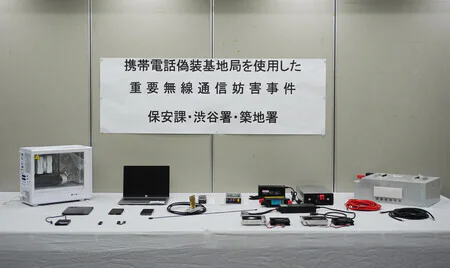
Tokyo police have arrested a 31-year-old Chinese man accused of operating an SMS blaster from a car parked in Ginza, one of the city’s busiest shopping districts. Yu Hai was caught operating the device on the afternoon of 7 November and referred to prosecutors on 9 November for operating an unlicensed radio station and interfering with NTT Docomo’s network.
Police say the device disrupted mobile service within a radius of approximately 500 metres, causing phones to lose their normal network connections before connecting to the SMS blaster’s fake 2G network. Police estimate that the device disrupted service for more than 10,000 phones in less than two hours, including those belonging to officers investigating the case.
The SMS blaster sent Chinese-language smishing messages claiming that the recipient’s credit card had been suspended because of suspected overseas fraud. The messages contained links to a website designed to steal card details. Police have received complaints from 18 Chinese tourists and students since January 2025, involving losses of approximately JPY4mn (USD26,000). They are investigating whether Yu was responsible.
The car had previously been spotted behaving suspiciously in Ginza, Shinjuku and Shibuya, three areas popular with foreign visitors.
Yu denies the allegations, claiming there was no radio equipment inside the car. Police are investigating possible links to organised crime. According to Japanese news agency Jiji, this is the first time anyone in Japan has been prosecuted for disrupting mobile communications using this method.
SMS blasters operating in Tokyo were first exposed by members of the public. In April 2025, amateur detectives identified several fake base stations operating in Tokyo and Osaka, all sending Chinese-language scam messages aimed at tourists. Three months later, they mapped the route taken by one of the Tokyo SMS blasters, showing how it repeatedly travelled between Shinjuku, the Imperial Palace and Shibuya. Two of these locations are also where Yu is suspected of operating, though police have not established whether he was responsible for the earlier incidents.
The use of a vehicle to target tourists in busy areas is consistent with SMS blaster operations elsewhere. Criminal gangs frequently employ drivers to carry the equipment through locations with large numbers of potential victims. Recent arrests in Manila involved drivers instructed to visit shopping malls, while an SMS blaster in Jakarta was driven slowly back and forth along a busy metro route.
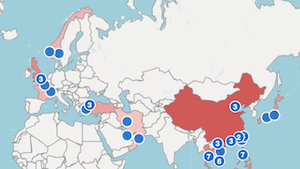
The latest Japanese case has been added to the SMS blaster map on the Commsrisk Global Fraud Dashboard. A video report is embedded below.