I have said it before and I will say it again: the American legal system is not fit to fight the epidemic of phone scams. But even I was amazed at the story of a Florida Sheriff who is tackling scam calls made by criminals already incarcerated in prisons within the neighboring state of Georgia.
Volusia County Sheriff Mike Chitwood took to Facebook to share his frustrations at the ‘huge’ scam being operated by inmates of Calhoun State Prison and Wheeler Correctional Institution, both in Georgia. Chitwood spoke on the matter after arresting 61 year old Annie Ashley, a resident of Atlanta, Georgia, and an alleged accomplice of the prison scam gang. He greeted Ashley by observing:
I think it’s ironic that you’re part of a scam that’s telling people they have an arrest warrant and yet we have an arrest warrant for you.
One of the victims was scammed out of USD15,000. Half of this money was traced to Ashley’s account. Luckily, USD12,000 has since been recovered.
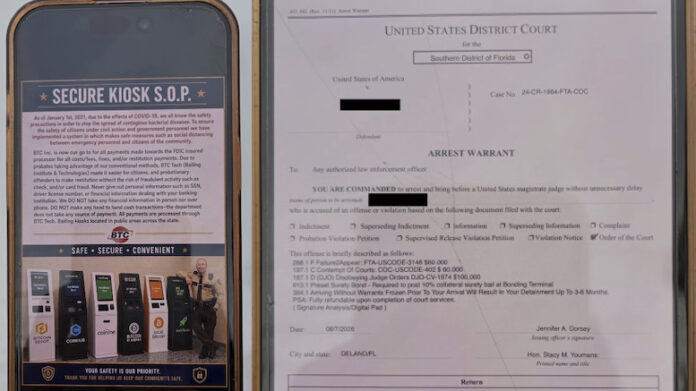
According to Chitwood and reporters at CBS News, the scam involves making phone calls that impersonate law enforcement. Recipients are told they are in trouble because they skipped their jury duty. Messages sent to the victims include bogus arrest warrants that appear impressively authentic. They also include instructions for how to pay the fines using bitcoin ATMs, supposedly because the government no longer accepts other methods of payment ‘to stop the spread of contagious diseases’. In reality, bitcoin ATMs are a gift to criminals because of the absence of any checks over the identity of users.
The criminals want to keep their identity obscured but the scam would not work if they were unable to gather information about prospective targets. So how are prisoners able to research their targets, create credible-looking arrest warrants in their names, then bombard them with calls and messages? Chitwood explained:
…the inmates are allowed to have access — or nobody’s searching them — to cellphones and iPads. They look up everything they can, especially here in Florida, and then they do the scam…
The Sheriff shared images of a bogus arrest warrant and bitcoin payment instructions sent by phone.
Networks are global and they work much the same in every country. However, cultures vary from place to place. For historic reasons, the USA has some issues with asking its residents to identify themselves. This compounds deficiencies with the US legal system. That system makes a lot of money for lawyers — and for the corporations they represent — but it is embarrassingly arcane and arbitrary compared to the justice systems of most other advanced economies. As a consequence, the US is singularly unfit to tackle the root cause of networked scams: the absence of know-your-customer (KYC) information about who is using phone services and the transactions that occur over networks.
You might think it should be easier to monitor and limit the phone usage of convicted criminals when they are locked in a prison cell. This scam illustrates how the USA has to devote additional resources to some aspects of law enforcement just to counter deficiencies in preventing networked crimes before they can occur.