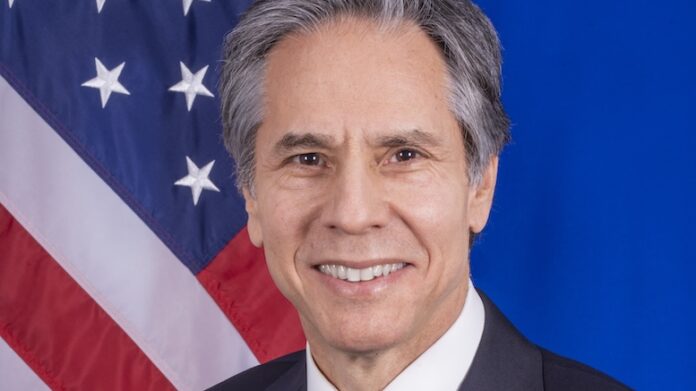
Six anti-scam organizations have jointly lobbied Antony Blinken (pictured), the foreign affairs secretary in the administration of US President Joe Biden, to impose sanctions in response to an explosion in human trafficking to staff scam call centers within Cambodia. Their joint letter to Blinken begins:
We, representatives of the undersigned organizations, would like to draw your attention to the growing problem of transnational online fraud originating from Cambodia. For the last three years, the FBI has reported that the costliest form of crime reported by Americans has been online cryptocurrency investment scams. These scams cost Americans tens of billions of dollars per year.
These scams start with an innocuous text message, followed by an extended period of social grooming, before potential victims are introduced to fake investment schemes. These online crypto investment scams are frequently referred to as “pig butchering.” Due to the highly labor intensive nature of the prolonged social interaction these scams entail, they primarily originate from involuntary slave labor housed in call centers throughout southeast Asia. Criminal rings lure immigrants from all over the world with false offers of employment. Victims are then held against their will and forced to scam others online and over the phone.
The severity of the abuse that occurs within these scam compounds cannot be dismissed lightly.
Instances of sexual abuse, torture, and murder as instruments of control used at these call centers have been documented by your Department. The State Department has acknowledged that Cambodia is an epicenter of this organized crime, with an estimated 10,000 cybercrime slaves held in that country. The U.N. Office of the High Commissioner for Human Rights estimated that as many as 100,000 people have been held against their will in scam call centers in Cambodia.
The letter also highlights mainstream media reporting of alleged links between scam compounds and powerful Cambodians, including a nephew of Cambodian Prime Minister Hun Sen and a business owned by a Cambodian Senator. The US government already designates Cambodia a ‘Tier 3’ country, meaning it does not comply with the stipulations in the USA’s Trafficking Victims Protection Act (TVPA). A 2023 report by the US State Department was explicit about the relationship between Cambodian government corruption, scams and human trafficking.
The Government of Cambodia does not fully meet the minimum standards for the elimination of trafficking and is not making significant efforts to do so… corruption and official complicity in trafficking crimes, including by high-level senior officials, remained widespread and endemic… Authorities did not investigate or hold criminally accountable any officials involved in widespread, credible reports of complicity, in particular with unscrupulous business owners who subjected thousands of men, women, and children throughout the country to human trafficking in cyber scam operations…
The six organizations that are calling for sanctions are:
- The Global Anti-Scam Organization (GA-SO);
- The Fraud Victim Rights Organization (FVRO);
- The Public International Cybercrime Disruption Organization (PICDO);
- The Eyewitness Project;
- Advocating Against Romance Scammers (AARS); and
- Intelligence for Good.
They collectively demand ‘escalating’ sanctions that begins with:
- maintaining Cambodia’s status as a Tier 3 TVPA non-complaint country;
- ending or narrowing the TVPA waiver that has spared Cambodia being subjected to sanctions so far; and
- the application of additional sanctions against specific individuals, businesses, and the Cambodian government.
It is inevitable that the US government has to cut deals with horrible people from time to time. China and the USA are vying for influence in Southeast Asia, and this discourages either power from criticizing the Cambodian government, although the scams run by these compounds affect many ordinary Americans and many ordinary Chinese. However, turning a blind eye to modern slavery is shortsighted. The nonpartisan United States Institute of Peace estimates that the illegal income generated by scam compounds in Cambodia, Myanmar and Laos is equivalent to almost 40 percent of the nominal GDP of those countries. Profits will be reinvested in establishing more scam compounds in more countries, with the result that fraud losses will continue to rise and law enforcement will ultimately need far more resources to eventually turn the tide on a problem that is already out of control.
Turning a blind eye to modern-day slavery also means enormous numbers of people are suffering terrible deprivation whilst simultaneously being trained to steal. This is not good for them, and not good for anyone else. Sanctions that target the criminal kingpins and the corrupt officials who profit most from scams represent an essential but missing component in a coherent global anti-scam strategy.
You can read the full text of the letter to Antony Blinken here.