Last week Anatel, the Brazilian comms regulator, announced the seizure of another rogue base station being used to send fraudulent messages to mobile phones within range. They reported that the device was tracked to the 14th floor of a residential condominium in the Vila Olimpia neighborhood of São Paulo using Anatel’s drive test equipment. The police then entered the property, arrested the man operating the device, and took the equipment he had been using. Per Anatel’s figures and our own, this is the eighth time that an SMS blaster has been found in São Paulo since July 2024.
Different countries will take differing approaches to how they tackle SMS blasters. The police will always be needed to make any arrests, but choices have to be made about who is responsible for finding SMS blasters. There will be an expectation that mobile operators will identify anomalous radio interference indicative of SMS blasters but this can create a serious security loophole if they are neither compelled to do so nor choose to act voluntarily. The telco may then operate the portable equipment needed to pinpoint the SMS blaster’s location, or it might be operated by the relevant regulator, or it could be operated by the police.
Policies will vary from country to country but they can also change over time. Initial expectations are likely to place the burden on the private sector to find SMS blasters. Telcos will have more relevant expertise than any other organization and it is the default setting of politicians to avoid additional costs for the taxpayer. This allocation of responsibility may later be overridden by the need to find a way to fund sustained crimefighting from the public purse. For example, the authorities in the Philippines recently held a ceremony for the transfer of ownership of three base station detectors from market leader Globe Telecom to the National Telecommunications Commission, the Cybercrime Investigation and Coordinating Center and the Criminal Investigation and Detection Group.
The Vila Olimpia instance has been added to our global map of SMS blasters. Commsrisk pioneered the development of AI-enhanced automated daily searches of worldwide news to produce the most comprehensive map of the international spread of SMS blasters. The map is the most-visited chart in our Global Fraud Dashboard, a resource that we believe will change the way decision-makers will approach the challenge of determining national and international anti-scam policies. The future development of the dashboard depends on the support of our community. We have already received many generous donations to our fundraising drive, which lasts until April 9. If you have not done so already, please help us reach our target by making a contribution now.
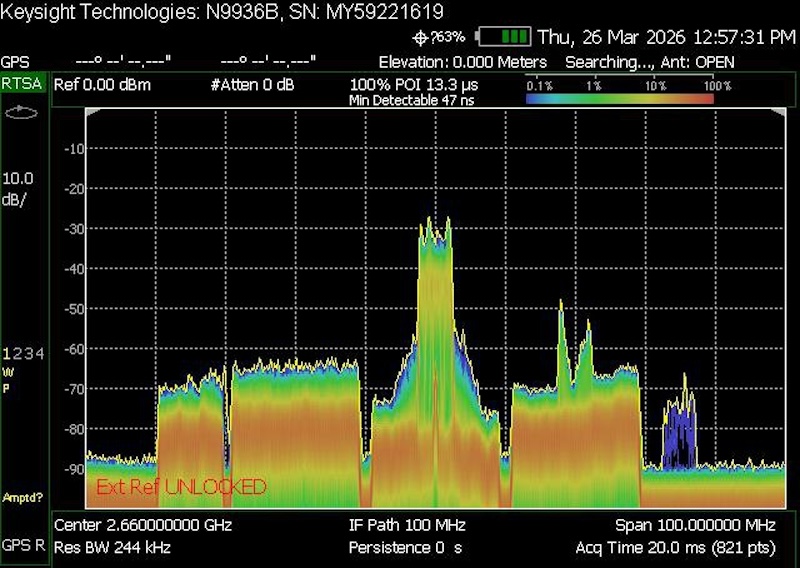
Technophiles and radio enthusiasts may want to take a close look at an image showing the radio spectrum analysis Anatel used to identify the device; it has been reproduced below.