
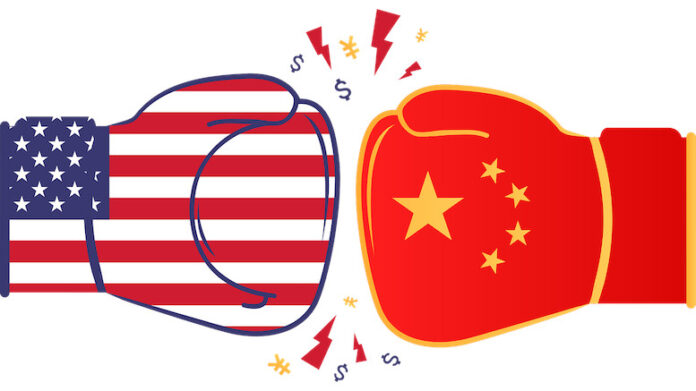
After 20 years leading major fraud investigations for AT&T and T-Mobile US, Tom Walker knows what it takes to track comms crime back to its origins, and then dismantle the syndicates responsible. Walker can speak more freely about the problems faced by the comms sector since establishing his own consulting business a few months ago, and he was especially provocative in a recent article entitled “The US Needs to Compete with China on Which Country is Better at Stopping Transnational Fraud”. Fraud professionals usually talk about the need for cooperation to tackle fraud, so why does Walker say the world’s two leading powers should be in competition with each other?
The contrast between the Chinese Government’s approach to protecting its citizens from transnational fraud and the United State’s approach could not be sharper.
Last week, Interpol announced coordinated human trafficking interdiction efforts in 27 countries that resulted in 281 arrests. This operation specifically targeted attempts to smuggle workers into organized cyber/telecom scam call centers.
Walker refers to the first INTERPOL operation of its kind, a response to a human rights crisis created by organized criminals kidnapping a growing number of ‘staff’ who are forced work in scam compounds. Reuters reports that Myanmar has transported 31,000 suspected telecoms fraudsters to China since both countries instigated a crackdown in September. Many other countries have extradited scammers to China; this has been the subject of numerous Commsrisk reports in recent years. But Walker argues that the current situation would be even worse if China had not been so proactive.
Over the past decade, China has poured significant effort and funds into Interpol operations. This is likely not only part of a strategy to protect its citizens from transnational fraud, but also a “soft power” effort to ideologically compete with western democracies.
The Chinese government has a long-term strategy oriented around the development of international alliances. Walker contrasts this with US authorities showing little interest in tackling comms fraud.
While China has been spending resources and political capital on building relationships with law enforcement all over the globe in order to protect its citizens from transnational fraud, the United States’ efforts appear to be centralized in a small, obscure unit within the Civil Division of the Department of Justice.
Walker concludes his article with a simple plea.
If the United States wants to compete with China for the hearts and minds of global society, it needs to take protecting its citizens from transnational fraud more seriously.
It is an intriguing argument. There are times when the call for increased cooperation sounds like an excuse for doing nothing. One of the easiest ways to solve a problem is to tell somebody else to solve it for you. If they decline the request, then they can be blamed for the lack of progress. US tactics fit this pattern. A few years ago the US Federal Communications Commission started to demonize foreigners and blame them for unwanted calls, despite a near-total failure to punish recidivist criminals based in the USA who are responsible for huge numbers of illegal calls. Other Americans have followed the lead of the FCC, currying favor by jumping on an increasingly xenophobic bandwagon.
The FCC has repeatedly threatened punishment of reputable foreign telcos that are not perceived as making sufficient effort to block bad traffic coming into the USA, but they offer no incentives to legitimate businesses, nor make any reciprocal promise to tackle those fraudsters based in the USA that target victims overseas. A lot of fuss has been made about the US Traceback program, but few foreign businesses will be thrilled by the prospect of pouring resources into helping US agencies to identify criminals when prosecutors so rarely attempt to take them out of circulation. Meanwhile, China does not hesitate to deal with scammers, wherever they are found.
You can read Tom Walker’s comparison of Chinese and US fraud priorities here.