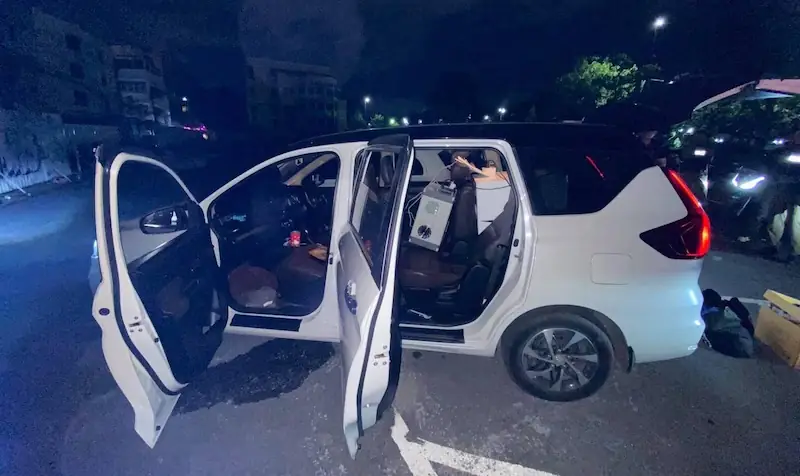
A Suzuki, not a Mazda. That is the only outward difference in the modus operandi of two Thais caught driving a smishing SMS blaster around Bangkok on August 15, when compared to two other Thais arrested for doing the same thing on August 8. However, this latest bust may provide a vital lead to the criminal overlords that orchestrate scams from afar. One of the men arrested on August 15 told police that payment for the rental car he was using to transport the SMS blaster around Bangkok had been made by the Chinese man who recruited and trained him to commit crime.
Regular readers of Commsrisk are now tediously familiar with the methods used by SMS blaster fraudsters. They drive fake base stations around densely populated cities to transmit large numbers of SMS messages containing links to phishing websites that impersonate reputable organizations. Nevertheless, it is worth listing all the similarities between the busts in ‘Operation Pinklao’, which resulted in the arrests on August 8, and ‘Operation Khao San’, which arrested two men on August 15.
- Locating the fake base stations required close cooperation between the police and AIS, a leading mobile operator.
- Police followed the cars identified as carrying the fake base stations until the drivers stopped of their own accord, giving the police an opportunity to safely search them.
- A fake base station was found in each car. Each device was configured to repetitively send smishing SMS messages with lured recipients into clicking a link, for example by claiming the recipient had earned loyalty points which were due to expire. The links pointed to websites which asked victims to enter their banking details.
- Each car had a two-man team with a driver and co-pilot. These men were arrested at the scene and then interrogated about who hired them to commit these crimes. All of the men were Thai nationals in their 20’s.
- Each team reported they had been hired by a man of Chinese ethnicity.
Police say they intend to track down the man who rented the Suzuki. However, it has not been clarified if the same Chinese man was responsible for recruiting both teams of drivers.
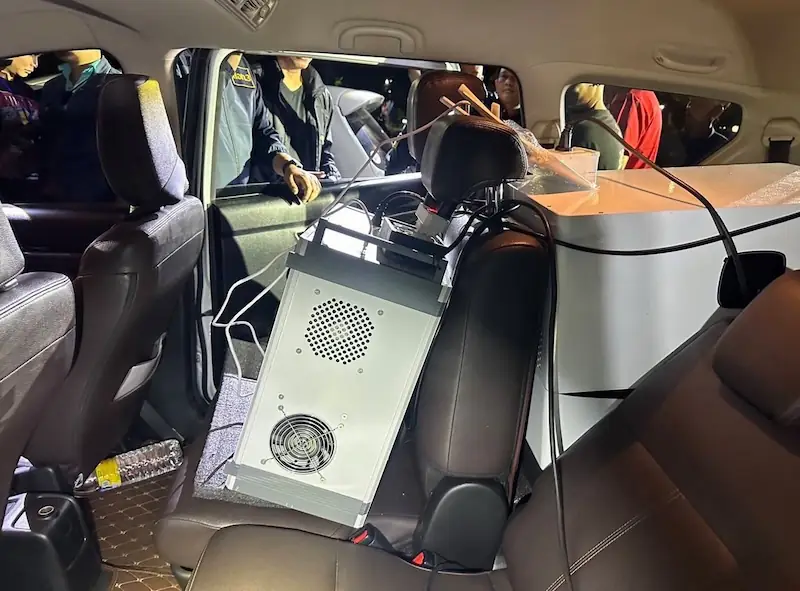
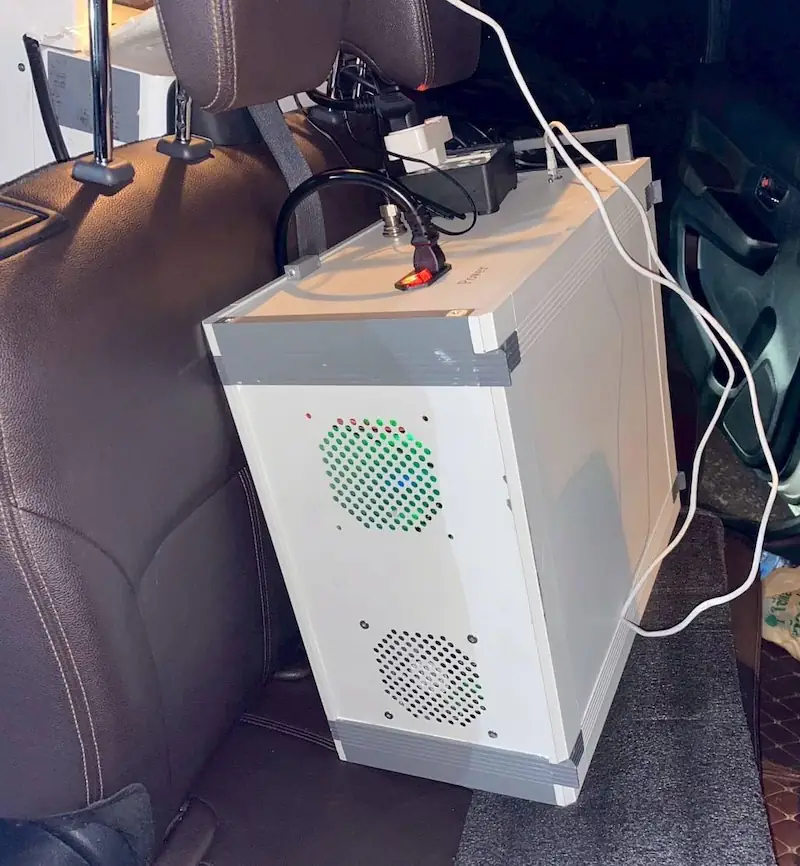
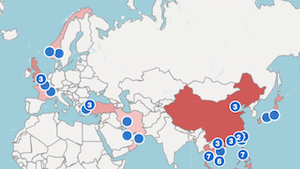
Photographs reveal differences in the equipment carried by the two cars; police images from the August 15 arrest are reproduced at the bottom of this article. The equipment seized on this occasion looks dissimilar to that shown in photographs from earlier SMS blaster busts. Radio antennas were placed on the roof of the Suzuki and disguised as shark fins to disguise their real purpose. Also, the radio technology was housed in a large white shell unlike any seen in previous busts where police have shared images of equipment. Photographs from previous cases revealed the same distinctive orange power inverter was used alongside SMS blasters found in Hong Kong, Japan, Malaysia, the Philippines, Qatar, Thailand, Türkiye and the UK.
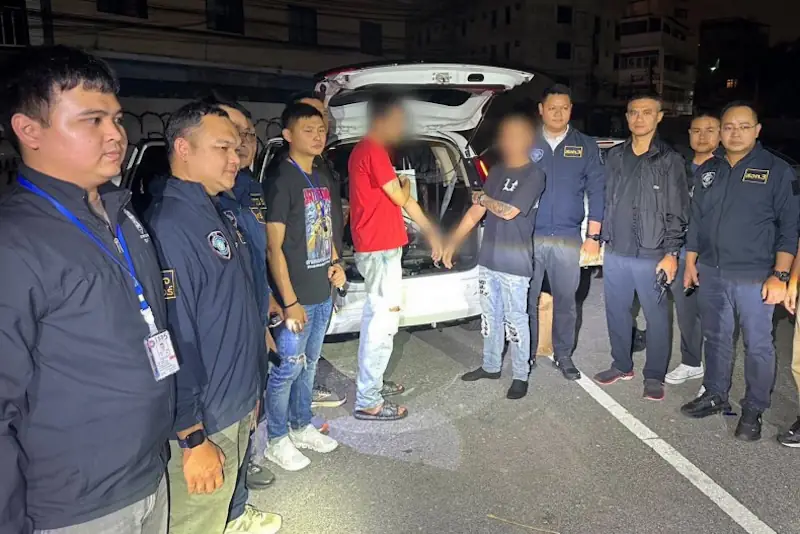
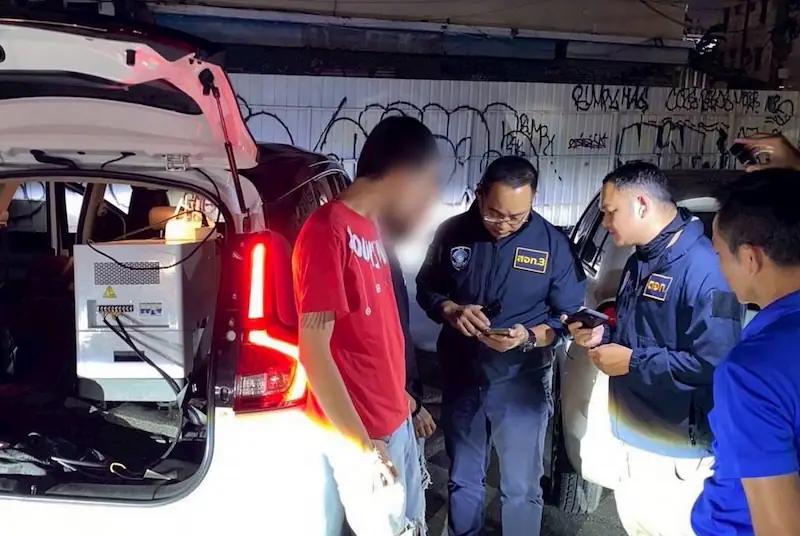
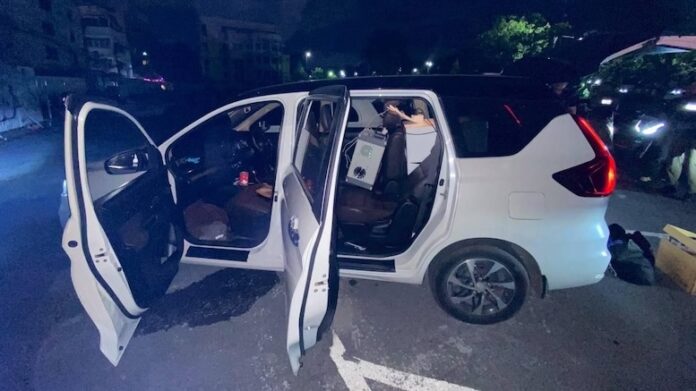
Operation Khao San was instigated after interrogation of the men arrested by Operation Pinklao suggested that more SMS blasters may have been circling the same parts of Bangkok. Radio signals pinpointed a white Suzuki driving through Soi Sukhumvit 3 at 11pm on August 14. Smishing SMS messages were received by the phones of the police officers following the suspect vehicle. Police searched the vehicle after it stopped at the parking lot of the old government lottery office on Ratchadamnoen Road. It is estimated the equipment could have been used to send between 5,000 and 10,000 SMS messages per day.
One of the arrested men claimed he was initially approached in February 2025 by a Cambodian man who worked in a bar on Khao San Road. The Cambodian introduced him to the Chinese boss who hired him as a driver, initially to drive himself and his girlfriend. The boss arranged for scam equipment to be delivered to the arrested man in March, and also sent instructions for how to install and use the equipment. The driver first installed the equipment in the car of his former girlfriend but later relied upon vehicles rented by the Chinese boss. Initially he was paid THB3,300 (USD100) a day, which also covered the cost of providing his own vehicle. This was changed to THB1,350 (USD42) per day when he began driving cars rented by the boss. A day’s work consisted of a morning shift from 9am to noon and an evening shift from 6pm to 1am, with the car expected to be driven through some of Bangkok’s busiest districts.
Covering so many separate stories about SMS blaster arrests has begun to affect our ability to cover other news from around the world. If new SMS blasters continue to be discovered at the current rate then we might have to switch to a weekly news round-up. All reports are separately logged on the map of SMS messages sent by fake base stations within our Global Fraud Dashboard.
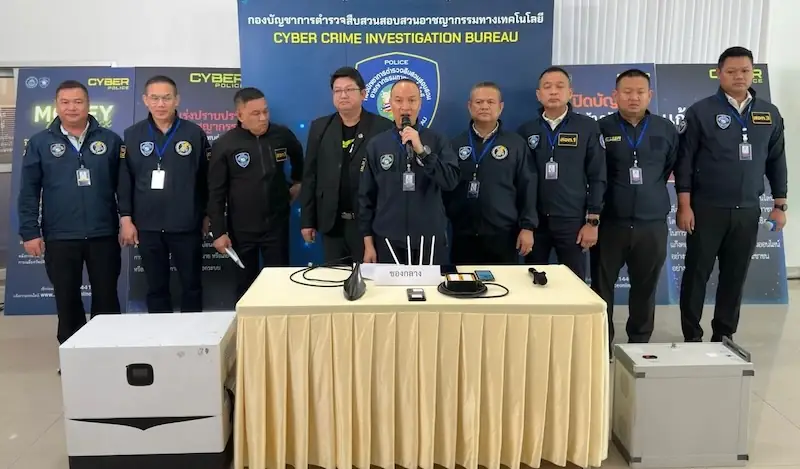
Police photographs of the arrest at the old lottery office and the equipment that was seized have been reproduced below.