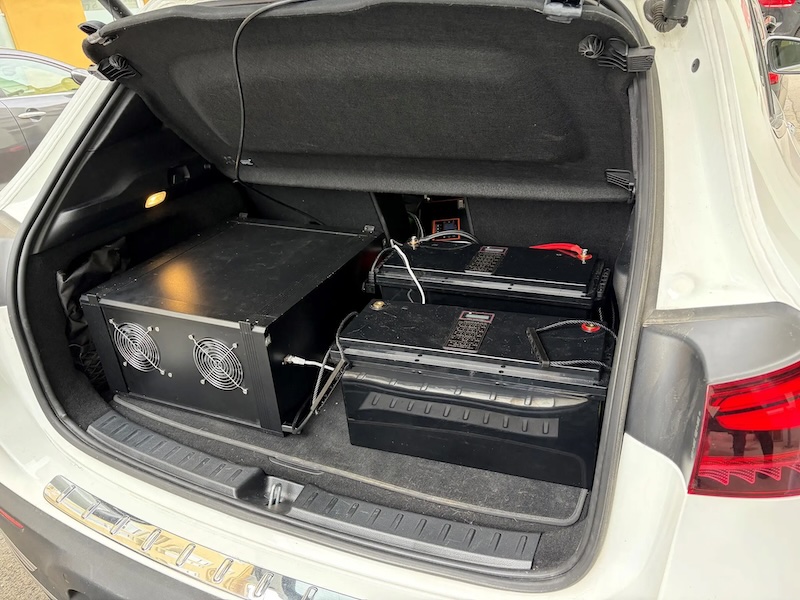
A Chinese man was arrested in Austria after he drove a car carrying an SMS blaster near to the venue for the Eurovision Song Contest. The arrest happened on May 14, during the build-up to the second semi‑final of the competition, which hosted musical acts from 35 countries in the 16,000-seat Wiener Stadthalle. The arrest was made by Einsatzkommando Cobra, a specialized Austrian police unit trained to conduct counterterrorism and hostage rescues, and which was providing security support at the Eurovision event. This is the first reported arrest of an SMS blaster scammer in Austria.
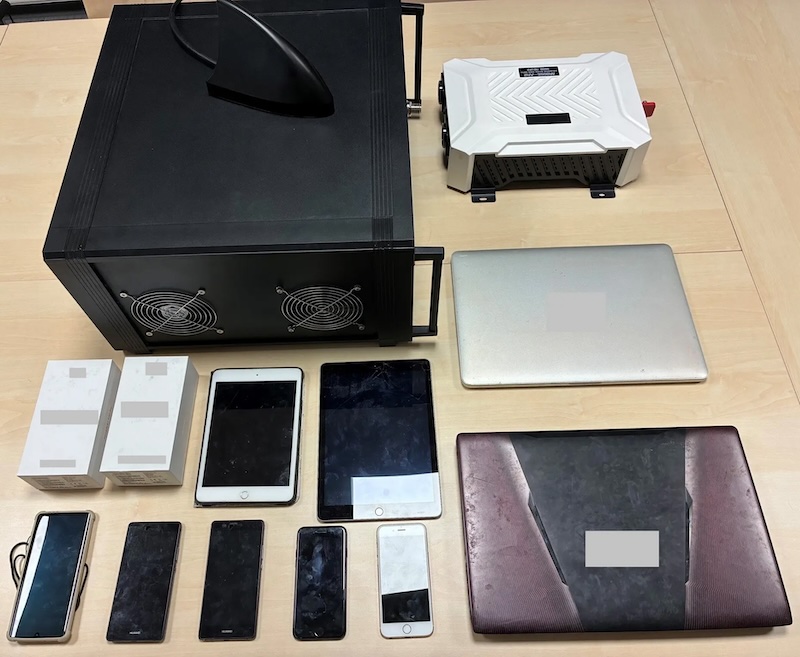
The man is in custody and has confessed to attempted fraud. An Austrian mobile network operator is said to have first identified the telltale radio disruption of an SMS blaster on April 6. The suspect’s house was searched following the arrest, resulting in the discovery of a second SMS blaster. Few details were provided about the smishing texts circulated with these devices, although the police estimated it was ‘likely’ that several million messages which impersonated delivery firms and mobile operators had been sent before the culprit was captured. The pattern of radio disruption suggests he circulated parts of Vienna where people were congregating for concerts or football matches for several hours at a time.
In addition to being charged with attempted fraud, the suspect has been charged with endangering the safety of his 6 year old son, who was also in the car when the arrest occurred. This is a foolish attempt by the Austrian authorities to beef up the charges. Mainstream Austrian news media repeated the police’s claims about radiation risks without bothering to check the facts. The notion that the radiation emitted by a rogue base station could be a health hazard is not based on any scientifically credible evidence. Invoking it in this case will encourage conspiracy cranks who wrongly believe that the much higher levels of energy emitted by genuine base stations are a threat to the public. The amount of energy emitted by any kind of base station is negligible compared to the amount we each receive from the Sun. It is hence unsurprising that numerous research studies have failed to establish that exposure to base stations has any effect on a person’s health.
The presence of the suspect’s son does indicate something else: drivers of SMS blasters are low-level street criminals who are naive about how they will be caught. They are unaware of the extent to which a motivated mobile operator can conduct network analysis to narrow the geographical area in which an SMS blaster is currently being used, especially in the densely-populated urban districts where criminals will find the largest number of targets. Criminals continue to get away with this crime for two reasons: some mobile operators are not trying to identify the disruption caused by SMS blasters, and some police forces are not yet willing to respond to the intelligence that can be supplied to them by mobile operators. In addition to catching the individuals who carry SMS blasters, European and Southeast Asian countries that devote increasing resources to tackling this crime should exert diplomatic pressure on China to help with identifying the kingpins who orchestrate these scams and to close down the businesses that manufacture and export SMS blasters.
The annual Eurovision contest began 70 years ago and continues to boast one of the largest global television audiences for any live event. The contest is shown live in the 35 countries that participate and there are approximately 20 other countries that show an official live feed that is broadcast over-the-air or via internet streaming. 166 million viewers tuned in last year and a similar figure is anticipated for this year’s contest, after all the national broadcasters have shared their audience tallies. The name ‘Eurovision’ stems from the event being a showcase for the simultaneous exchange of live television signals across multiple European countries, which was a groundbreaking development in 1956. The first event was intended to heal wounds caused by World War 2 and encourage further cross-border cooperation. It is ironic that Eurovision is now highlighting the slow response of some European authorities to the spread of disinformation by sinister radio devices despite the rising number of rogue base stations that have been seized in neighboring countries.
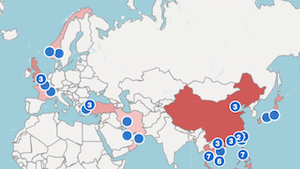
Vienna’s provincial police force shared photographs of the equipment that was seized; these have been reproduced below. The police press release is available here. This case has been added to the SMS blaster map on the Global Fraud Dashboard. We use daily AI-powered multilingual search to maintain the most comprehensive and most up-to-date inventory of all confirmed cases involving SMS messages sent by fake base stations.