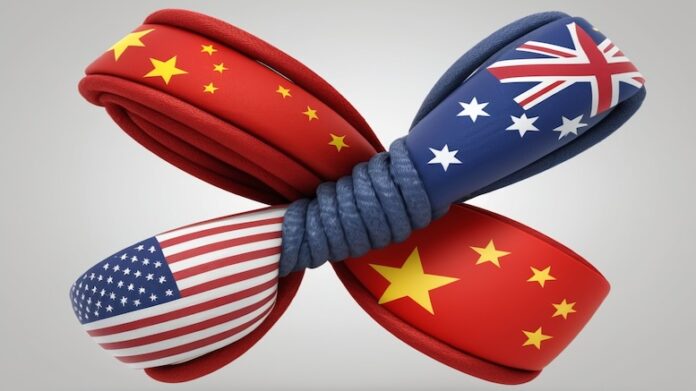
Only a fool would pretend that universal solutions to communications scams can be delivered without the engagement of both China and the USA. However, the world’s two leading economic powers have divergent policies on how to protect phone users. Australia is a Pacific country that has to balance its relationships with both the East and West. China is Australia’s leading trade partner, whilst the USA is the second-largest exporter to Australia in addition to being a military ally. However, when it comes to scam prevention, Australia is most closely emulating the strategy adopted by Singapore, which also exercises influence on China, especially through its ties to Hong Kong. Triangulating recent developments in China, the USA and Australia can provide clues about trends that may emerge globally.
Australia’s Proactive Regulatory Reforms
This week the Parliament of Australia adopted the first ever Scams Prevention Framework (SPF), setting a precedent for other countries to follow. As previously explained on Commsrisk, the framework harmonizes and coordinates anti-scam activities and expectations across different sectors, including the communications sector.
The Australian Communications and Media Authority (ACMA) will have stronger enforcement capabilities whilst being supervised by the Australian Competition and Consumer Commission (ACCC) in a role which requires the ACCC to maintain consistent treatment of businesses in different sectors by monitoring the way sector-specific regulators exercise their anti-scam powers. The Communications Alliance, an Australian industry association, voiced its support for the framework and its enhanced consumer protection measures. Luke Coleman, CEO of Communications Alliance, an association of Australian comms providers, emphasized the importance of backing the SPF with penalties for non-compliant businesses.
Communications Alliance has consistently called for stronger enforcement powers for the ACMA.
The Australian government’s amendments to the Telecommunications Act 1997 will empower the ACMA to take immediate enforcement action against telecom companies that violate consumer-related industry codes. Previously, the ACMA was required to issue a compliance directive before taking any enforcement action. This legislative change marks a significant shift towards more direct and robust regulatory oversight.
The Telecommunications Consumer Protection (TCP) Code is currently undergoing a major revision, with public comments open until February 28, 2025. If approved by the ACMA, the revised TCP Code, coupled with the new enforcement powers, will provide a stronger framework for safeguarding consumers.
China Works with Asian Neighbors to Capture Scam Overlords
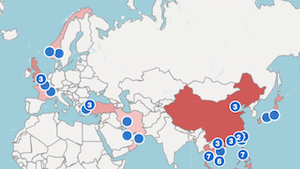
China is taking a collaborative approach to tackling communications scams, as evidenced by a recent consensus reached with Myanmar and Thailand. Officials from these countries met in Kunming, China, to agree how they would eradicate scam compounds in Myanmar. According to China’s national broadcaster, the meeting also included representatives from Laos, Cambodia, and Vietnam, who collectively agreed to target the leaders of criminal syndicates.
It is not unusual for the Chinese authorities to express their determination to tackle phone and online scams. Telecoms fraudsters have faced potential life imprisonment since tough laws were introduced in 2016. However, further impetus has been added to Chinese efforts by a recent series of high-profile scam incidents, including the temporary abduction of a Chinese actor who was invited to audition for a part in Thailand but was then taken to Myanmar and required to give lessons to scammers in a scam compound.
Since 2023, Myanmar has deported 53,388 Chinese nationals involved in online fraud. However, these individuals were deported without facing legal action, a decision attributed to “friendly relations and humanitarian grounds” per the Myanmar embassy in Beijing.
New Gaps Emerge in the USA’s Defenses against Cyber Threats
The abrupt dismissal of the USA’s Cyber Safety Review Board (CSRB) by President Trump has raised concerns about the country’s ability to address cyber threats effectively. CSRB’s mission was to examine significant cybersecurity incidents and provide recommendations on how to enhance national cyber resilience. Their dismissal came despite their being tasked with investigating the activities of the Chinese hacking group Salt Typhoon, which reportedly infiltrated all of the USA’s largest comms providers.
The USA’s lack of a consistent and proactive regulatory framework, and the go-it-alone attitude of many American government agencies represents a stark contrast to the strategies executed by Australia and China in recent years. While the US has mechanisms to address cyber threats, political interference is undermining their effectiveness. This is coupled with a failure to learn from the successes of other countries. The result is a hotchpotch of politicized media spin that presents the USA as if it is leading global efforts to reduce scams that hurt American phone users, but which disguises how poorly this work is being coordinated at both a national and international level.