Senator Hassan Urges Elon Musk to Block Starlink Access for Transnational Scammers
While most people have probably noticed the increasing number of scam texts, calls, and emails they’re receiving, they may not know that transnational criminals halfway across the world may be perpetrating these scams by using Starlink internet access.
SpaceX has a responsibility to acknowledge any role that Starlink has played in facilitating scams emanating from Southeast Asia, and to block these criminals from using the service to target Americans.
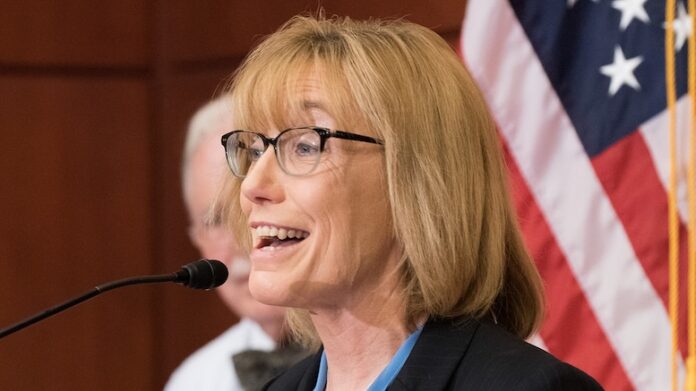
Elon Musk’s name is effective at increasing the amount of traffic generated by any website, the number of viewers for any news program, and the amount of attention received by any politician. That is why I am somewhat cynical about US Senator Maggie Hassan (pictured) choosing to issue a press release about Musk and write a letter to Musk at the same time as she launched her own online survey about scams. The letter asks valid questions about the use of satellite communications to provide connectivity to scam compounds but the timing suggests it is also a publicity stunt.
Putting my doubts aside, Musk’s satellite business needs to tackle scams on behalf of the public, just like any responsible communications firm. He is the CEO of SpaceX, making him ultimately responsible for the anti-fraud controls implemented by Starlink, its satellite communications brand. The questions put by Hasan to Musk can be summarized as follows.
- Is SpaceX aware of reports that Starlink is being used to provide connectivity to scam compounds in Southeast Asia?
- What are the company’s policies for limiting Starlink access?
- Has the company taken action in response to evidence of misuse in Southeast Asia?
- How many reports or complaints has the company received about fraud involving Starlink, and what was done in response?
- Has the company identified any security vulnerabilities exploited by bad actors, and what was done about them?
- What is SpaceX doing to cooperate with law enforcement agencies about the use of Starlink by scam compounds in Southeast Asia?
- How much revenue has SpaceX made by selling services to scam compounds in Southeast Asia?
I have been very succinct when producing this summary. Brevity required me to strip away some fluff that would otherwise make these questions appear more neutral, although the direction of travel is made obvious by the final question in the list. Hassan is angling for a headline of the type that reads: “Musk made $Xmn by selling services to criminals”. This is good political optics for Hassan, who has been winning elections as a Democrat for over 20 years. She has issued several press releases that lambasted Musk about various topics since the billionaire began associating himself with the political right. However, cheap political point-scoring is also a terrible approach if you actually want to foster cooperation between the public and private sector. A rational strategy for reducing the extent of scam activity can only come through a genuine collaboration across the whole of society. The deep divisions between Americans hamper the realization of such a strategy, no matter how much politicians apply a superficially bipartisan gloss when describing how they intend to reduce scams.
Every communications business makes money by selling services to criminals. Picking on one particular business because of the political affiliations of its CEO is a mistake. Or rather, if there is a serious intention to examine how much the private sector profits by turning a blind eye to crime then it needs to be done fairly and objectively across the entire comms industry and allied businesses. Only then will we identify the quickest and best ways to reduce the fraud losses of consumers. With a little rephrasing, the questions in Hassan’s letter to Musk should just as deservedly be asked of every CEO of every network operator, every CPaaS provider, every SMS aggregator, every business that provides OTT communications.
Other outlets will report this story differently. They, like Hassan, will claim to be ‘raising awareness’ of the role of Southeast Asian scam compounds in transnational fraud enabled by comms networks. Readers of Commsrisk do not need their awareness raised; you have been aware of these scam compounds a lot longer than the various politicians and journalists that only recently jumped on this bandwagon. I could reference old Commsrisk articles to validate this claim. One reason not to do so is to spare some collective blushes. I recall the amount of traffic generated by some of Commsrisk’s older articles about Southeast Asian scam compounds. Linking Elon Musk’s name to a story about this topic is guaranteed to hook many eyeballs now, but there was a time when fewer cared about the scale of human suffering created by these factories of crime.
Any anti-fraud professional working in the comms sector knows how little interest was shown in scam reduction before it recently became fashionable to profess concern for the public alongside concern for the company’s bottom line. Those fashions changed around the same time that some businesses began discovering ways to monetize the sale of anti-scam controls. Many of you know this to be true. For those that do not, must I go back and review how little was said about consumer scams in the agendas taken from older meetings of the GSMA Fraud and Security Group, or the Communications Fraud Control Association (CFCA), or various other bodies that now appear to be passionate about protecting consumers?
I used to routinely complain that the oft-quoted CFCA global fraud survey did not even bother to distinguish between the losses borne by comms providers and the losses borne by their customers, mostly because the people running the CFCA had no interest in the latter. That never seemed to discourage numerous self-professed experts from repeating figures from the survey anyway, seemingly in complete ignorance of what those numbers actually meant. The CFCA survey is now being quietly retooled to disguise the incongruity of telcos complaining about losing tens of billions of dollars to preventable frauds while rival surveys claim the fraud losses suffered by the public exceed a trillion dollars per year. Musk is a legitimate target if Starlink is failing to implement controls that would reduce crime. However, if he is to receive blame for the scale of organized criminal scams then many others also deserve a share of the blame. A lot of people have prioritized corporate profits ahead of their wider responsibility to the rest of society.
Commsrisk has been covering the rise of Southeast Asian scam compounds for years, but that was only possible because so many who live outside of a US-centered professional bubble have been striving to tackle the phenomenon. China has been vigorously cracking down on Southeast Asian scam compounds for years. Thai politicians have been complaining about scam compounds in neighboring countries for years. There are also some Westerners who raised the alarm. Various American activist groups have begged the US government to impose tougher sanctions on corrupt Cambodian officials who are known to be shielding scam compounds and the human traffickers associated with them. The pleas of those Americans have fallen on deaf ears, whichever party has been in power.
One downside to publishing Commsrisk for so long is that I have needed to read a lot of crap that other people published. So it is from a position of expertise that I judge the analysis of scam activity that was published by Senator Hassan alongside her letter to Musk to be one of the biggest piles of crap I have encountered. Instead of providing a thoughtful analysis or a workable action plan, Hassan and her associates have assembled a stream of sensational soundbites and statistics without applying the slightest effort to validate their accuracy with other sources. I will justify this assertion with a couple of examples.
Hassan’s letter to Musk refers to a UN report that says geofencing could be used to reduce criminal activity by Southeast Asian scam compounds, and then says “it is unclear whether the company has done so in Southeast Asia”. Page 101 of the UN report cited by Hassan states:
Despite Starlink use being strictly monitored and, in some cases, restricted through geofencing, organized crime groups appear to have found ways around existing security protocols in order to access the remote high-speed internet connectivity made possible by this portable technology.
Hassan is the ranking Democrat on the US Congress Joint Economic Committee, making her directly responsible for this paper about scams. The purpose of the paper is to feed a narrative that will be repeated by news broadcasters and other journalists, including a claim that 45% of Americans who received a deepfake scam call during 2023 had been ‘duped’ as a consequence. But this claim does not come from a reputable source. It is repeated from a British popular computing magazine, which was itself repeating the marketing output of Hiya, a business that routinely conducts biased surveys to boost sales of its call blocking technology. That bias cuts both ways, so Hassan is guilty is willfully exploiting the bias that complemented her own. This is what the same UK magazine also had to say about the scale of fraud in the USA:
“What makes the US unique is its low fraud rate: just 1%,” according to Hiya, thanks in large part to spam-blocking features provided by wireless carriers.
Hassan has fallen into the trap that has become the greatest obstacle to a rational anti-scam strategy. Too many people choose to be dishonest about the extent of scams and the most effective ways to stop them. Some are made dishonest by their desire to exaggerate scams. Others are made dishonest by their desire to exaggerate how much they can reduce scams. That is why businesses like Hiya end up in the ridiculous situation of espousing the utopian perfection of the tech they sell while simultaneously insisting the whole of society is poised on the brink of a scam abyss. Hassan and her associates have discovered it is easy to find ‘facts’ that tell any story you want to tell about scams, if you have no desire to check those facts. The overall result is a wild see-saw ride in the public’s imagination, where media attention is sought through claims that the sky is falling, then through claims that miracle solutions have saved us all, then by claiming the sky is falling again, then by praising the next miracle cure.
Reality is usually somewhere between the wild exaggerations that garner most attention. That is why Hassan is now amplifying the claim that “digital scam losses have increased 370 percent in the U.S. over the past five years” even though the Biden administration delivered four years of Democrat apparatchiks asserting how effective anti-scam mitigations had been. Hassan hypes the dangers posed by every method used by scammers, seemingly without any regard to the previously hyped successes of national anti-fraud initiatives. Americans are told that call spoofing has been greatly reduced by STIR/SHAKEN; Hassan cites call spoofing as a big current problem. Americans are told that scam text messages are being effectively filtered thanks to The Campaign Registry; Hassan cites scam text messages as a big current problem. Are there some parts of the current US anti-scam strategy that are working or is it all a complete failure? Hassan’s analysis has nothing to say about past efforts to reduce scams, including those led by fellow Democrats, leaving it impossible to tell what she considers a success and what she would like to change.
It is absurd that Hassan has started an amateurish Google survey so the public can tell her about scams. She obviously takes it seriously because her survey was mentioned three times within four minutes after she used her letter to Musk to obtain a live interview with MSNBC’s morning show. The Federal Trade Commission has a budget of over USD400mn per annum. They should be trusted to impartially collect information about the extent of consumer scams. The last thing Americans need is more political cherrypicking of slanted statistics from sloppy surveys. The public is already awash with bad estimates of the amount being lost to fraud. There are also some anti-fraud professionals that appear to be incapable of distinguishing between robust data and dishonest marketing. Our problem is not that we lack estimates but that the estimates so rarely agree with each other. Confused metrics leave us unable to reach agreement on how to rationally prioritize anti-scam activity.
Scams are going to keep getting worse for Americans unless Americans find better ways to work together. Elon Musk and his satellite comms business needs to contribute to that joint effort. So do others. The best way forward would involve turning down the political heat, and devoting more resources to the impartial and objective measurement of crime and of the effectiveness of methods to mitigate crime. Sadly, politicians like Maggie Hassan show why a rational and cohesive anti-scam strategy is likely to remain elusive.