It makes me unpopular to point it out, but some of the people who claim their role is to raise awareness of crime are as prone to breaking rules as the scammers they warn about. I have had the displeasure of dealing with:
- anti-spam conference organizers who violate GDPR by supplying the personal data of attendees to marketeers without consent;
- writers who use fake online identities to promote articles about scammers who use fake online identities; and
- numerous people who stole my intellectual property, including the Telecommunications UK Fraud Forum (TUFF).
The stock response when they are caught is to complain that their reputations will be damaged if others find out. They should have thought of that before! However, behaviors like this should not be surprising when you consider the motives and egos of the people involved. Many of these alleged nonprofits use the same methods as con artists who seek to make a tiny venture appear much bigger and more successful than it really is. How else should we explain the propensity for ‘global’ associations to suddenly appear out of nowhere, with no prior history of accomplishing anything at the level of a city, or a country, or a continent?
I recently pointed out to one such ‘global’ CEO that he likes publicity but not the scrutiny that should come with it. My words will not stop him. He will undoubtedly get away with his misdemeanors like all the others have. Audiences that should be comprised of the most skeptical and suspicious professionals tend not to apply critical thinking when hearing speeches that praise the good people in the room for fighting bad people outside the room. Even the best professionals may forget that as the number of people inside the room increases, so the chances of everybody in the room being good rapidly declines to zero. That is why global do-gooder associations tend not to grow that big or tend not to do much good, irrespective of how much support they get from hazy idealists, dodgy politicians and unscrupulous marketeers.
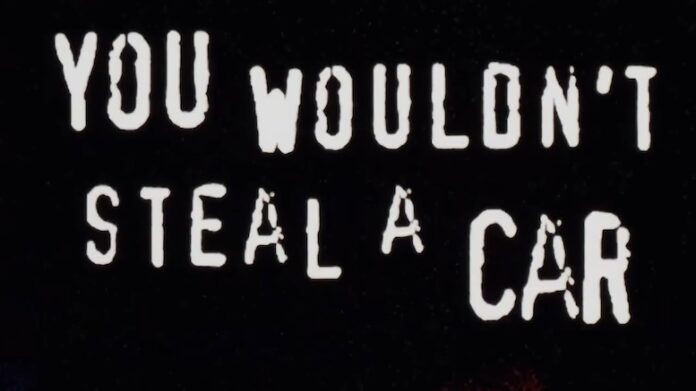
But occasionally — and it is worth emphasizing how rare this is — somebody independent will check the facts that nobody else bothered to check. It has been 21 years since cinema-goers and DVD-buyers worldwide were first confronted with the following.
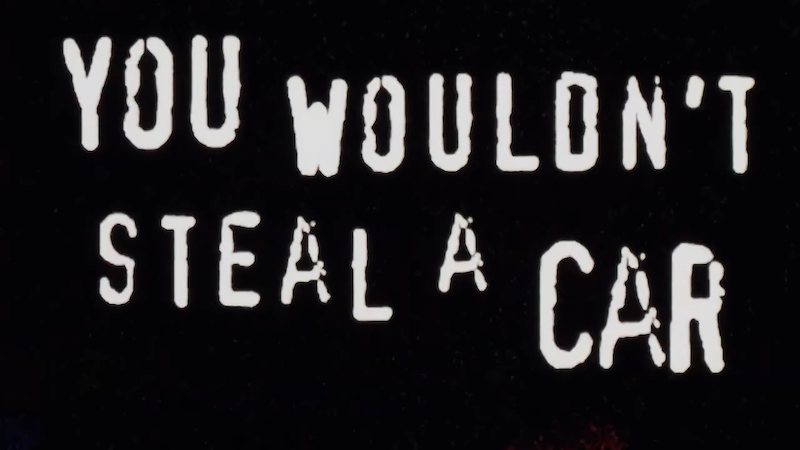
Just thinking about this anti-piracy campaign makes me shudder. Ominous music accompanied images of crimes so heinous that even a serial killer might consider himself to be morally superior to somebody who torrented a TV show. This anti-piracy advert was so over-the-top (in the innocent days before that phrase was associated with WhatsApp) that it probably encouraged people to engage in piracy, and it certainly encouraged many spoofs (also before that word began to mean something else). So credit goes to a Bluesky user called Rib, who checked which font had been used for this campaign, and found it was pirated.
Whether the "You wouldn't steal a car" anti-piracy campaign stole the music is up for debate, but I found today that the font they used throughout was a pirated clone (XBAND Rough) of a real font (FF Confidential).
— Rib (@rib.gay) April 23, 2025 at 5:15 PM
Sky News replicated Rib’s technique and arrived at the same conclusion. The marketeers who devised this campaign had used a font called Xband-Rough which ripped off the intellectual property of Just van Rossum, the designer of a font called FF Confidential. Perhaps the anti-piracy marketeers will claim they were unaware of any illegality surrounding Xband-Rough, whilst conveniently forgetting the legal maxim that ignorance is no defense. If the over-the-top logic of their anti-piracy campaign was applied to their own actions then they should at least be considered guilty of handling stolen goods.
I could have ended this article with another dry sermon about widespread hypocrisy or by sharing an actual video of this infamously awful anti-piracy campaign. I might even have recounted the true story of a telco CEO who encouraged all his staff to use Limewire. But all of those options would be boring. Sometimes I forget that mockery can be an even more powerful tool than morals and facts. And so, here is a reminder of the infamous ‘wouldn’t steal a car’ anti-piracy campaign, by way of the glorious spoof version created for The IT Crowd. Enjoy!