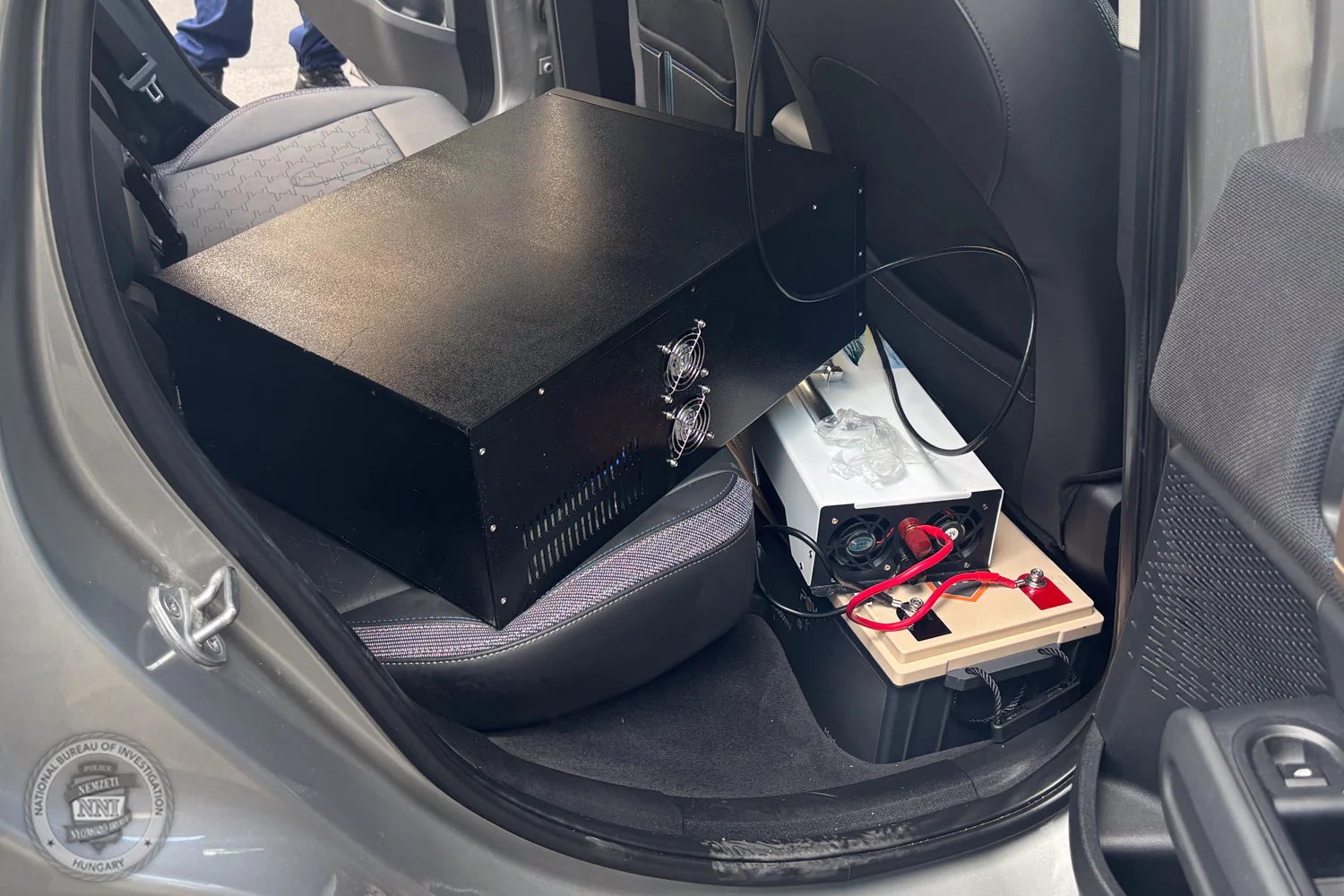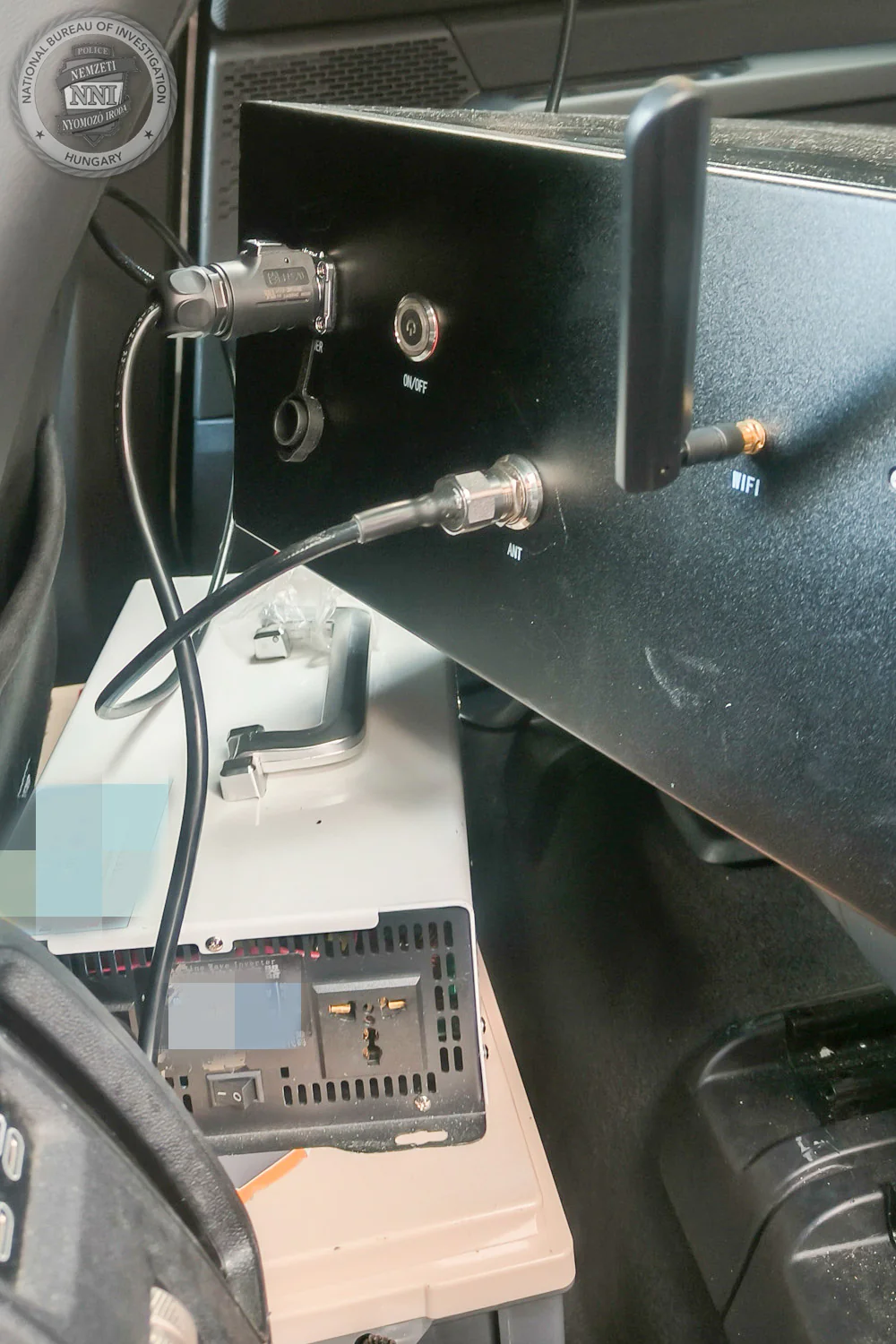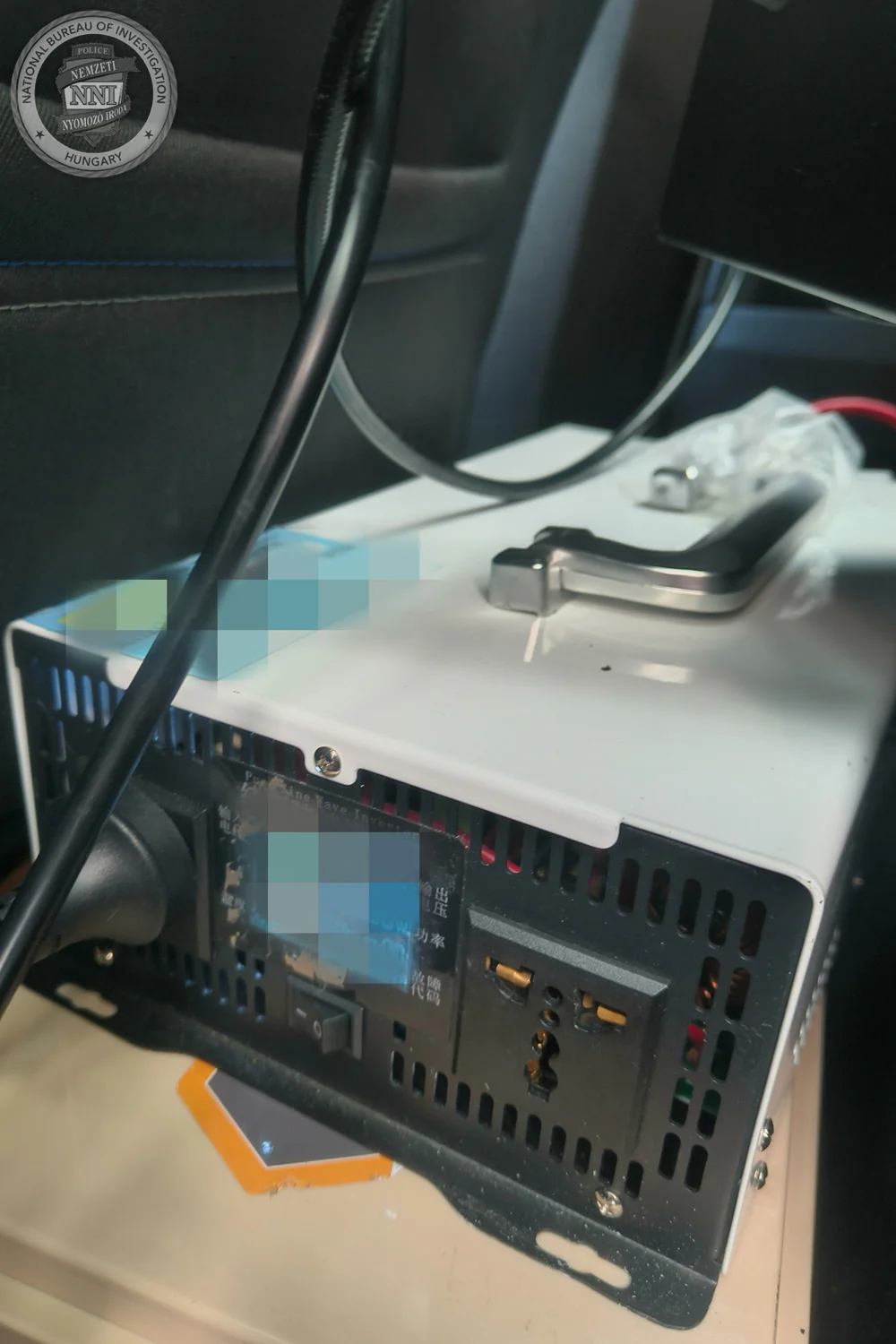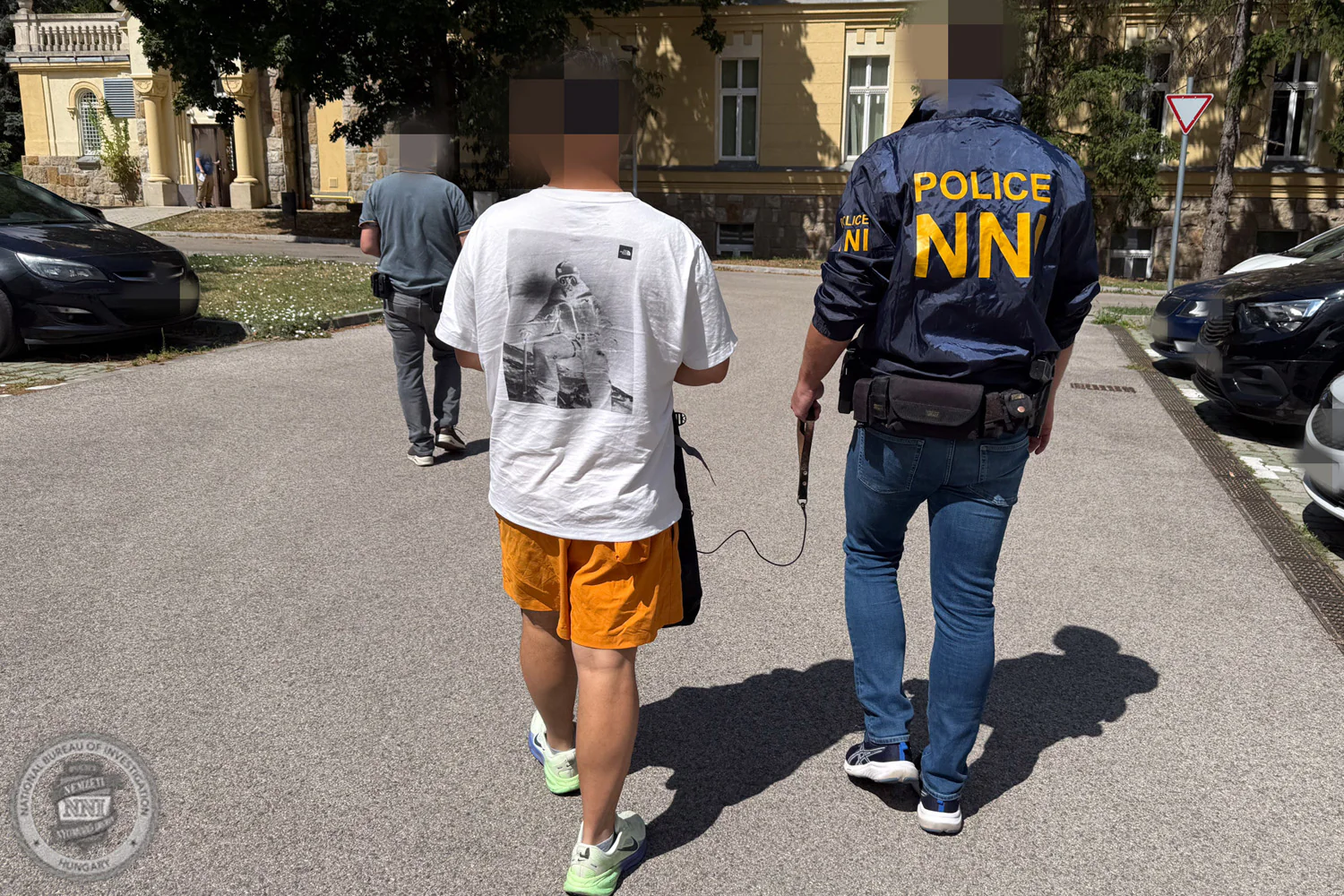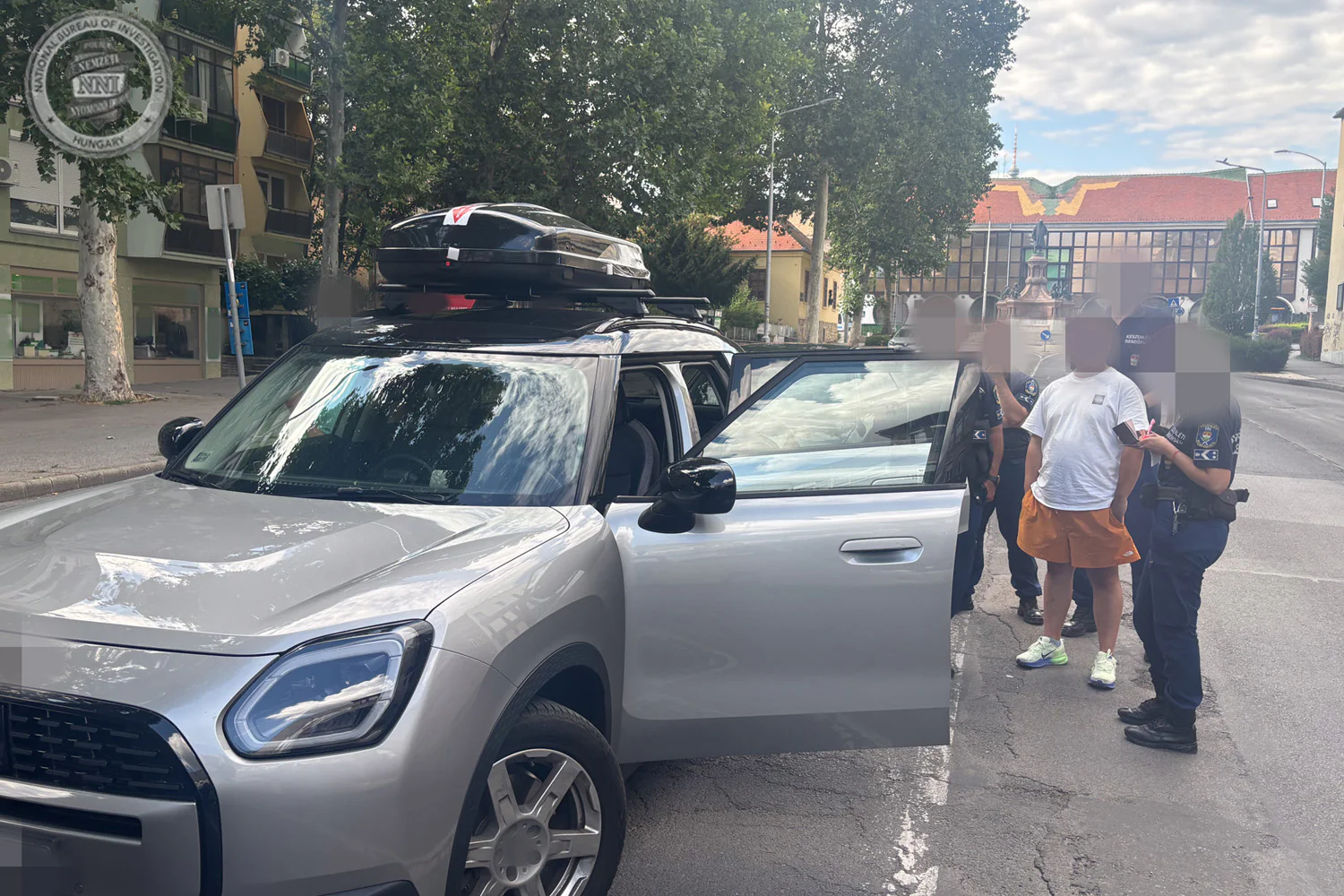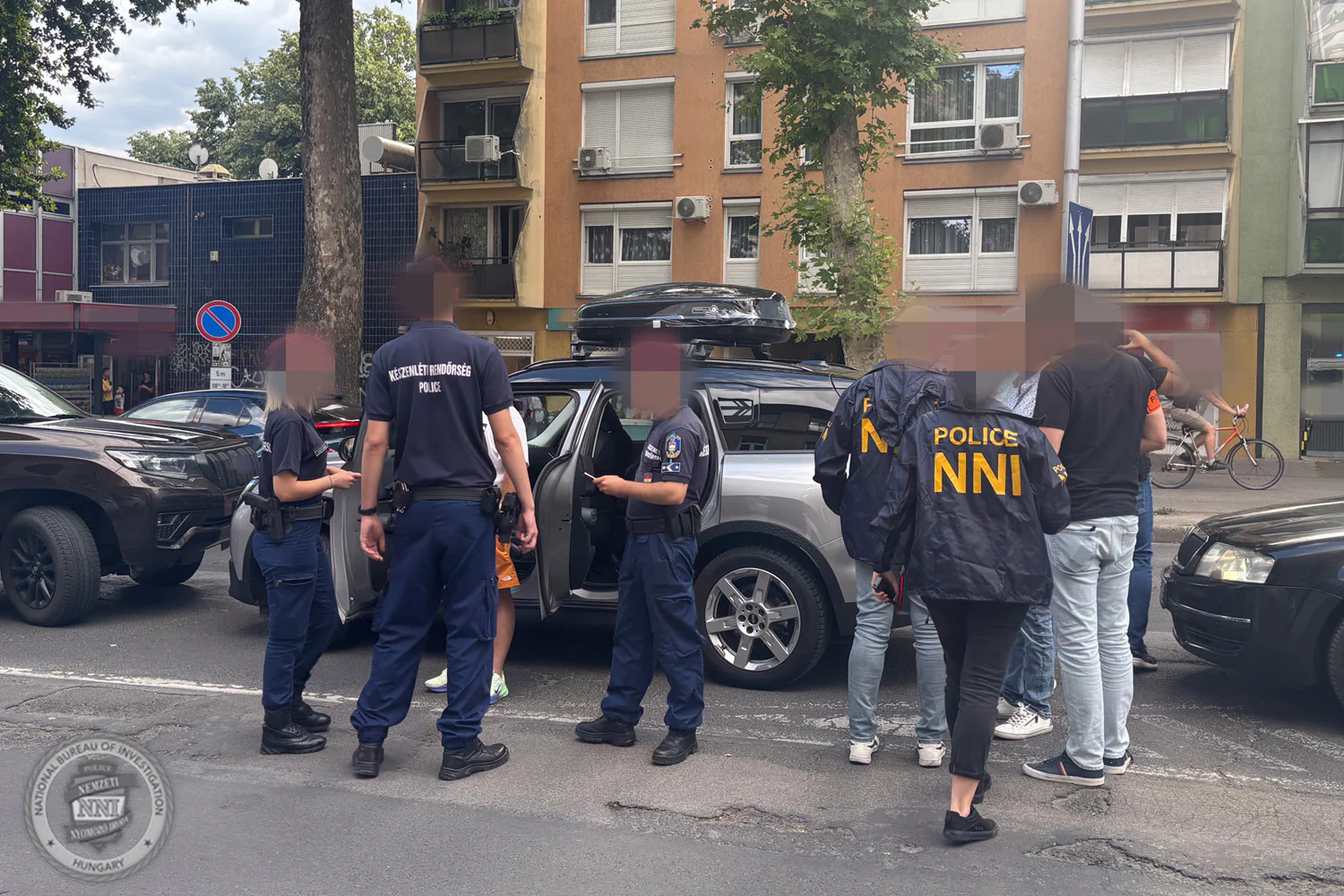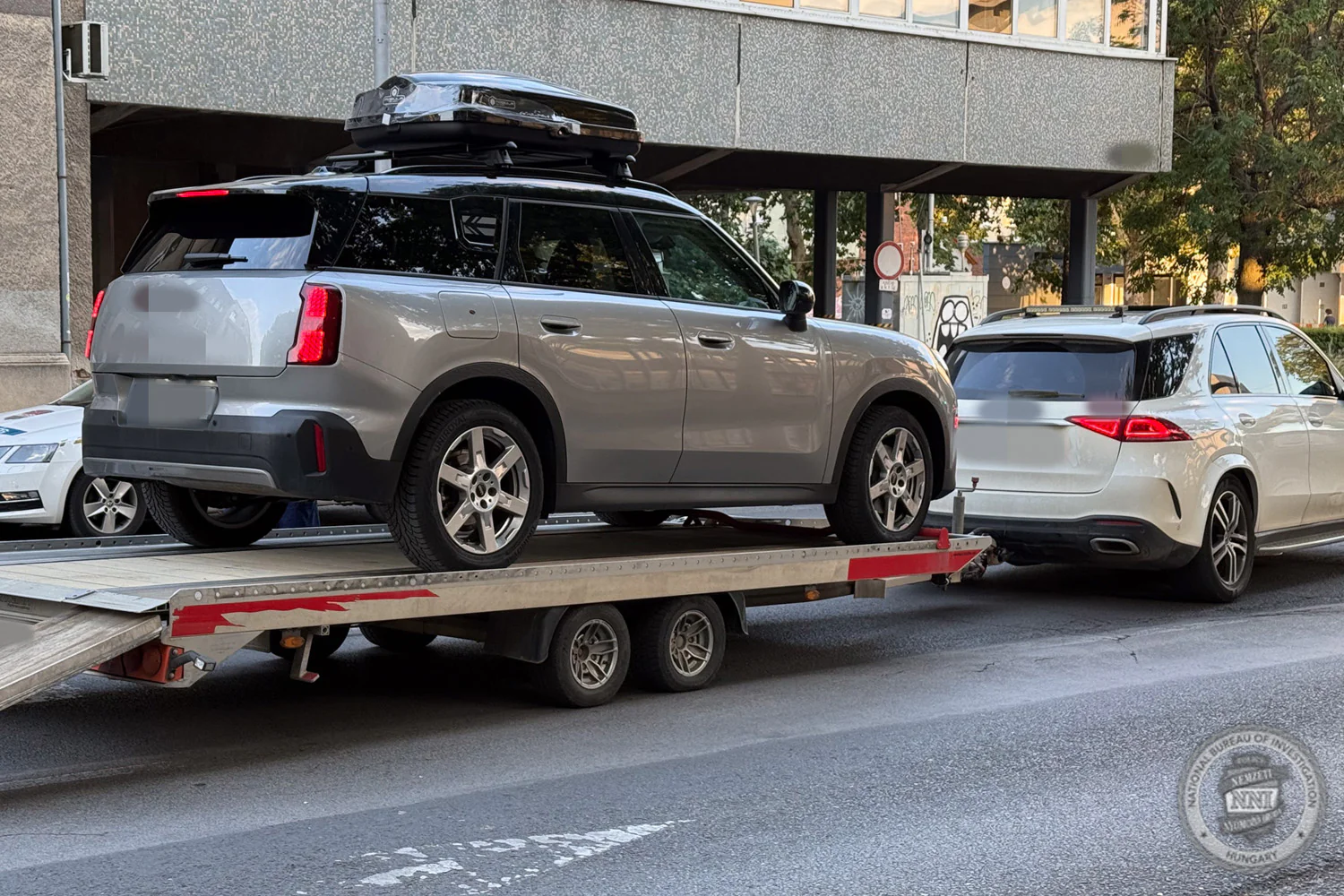
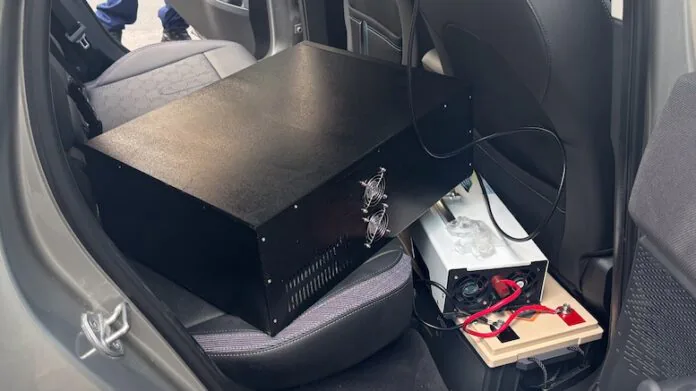
Police in Hungary announced this week the arrest of a 27 year old Chinese SMS blaster scammer whose car was stopped in Pécs on 22 July 2026. The man’s car was followed by the authorities to Pécs from Budapest, where fake base station signals emanating from the car were first detected. A fake base station was found on the back seat of the car. The police stated this was the first known use of an SMS blaster to commit crime in Hungary.
The Nemzeti Nyomozó Iroda (National Bureau of Investigation, NNI) began their investigation into a suspected SMS blaster being transported by car around Hungary on 17 July after receiving advice about radio coverage anamolies from an unnamed Hungarian mobile operator. The operator’s advice coincided with multiple reports from phone users about fraudulent SMS messages. The SMS messages impersonated the police, including the use of the word “RENDORSEG” (meaning “police” in Hungarian) as the Sender ID.
The messages stated that recipients had committed a traffic violation in Budapest. Recipients were told to click a link to a bogus website in order to resolve their case. Per telco data, 88,235 incidents involving the use of a fake base station were detected in Hungary between 13 and 22 July. Further investigation identified nine victims of the scam, who suffered collective loses of HUF4,802,333 (USD14,640).
The police were unable to establish any links between the Chinese driver and any accomplices within Hungary; he is believed to have installed and operated the SMS blaster on his own. Investigations into foreign accomplices remain ongoing.
The discovery of scammers using SMS blasters in Hungary is not surprising; equipment like this has previously been seized in Austria and Serbia. These two countries border Hungary to the West and South. The real surprise is that so many other neighboring European countries have yet to report a crime involving SMS blasters. Criminals will continue to target victims using SMS blasters even if a country switches off all its old 2G networks, and warns the population to disable 2G on their mobile phones. The crime will continue to be effective so long as some handsets continue to use 2G, as demonstrated by a recent bust by the Japanese police where the SMS blaster scam gang was targeting Chinese tourists whose phones still had 2G enabled while they roamed in Japan. Japan was the first country to switch off its 2G networks, a process they completed in 2012.
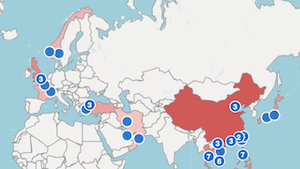
Commsrisk has the most comprehensive map of SMS blaster crime because we use multilingual AI to monitor newly-reported cases on a daily basis. We apply a great deal of care to reviewing each case to weed out fake news, which has become more common as awareness of SMS blasters has risen worldwide. However, we are also aware of genuine cases of SMS blaster crime that are not included in our map because they have never been publicly reported. Just because a country is not featured on our map does not mean there have never been any SMS blasters found in that country; different authorities adopt different policies on how much information they share with the public. And news of a crime can only be reported if the crime has been detected. The issue of SMS blaster crime receives insufficient attention in many countries because it requires the police to devote resources to hunting down and arresting scammers instead of just relying on telcos to block harmful traffic, and because irresponsible parties within the telecoms sector continue to exaggerate the extent to which this crime can be curtailed by decommissioning 2G networks.
Scroll to the bottom of this article for photographs of the SMS blaster equipment, the car and the arrest that were shared by the NNI. A police video also shows the technology they used to track the SMS blaster; watch that immediately below.