The Philippines’ National Bureau of Investigation (NBI) has announced the arrest of three Filipinos and two Chinese nationals who were caught after military forces in the capital detected the radio signals of an IMSI-catcher nearby. The suspects have been charged with violating the country’s Espionage Act and Cybercrime Prevention Act.
The arrested Filipinos claimed the Chinese ringleader paid them a daily wage of between PHP2,500 and PHP3,000 (USD43 to USD52) to drive the vehicles around areas of Metro Manila that include the headquarters of the country’s military, the national headquarters of the police, an airbase and the US Embassy. When questioned by the police at her home, the ringleader’s wife showed them other IMSI-catchers stored there, and admitted her husband had recruited the Filipino drivers.
Seven Chinese were separately accused of spying during January. The Philippine authorities are treating the IMSI-catcher incident as another example of Chinese-orchestrated espionage. They have reassured the public that security has been stepped up in response to this incident.
This story highlights the importance of being clear about the manifold dangers created by radio devices that act like mobile base stations. The limited details provided by the police would also fit the pattern of using IMSI-catchers to send scam SMS messages, as we do not know how close the vehicles remained to the sensitive locations that were listed, as opposed to driving more generally around Metro Manila. A Malaysian man who was imprisoned last year after he was caught driving an IMSI-catcher around Norway was initially charged with espionage before it was concluded that he used the device to send smishing SMS messages.
The Philippines is already making more effort than most other countries to prevent the import of IMSI-catchers, though it has been discovered that customs checks are being evaded by smuggling the equipment as components which are assembled within the Philippines. Radio devices like these can be used for both spying and for fraud, and that means there are twice as many reasons to stop their sale and use.
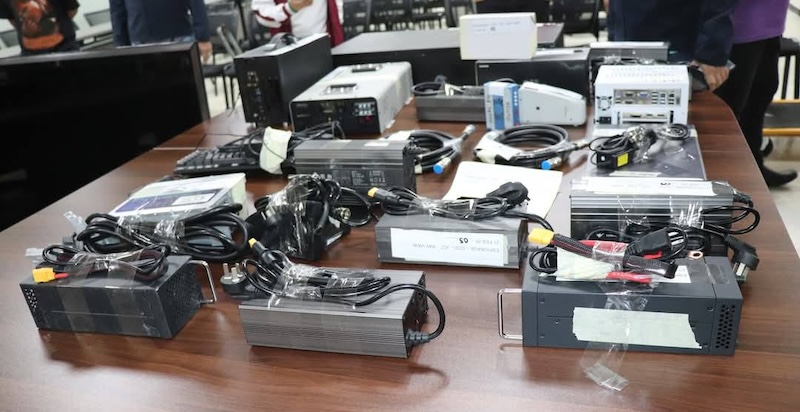
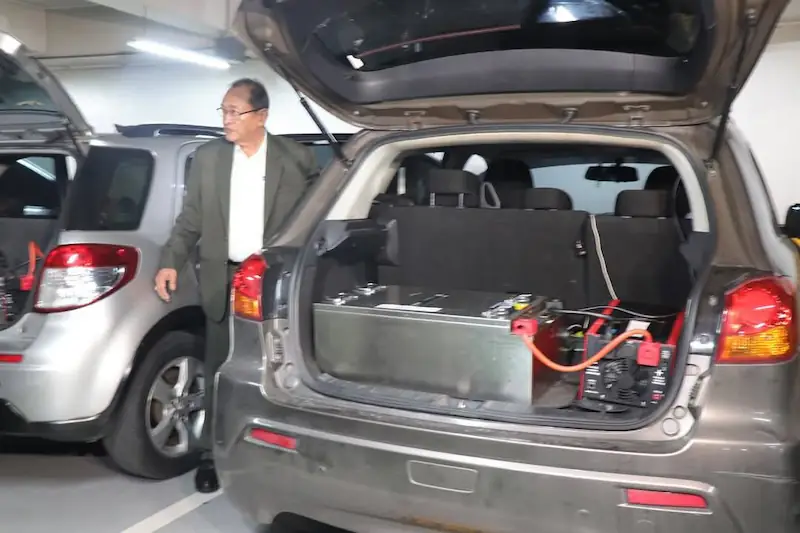
Look below for photographs issued by the NBI of equipment and cars they seized. The Philippine government’s official news agency reported the story here.