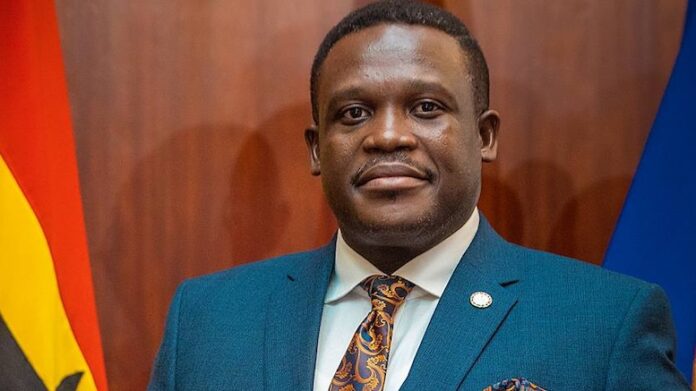
Samuel Nartey George MP (pictured) has never hidden his opposition to the lucrative national telecom revenue assurance contract given to Global Voice Group (GVG) by the previous government of Ghana. In 2019, George warned that the implementation of the RA technology had been done in a way that made it…
…very likely that our calls and text messages are being listened and read.
Last year George said that the government had used the revenue assurance audits of telcos and other businesses as a vehicle for corruption.
In principle… I don’t think revenue assurance is a bad thing, but revenue assurance has become the biggest looting avenue in the state.
National elections held in December saw the ruling New Patriotic Party (NPP) routed by their opponents in the National Democratic Congress (NDC), the party which George belongs to. George was appointed Communications Minister in the new NDC government. One of his first decisions is to question the legitimacy of the national telecom revenue assurance deal signed by his predecessor by asking the Attorney General to provide a legal opinion on the ‘terms, compliance and viability’ of the contract with GVG. George referred to the new government’s ‘zero tolerance for corruption’ as justification for the legal review.
The prima facie evidence for corruption will be obvious to any business that ever supplied a telecoms RA system. KelniGVG, the Ghanaian subsidiary of GVG, received a 10-year deal worth USD1,491,225 per month. That is an astonishing amount of money compared to typical fees for installing or running a commercial RA system. There have also been other warning signs:
- a prominent critic of the contract alleged that he had received death threats;
- no telcos have been prosecuted for tax evasion despite the previous Communications Minister insisting the audits had prevented tax evasion; and
- Ghana’s High Court issued an order to destroy data that had been collected in contravention of the privacy rights of phone users.
The former Minister for National Security even made the troubling argument that Ghana’s state security apparatus would prioritize the collection of mobile money taxes. This is tantamount to saying ordinary phone users should be subjected to the same kind of surveillance as terrorists and foreign enemies. This extraordinary claim came just a few weeks after punches where thrown in Parliament by supporters and opponents of a new tax on all mobile money transactions.
GVG is a privately-owned business that keeps its tax affairs secret through a complicated arrangement of legal entities in tax havens. Nevertheless, they brazenly lied that their Ghanaian subsidiary was a long-established local business when trying to win public support for their contract. The absurdity of this claim became obvious when a dozen Ghanaian regulatory staff were flown to GVG’s base of operations in Spain for training on the new RA system.
Controversy surrounds GVG in other countries too. A former CEO of Lesotho’s comms regulator claimed she was pressured for sex and bribes in relation to the awarding of a national RA contract to GVG. The founder of GVG, Laurent Lamothe, the former Prime Minister of gang-ridden Haiti, has been barred from entering the USA over his involvement in corruption.
George also wants the Attorney General to review a contract with Lebara Ghana for the management and commercialization of the country’s e-government infrastructure. Just like the deal with GVG, the contract with Lebara Ghana is scheduled to last 10 years, and was signed in 2019 by the previous Communications Minister.
A press release about the Attorney General’s review was shared on X by George. It has also been reproduced below.