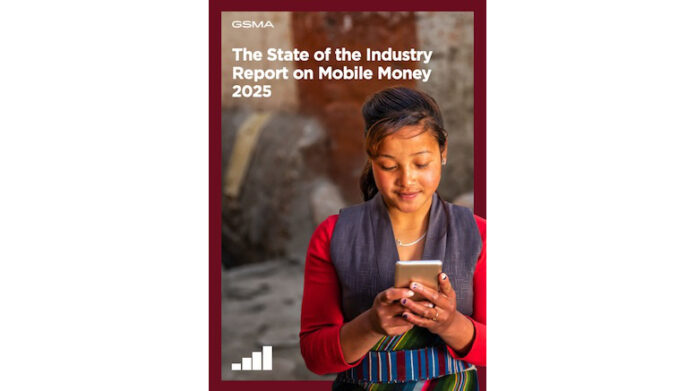
There are not many surprises in the GSMA’s latest State of the Industry Report on Mobile Money. There were plenty of signs at Mobile World Congress that telcos in Western countries are pinning their hopes of growth on becoming the servants of the financial sector, but there is a contrary trend in many developing economies, where big comms providers have enabled financial services for millions of customers that banks rejected. Money talks, and the GSMA is a good listener, as made plain by their own statistics.
- 2 billion mobile money accounts in total
- Half a billion monthly active users of mobile money
- Almost USD1.7tn of mobile money transactions during 2024
Having seen those figures, would you be shocked by the following assumptions?
- Mobile money attracts crime
- Providers of mobile money want law enforcement agencies to do more to stop crime
- Failing that, they want the public to protect themselves from crime
Other people express these concepts differently but the gist remains the same. For example, the GSMA’s report states:
In 2024, fraud remained a pervasive issue for the mobile money industry. Most mobile money fraud revolves around activities by agents or customers. As a result, several MMPs [mobile money providers] and regulators are focussing on improving digital financial literacy to increase financial awareness among customers and, in the process, combat fraud.
More than 70% of MMPs consider law enforcement authorities to be ineffective due to a lack of technical capacity, poor resourcing and corruption.
But depending on how you interpret the following sentence, it is not obvious that mobile money providers have that much sophistication at tackling fraud either.
Most MMPs detect mobile money fraud through customer complaints, underscoring the crucial role of customer awareness and reporting channels.
In other situations, the GSMA is not shy about referring to the work that telcos are doing to tackle fraud. For example, if you were at Mobile World Congress, you would have been told about three important ways to reduce crime.
- APIs
- APIs
- APIs
It must just be a coincidence that APIs also represent an effective way for telcos to monetize their data by selling it to banks and other providers of financial services. Nevertheless, the GSMA’s mobile money report does not offer advice about how providers should tackle fraud, perhaps because that would involve operators using their knowledge of the customer, or gaining new knowledge about the customer, instead of selling that knowledge to other businesses.
Back in the world of the consumer, there has been no shortage of users who turned to social media to express their frustration at mobile money providers that lack any tripwires when uncharacteristically large withdrawals or loans are executed on a customer account. Anger is similarly expressed at the antiquated demands made by providers when customers want to reverse a transaction that was made in error.
Perhaps the strongest sign that mobile money providers are minimizing the role they need to play in upholding the law comes from reports concerning the abuse of the small businesses that have been vital to the expansion of mobile money services. Mobile money agents are at risk of violence and robbery because of the cash they have to handle but operators have been slow to use their negotiating power to develop insurance products that would protect agents. Agents boost their reach and the value of their association with the operator by engaging sub-agents who run additional offices as franchise holders. However, sub-agents may have no recourse to the mobile money provider when its systems are used by an agent to raid the working capital of sub-agents.
I have no doubt that law enforcement could do more to protect the public from mobile money crimes in theory. The reality is that the police and prosecutors are not going to prioritize the goals of businesses that do little to protect themselves, their customers or their business partners. Telcos have succeeded in making themselves unpopular. It will take hefty bribes donations to persuade politicians to spend taxes on fighting the crimes that telcos have been unwilling to tackle unless they could find somebody to invoice for their efforts.
Many current preoccupations with how to fight crime stem from the rise of mobile money. For example, SIM swap gangs emerged in various countries as a response to the popularity of mobile money, begging the question of why the police needs to devote resources to arresting the youths recruited by these gangs if telcos will not devote sufficient resources to validating the transfer of a SIM. This prompted some intelligent innovation of anti-crime controls, such as APIs that report whether a SIM has been replaced recently. It was notable that it took a long time for such a cheap and effective method to be adopted widely, and that it only received significant attention because the GSMA and its partners have struggled to generate interest in their preferred use cases for selling network data to other businesses via APIs.
Everything the private sector does is motivated by the pursuit of profit but there are both smart and stupid ways to make money. Some of the stupider ways involve trampling on people before hoping they will later return for more of the same abuse. One way to tell that networked crime is at sky-high levels is to observe how many new people want to make money facilitate collaboration by charging fees for membership and advertising holding very important meetings that everybody should attend. Each organizer hopes that their event will become de rigueur because it also receives the support of governments, regulators and law enforcement agencies. None of them will accomplish much if they only know how to demand that the public sector does more, without offering any concessions from the private sector in exchange. That is why it is so strange to hear executives talk about the need to de-regulate at the same time as they finally admit crime is a serious problem. Rules are most popular when there is greatest need to restore order.
I have concentrated on the comms sector for most of my career, but at the beginning I did some work on the information risks faced by the financial sector. Banks are heavily regulated. They need to be. Comms providers think of themselves as heavily regulated, but they are not half as regulated as financial services firms. Mobile money providers shot up in the cracks between the two. That means the regulation of mobile money has sometimes fallen behind the services made available and the risks being taken. It is not wrong for the businesses that emerged from telcos to ask for more help from taxpayer-funded services although that help is only likely to come with increased regulation. There is a quid pro quo if electronic networks are to work seamlessly with financial services, whether telcos are selling data to banks or spawning their own mobile money providers. The longer it takes comms businesses to formulate a win-win deal, the lower their chances of receiving the taxpayer-funded assistance they need.
However, as I previously observed, I express these ideas differently to others. For the GSMA’s perspective, The State of the Industry Report on Mobile Money 2025 can be found here.