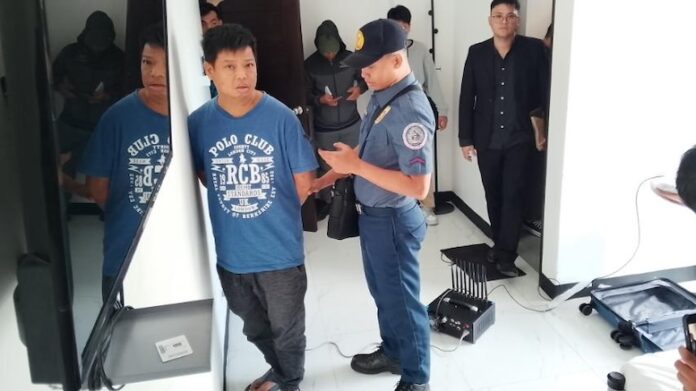
In the Philippines, the police have arrested a Malaysian national believed to be a major supplier of IMSI-catchers that were used by scammers to send smishing SMS messages in bulk. The arrest (pictured) was made as a consequence of a joint operation by the Philippine National Police (PNP) Anti-Cybercrime Group and the Cybercrime Investigation and Coordinating Center (CICC).
The arrested man was named as Thiang Choon Wee, and was described as the leader of a syndicate that is one of the top importers of SMS blasters to the Philippines. The suspect will face charges under the SIM Registration Act and the Data Privacy Act. Violations of the SIM Registration Act carry a potential penalty of 6 years in prison.
Alexander Ramos, Executive Director at the CICC, explained why they have begun targeting the suppliers of SMS blasters in preference to chasing the criminals who operate them.
Kung hahabulin mo lang eh yung operator, hindi mauubos. So tinarget namin yung source. Tine-test kasi natin online who is selling. So isa-isa ‘yun, tine-test ng ating mga agents. And so happens in one of the trials, nag-appear siya, may dala pang makina.
If you only go after the operator, we will never catch them all. So we targeted the source. We are testing online who is selling. So our agents are testing them one by one. And it so happened that in one of the trials [the arrested suspect] appeared, bringing one of the machines with him.
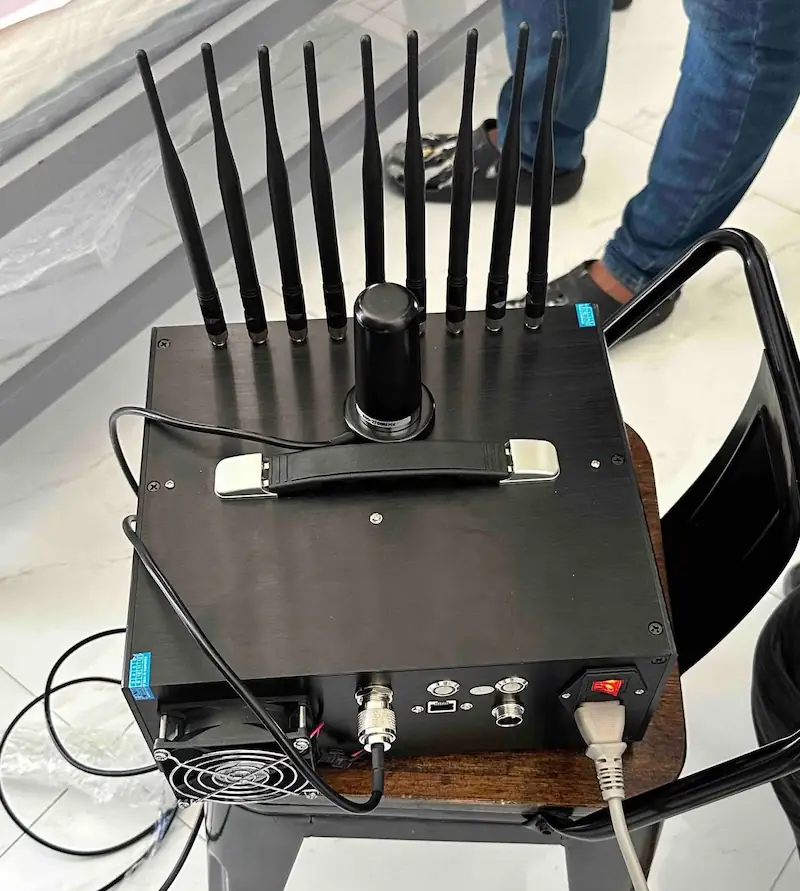
The authorities examined the SMS blaster they confiscated from the suspect. They discovered it had been configured to send multiple kinds of scam messages, including fake loan and job offers.
Roy Ibay, Vice President of the Philippines Chamber of Telecom Operators, thanked the police for their operation. He emphasized that comms providers also suffer as a result of these crimes. It was reiterated that comms providers would never send SMS messages containing hyperlinks to websites because this practice has been prohibited by the National Telecommunications Commission.
Philippine’s Commission on Elections (Comelec) has also said it is coordinating with authorities to ensure SMS blasters will not be used to spread fake news during upcoming elections. Comelec stated it will hold politicians accountable and would disqualify them from elections if they use SMS blasters to mislead voters.
A news release about the arrest from the Philippine government’s news agency can be found here. Look below for a photograph of the SMS blaster that was seized when Thiang Choon Wee was arrested.