The number of scam calls detected and blocked by Telia Estonia fell by 95% between February and June 2026, suggesting that improved network defences are discouraging criminals from making fraudulent calls.
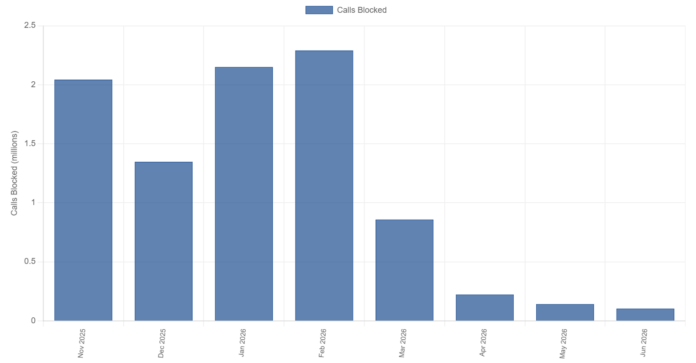
According to figures published by Telia, the operator blocked 2.29mn scam call attempts in February, falling to 858,000 in March, 223,000 in April, 142,000 in May and just 104,000 in June.
Another major Estonian mobile operator, Elisa, reported a similar decline. It blocked 628,456 scam calls during the second quarter of 2026, compared to 5.6mn during the first quarter, a reduction of approximately 89%.
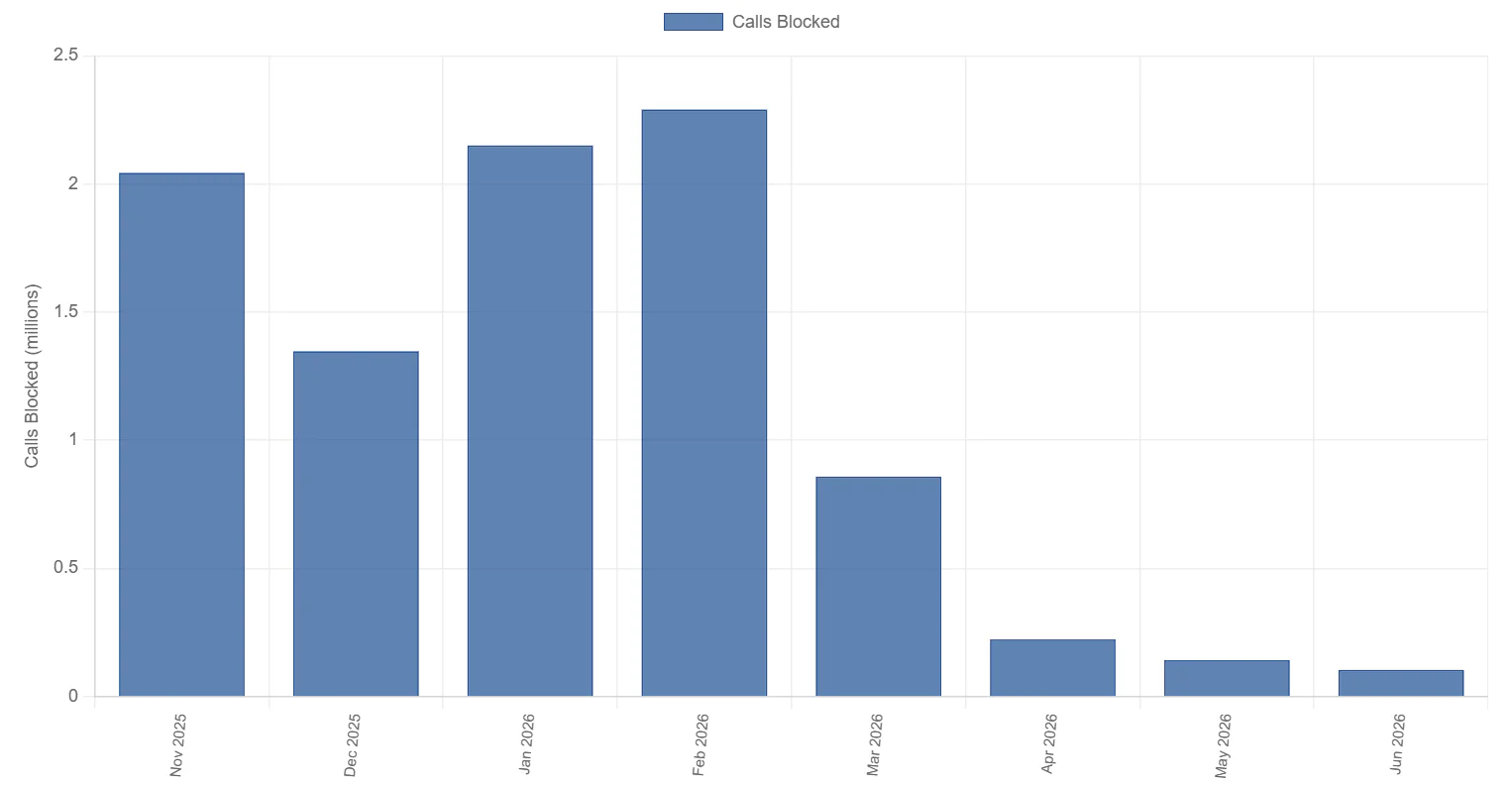
Scam call attempts detected and blocked by Telia Estonia, November 2025–June 2026. Source: Telia Estonia; Commsrisk Global Fraud Dashboard.
Telia attributes the decline to improvements in its fraud prevention systems. In March, the operator changed how its network responds to automated calls targeting numbers that are not in use. Instead of returning an error code, the network plays a recorded announcement informing the caller that the number is not in service. This increases the time required for criminals to scan large ranges of telephone numbers and identify potential targets.
Further improvements introduced in May allow Telia to validate incoming international calls using foreign telephone numbers. The system checks whether the calling number follows the correct international format, belongs to a number range assigned to an operator, and is technically valid and in use. Calls that fail these checks are disconnected before reaching the customer.
Evelin Neerot, Head of Connectivity Services at Telia Estonia, explained that the improved system can identify invalid numbers immediately, whereas previous defences relied on collecting multiple calls to identify suspicious patterns.
Estonia’s three largest mobile operators, Telia, Elisa and Tele2, already block international calls that spoof Estonian telephone numbers, consistent with ECC Recommendation (23)03. However, smaller operators have not implemented equivalent protections, allowing criminals to route calls through less secure networks. Estonia has 27 smaller telephone operators alongside the big three. The Estonian government has since approved regulations requiring all telephone and mobile operators to detect and, where possible, block calls using falsified numbers, including international calls that present Estonian numbers without justification. Operators must also check that SMS sender numbers are genuine and that the sender is entitled to use them. The new requirements take effect on 1 April 2027.
Telecoms operators and regulators frequently highlight the millions of fraudulent calls they block as evidence of success. However, a large and persistent volume of blocked calls also demonstrates that criminals continue to believe the effort is worthwhile.
A sustained decline in blocked scam calls, while legitimate call volumes remain unchanged, can therefore be a more meaningful indicator of success. If criminals abandon a method because it has become less profitable, that is a stronger result than simply continuing to block millions of attempts every month.
Telia reported that legitimate incoming international call volumes remained broadly unchanged during this period. This strengthens the argument that the decline reflects a change in criminal activity rather than a general reduction in telephone traffic.
However, fewer fraudulent calls do not necessarily mean less fraud. Elisa’s Head of Information Security, Mai Kraft, warned that customer feedback indicates criminals are increasingly using foreign numbers, numbers belonging to smaller operators, and messaging applications such as WhatsApp and Telegram.
Estonia’s experience illustrates both the effectiveness and the limitations of technical interventions against telecoms fraud. Making one method of contacting potential victims less attractive can discourage criminals from using it, but they will continue looking for alternative channels. A successful anti-fraud strategy must account for this displacement rather than treating the reduction of one type of attack as the end of the problem.
You can explore Telia’s monthly scam call statistics on the Commsrisk Global Fraud Dashboard.
You can read more about Telia’s anti-fraud measures in its announcements about the March and May updates, and find additional statistics in its first-half report. Elisa’s observations about changing fraud tactics are available here.