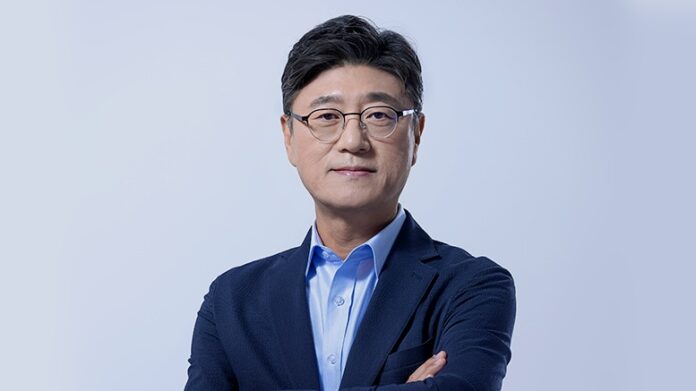
SK Telecom announced last week the appointment of Jung Jaihun (pictured), a lawyer and former judge, as their new CEO. It is the first time that the South Korean telco has appointed a legal professional as CEO and reflects the need for a leader that can set the right compliance tone as the company continues to reel from the impact of a devastating hack and data breach discovered earlier this year. Former CEO Yoo Young-sang has been shifted upstairs to the Strategy Committee of SK Telecom Group after trying to mend his telco’s reputation by temporarily suspending the onboarding of new mobile users to execute a replacement program for 25 million SIMs. He followed this by spending KRW500bn (USD370mn) on customer loyalty giveaways and allocating KRW700bn (USD510mn) to improve security over the next 5 years. These efforts were ultimately deemed insufficient to restore his own reputation and SK Telecom brought forward the date of their widely-anticipated switch to a new CEO in order to refocus the narrative for investors on the company’s future potential rather than its past mistakes.
When Yoo Young-sang became CEO in 2021 his primary mission was to drive SK Telecom’s transition towards serving the markets created by AI. Jung Jaihun will now oversee the split of SK Telecom into seven business units, three of which will focus on core telecommunications services while the other four will chase AI-powered growth. Jung’s previous role included responsibility for SK Telecom’s stance on AI governance. It is telling that a business which is currently under pressure for failings relating to old comms services is placing so much importance on anticipating the challenges involved in managing the unquantified legal and reputational risks that will come with AI. It is also telling that the hack of SK Telecom has contributed to a more widespread skepticism about the way South Korea’s telcos have been managed. Some comments made by Kim Young-shub, the CEO of KT, the leading rival to SK Telecom, have been interpreted as indicating he may also resign after KT has completed the investigation into a micropayments scam uncovered after the breach at SK Telecom. KT’s failings had far less impact on the general public but the heightened sensitivity created by SK Telecom’s scandal has resulted in the press and politicians scrutinizing KT’s issues much more than would otherwise be likely.
The first priority for SK Telecom’s new CEO will be engineering a rebound from the dire financial results for Q3, the first full quarter following the discovery of their data breach. Consolidated group revenue for SK Telecom and its subsidiaries was down 12.2% year-on-year and operating income fell 90.9% year-on-year. The latter fall was blamed on the cost of the customer loyalty program but SK Telecom’s mobile network operator has lost almost 840,000 mobile handset customers since April, the month when the breach became public knowledge. On a non-consolidated basis, SK Telecom reported an operating loss of KRW52bn (USD36mn) and a net loss of KRW207bn (USD144mn) for Q3 2025 compared to an operating profit of KRW457bn (USD317mn) and a net profit of KRW222bn (USD154mn) for Q3 2024. CFO Kim Yang-seob emphasized the importance of taking a financial hit now in order to bounce back later:
SK Telecom will prioritize the restoration of customer trust, turn crisis into an opportunity by delivering concrete results in the AI business, and move forward as a stronger company.
The hacking of SK Telecom and concern about the number of South Koreans tricked or forced into working in Cambodian scam compounds also helps to explain the timing of a new anti-fraud cooperation agreement between South Korea and China. Past experience shows that the voice phishing gangs which plague South Koreans are often run by Chinese crime syndicates. China also gets blamed for state-sponsored hacking of comms providers and other businesses. On the other hand, the Chinese government places a lot of importance on protecting its citizens from networked crime. The agreement will ostensibly cover the sharing of intelligence and evidence concerning scams, collaboration on cross-border investigations, the freezing of the financial proceeds of crime, and the rescue of Koreans and Chinese forced to work in scam compounds. Many details will need to be worked out, but China’s success in developing bilateral anti-fraud relationships with other Asian countries represents a challenge to the rival transnational scam strategy being pushed by the USA. One weakness of the US strategy is that it is impossible to imagine the CEO of any American comms provider admitting responsibility for a privacy breach or the scams suffered by the public, never mind losing their job as a consequence.
Can we infer that the replacement of a CEO reveals the beginning of a change in attitudes towards the security and privacy of phone users? Telcos typically say they place a high priority on protecting customer data; replacing a tarnished CEO would suggest at least one telco now means it. However, it is too soon to make the leap from rising expectations in South Korea to the rest of the world. The actions taken to restore the confidence of SK Telecom customers and investors reflects the culture of an advanced economy that has had difficult relations with its neighbors and is still technically at war with the other Korea to its North. Stories about voice phishing dominate not just Korean news but also feature prominently in Korean fiction too. The murder of Koreans forced to work in foreign scam compounds makes headlines. Meanwhile, foreign journalists have barely covered the recent string of scams and scandals that have beset South Korean telcos, or the extent to which voice phishing has become a Korean obsession.
Australia provides the closest comparison in terms of its wealth, population, the failures of its telcos and the impact of those failures upon ordinary people, but Australian bosses continue to respond very differently. Former Optus CEO Kelly Bayer Rosmarin held on to her job following a privacy breach in 2022 that impacted a similarly large proportion of the country, and was only forced to stand down following an unrelated network outage that occurred a year later. Her replacement is currently refusing to resign following the death of four people during another outage that prevented calls to emergency services. Mark Gregory, an associate professor at RMIT University, described Rosmarin as “another CEO in a technology company that really isn’t suited for the role”. That has not prevented Rosmarin being appointed a Non-Executive Director of Australian digital real estate company REA Group because of her “unique insights” into “digital transformation, regulatory compliance and crisis management”. The Australian government described the hack which caused the 2022 Optus data breach as “basic”, and The Guardian called it “the biggest hack in history”, so there is some merit to the argument that Rosmarin’s experience of compliance and crisis management is unique.
Communications is a global industry but perceptions about the way comms businesses should behave remain narrowly parochial. Risk professionals working in the sector are unforgivably prone to repeating platitudes that reflect national prejudices rather than the true extent of risk that all comms providers face. If hackers can exploit a vulnerability in a Korean telco then they can exploit the same vulnerability in every other telco that has it, irrespective of the language spoken by the politicians, journalists and consumers in that telco’s country. Commsrisk has been trying to broaden horizons by reporting important developments from all around the world, instead of only repeating the contents of the Anglophone echo chamber. South Korea is establishing a necessary precedent. Every CEO needs to be held accountable for the harm caused by hacks and data breaches, and we will all remain at risk until they are.
The SK Telecom press release announcing the appointment of their new CEO can be found here.
Update, 09:30 UTC, November 5, 2025: The spelling of Jung Jaihun’s name was amended to reflect SK Telecom’s preferred transliteration from Korean.