Regular readers know that the rate of news about the illegal use of SMS blasters, IMSI-catchers and other rogue base stations has been accelerating during 2025. If Commsrisk published a separate article about each new case in each different country then there would be no time left to cover anything else. So here is a summary of recent developments from around the world.
SMS Blaster Drivers Arrested in Cambodian Scam Capital
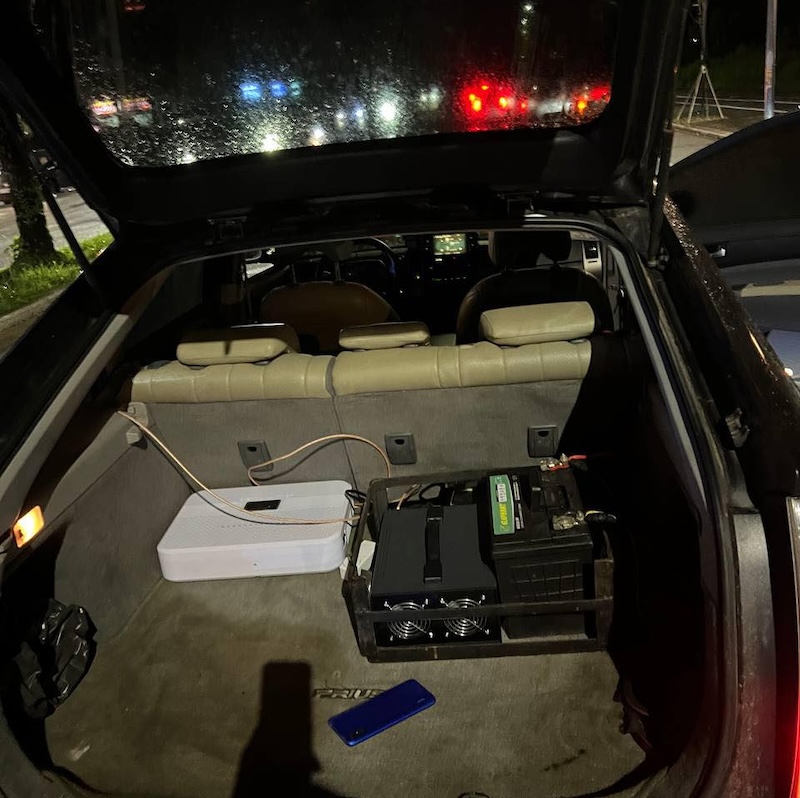
There are 22 scam compounds in the Cambodian city of Sihanoukville according to Amnesty International. Chinese gangs act with impunity across the city, populating office blocks with foreigners trafficked into slavery or lured by promises of well-paid IT jobs. With so many people working for organized crime syndicates that use networks to perpetrate scams on victims in other countries, you have to wonder why criminals have decided this is the right time to send SMS messages that scam people living in Sihanoukville too. Have the gangs grown so successful that they can only further increase their criminal revenues by scamming each other? While Cambodia’s police remain blind to scam compounds visible from space, Preah Sihanouk Provincial Police Department arrested a 24 year old Cambodian man for driving two SMS blasters around Sihanoukville on October 20.
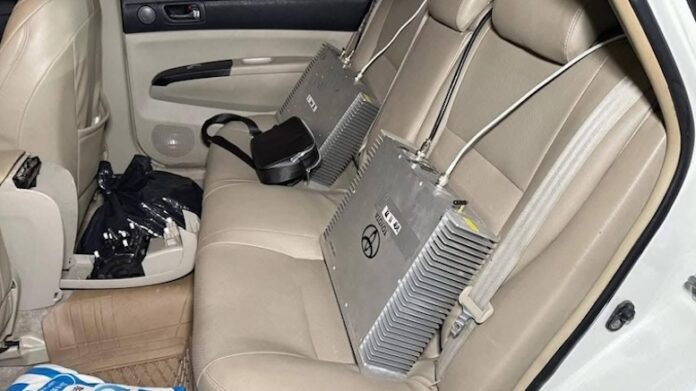
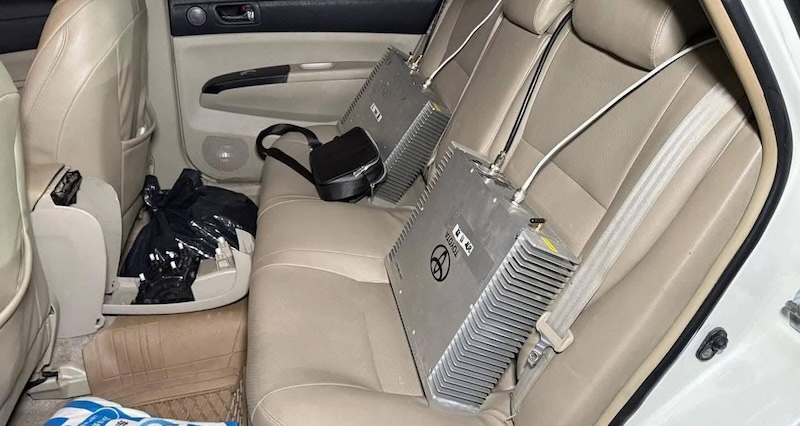
The criminal modus operandi in this case fits the pattern that all Commsrisk readers will recognize by now. Anyone receiving an SMS message from the SMS blasters would have been presented with a hyperlink to a phishing website. Two separate SMS blasters were carried on the back seat of the car, as is now the norm for SMS blaster drivers across East Asia. Photographs of the SMS blasters show they were housed in the same silver cases also used by criminals operating in Thailand, Vietnam and the Philippines. One interesting difference is that one of the cases was adorned with the logo of Japanese car manufacturer Toyota. The car was a Toyota Prius. Was the Toyota sticker on the SMS blaster a crude attempt to disguise its real function? Judge for yourself by examining the police photos reproduced below. This instance has been added to the SMS blaster map in our Global Fraud Dashboard.


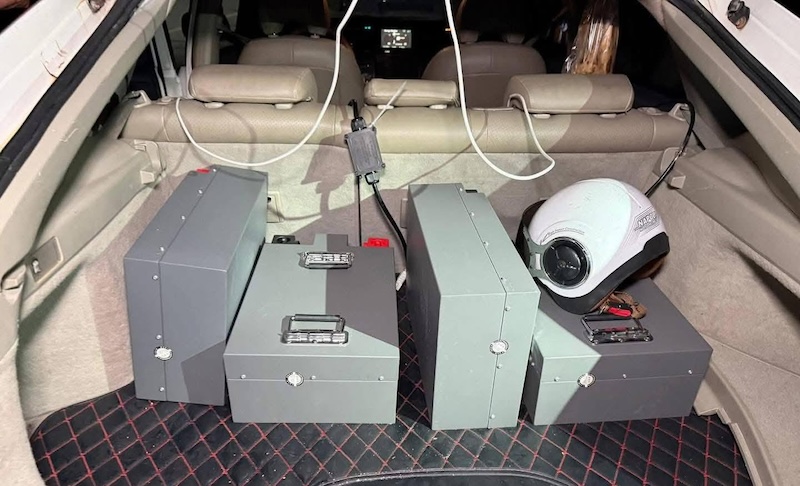
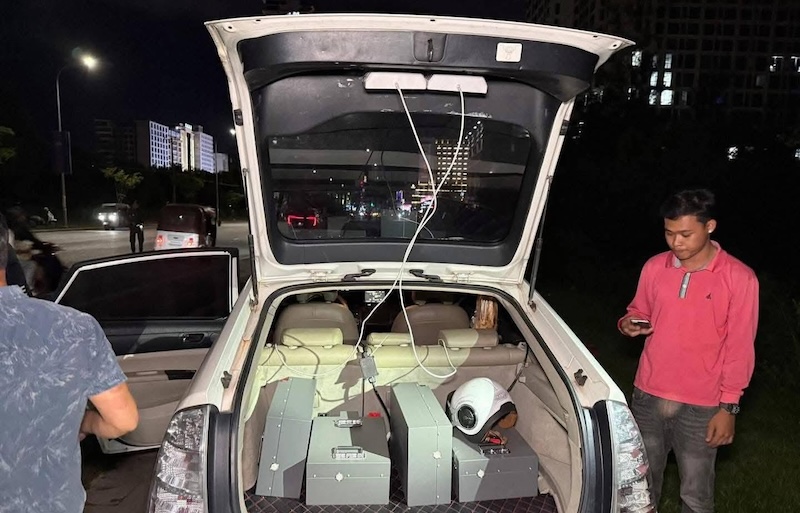
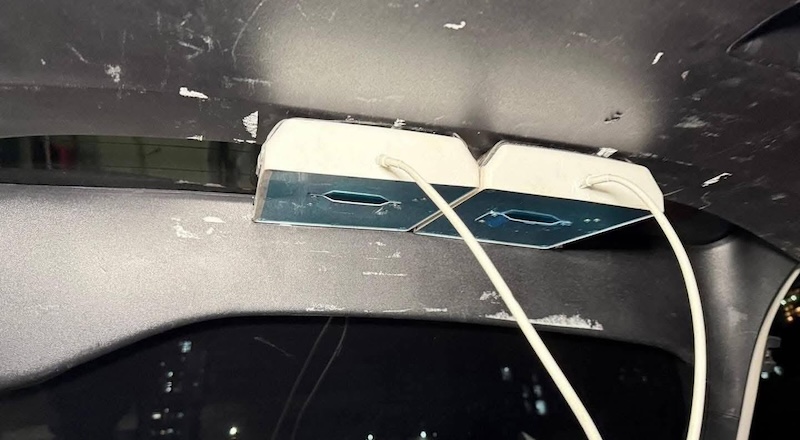
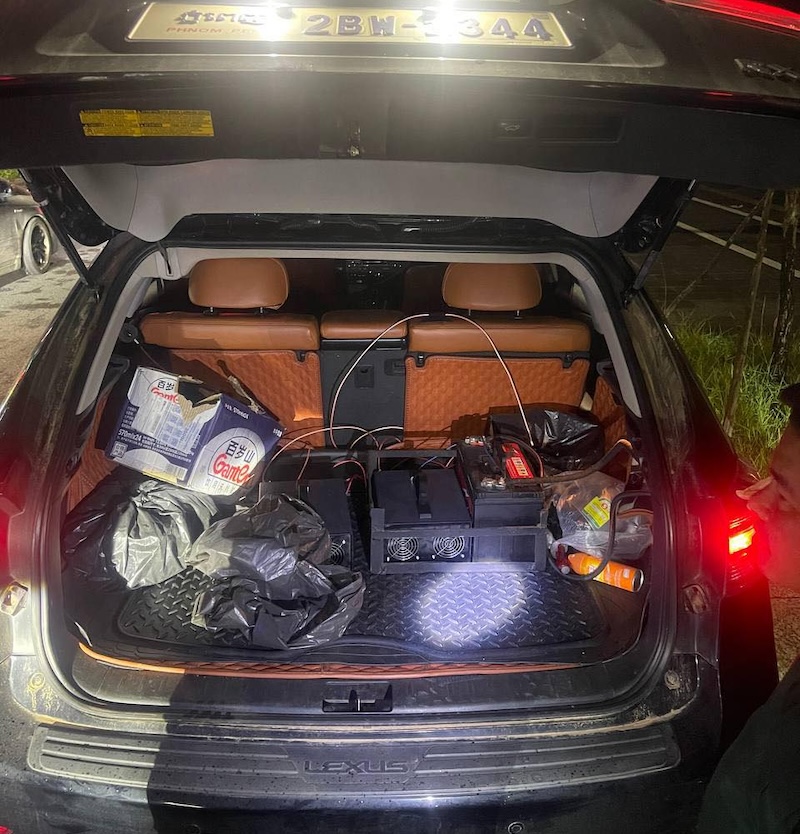
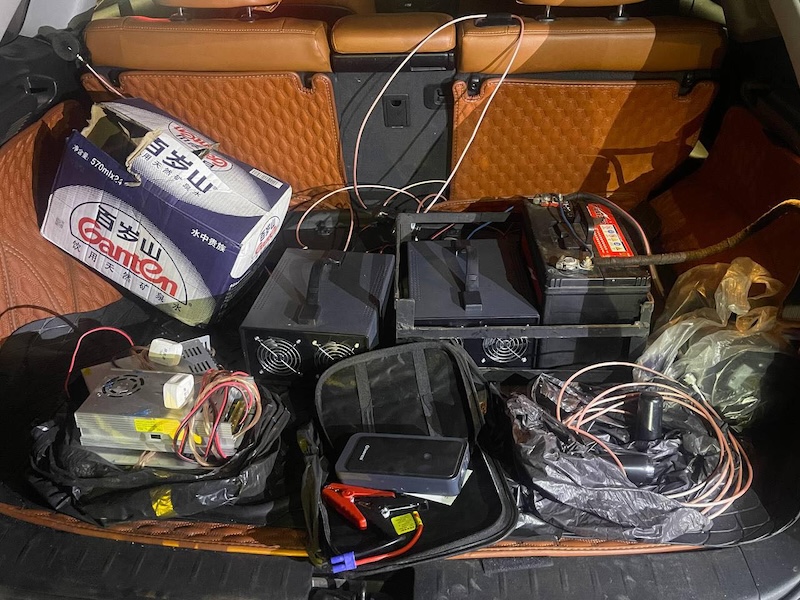
There were more SMS blaster arrests in Sihanoukville on the evening of November 1 when police instituted a roadblock on 28 Mithona Street, a major thoroughfare that runs between the beach and one of the city’s busiest junctions. 624 cars were stopped and searched between 10pm and 1am. Two of the cars were found to have an SMS blaster in the trunk. Other stops resulted in two arrests for the possession of drugs, two arrests of suspected people traffickers, and one arrest of a woman who had 10 mobile phones and is also suspected of online crime. Police photographs of the cars that carried SMS blasters are reproduced below.
Multiple Arrests for SMS Blaster Crime in Switzerland
Swiss police announced the arrest of a suspect driving an SMS blaster around Muttenz, near Basel, on October 14. The suspect is a 52 year old Chinese national. The device sent smishing messages that impersonated well-known organizations such as the Post Office and the Migros supermarket chain. Messages that claimed to be from UBS bank lured recipients into clicking the link by claiming they were owed loyalty points that could be converted into an attractive gift if they were claimed before a deadline. This instance has also been added to our SMS blaster map.
It was previously reported that Swiss police were hunting a suspected SMS blaster that sent smishing messages around the West of the country. Prosecutors have since announced the arrest of three men in relation to those crimes; two were in vehicles carrying SMS blasters and the third was the owner of one of the vehicles. No mention was made of their nationalities but the oldest man was said to be 30 years old and the others were both 21 years old. The SMS blaster map was updated with these additional details.
Philippine Bank Warns of Surge in SMS Blaster Scams
The Bank of the Philippine Islands (BPI), one of the largest banks in the country and one of the oldest banks in Southeast Asia, has told customers that smishing scams are on the rise and they should be especially conscious of the risk of fraud around Christmas. Jon Paz, Enterprise Information Security Officer at BPI, told a recent media roundtable:
During Christmas, when people receive their bonuses, these cases really go up
Paz also said that around 80% of online banking fraud cases were connected to smishing messages sent by fake base stations or to the download of fake banking apps. This contrasted with few examples of scams involving fake base stations during 2024.
Activist Says Drones Flying over Lebanon Are Spying on People with IMSI‑catchers
Mohammad Najm, Director of SMEX, a nonprofit campaign group for digital rights in West Asia and North Africa, has warned that IMSI‑catchers are being flown over Beirut. Najim referred to two types of Israeli military drone — the Hermes 900 and the older Hermes 450, both made by Elbit Systems — and said they were carrying IMSI‑catchers to gather data about people below. You can see his Facebook post on the topic here.
The use of flying drones to carry IMSI‑catchers is well-established. This combination of technologies has become especially common as a result Russia’s invasion of Ukraine so we should anticipate they will be used in other hotspots around the world. There is no way to verify Najem’s claims but it is probably only a matter of time before flying IMSI-catchers are used for law enforcement and surveillance worldwide.