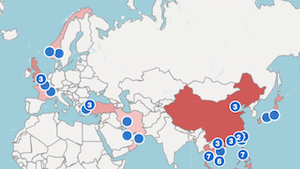
It is funny how many people argue that reducing phone scams requires the gathering of enormous amounts of data, but who then offer only the meagerest statistics in support of theories they espouse. Empirical observation is the cornerstone of the scientific method; it should be essential to the process that societies follow when determining which anti-scam policies they will adopt. There has been little commitment to objective analysis of data concerning scams and mitigations so far, as best exemplified by the Global Anti-Scam Alliance (GASA) claiming that the amounts lost to scammers fell by 57% in a single year without offering any explanation for why this happened. Why bother doing large and expensive surveys if you are not going to draw conclusions from the results? There is an answer to that rhetorical question: because these surveys are typically used to cherry-pick the conclusions that most suit the people who paid for them. The absence of academic research has left a void where data will be ignored unless it boosts the marketing of specific organizations, products and services. That is why we set up the Global Fraud Dashboard. With support from our donors, we are using automation to efficiently collate a rapidly increasing amount of data about phone scams from around the world.
The gathering of this data is already opening the door to comparative analysis of the anti-scam results obtained in different countries. So rather than argue against some of the theories that I knew would be espoused at this year’s Comms Council UK Fraud Summit, I presented a series of charts instead. If hard data does not persuade people to reject flawed theories for how to reduce crime then no other argument will. The response to the presentation was much more positive than I anticipated. I had expected a hostile reception from those segments of the industry that insist the US has been successful because they rely so much on the traceback of voice calls. I presented data which reversed the flow of that argument; the US is prioritizing the traceback of calls because it has not implemented controls that would reduce the need for traceback and which have already proven effective elsewhere. This leaves the USA repeatedly chasing scammers who use voice calls while other countries are needing to adapt their strategies as a consequence of the migration of scams from voice to other communications channels.
Given the positive response, I have recorded the presentation alongside the slides that were shown. The presentation lasts 15 minutes and is built around the comparison of data about phone scams from five different English-speaking countries: Australia, India, Singapore, the UK and the USA. Some of my phrasing is geared towards the British audience at the Comms Council UK event, but I believe the findings will be of interest to anyone with a sincere desire to learn about the relative effectiveness of different anti-scam policies. You can watch the video below.