
Guidance issued by Swedish comms regulator Post-och telestyrelsen (PTS) has prompted the country’s telcos to block inbound international calls presenting a domestic landline number from December 5. Leading Swedish operator Telia welcomed the development.
Blockeringen är en del av en bredare nationell strategi att bekämpa bedrägeri och ett viktigt steg i att förhindra att kriminella når fram. Det känns bra och viktigt att vi på Telia redan nu kan förstärka den insatsen genom att även blockera svenska mobilnummer som vi kan verifiera har utsatts för Spoofing.
The blocking is part of a broader national strategy to combat fraud and an important step in preventing criminals from reaching their targets. It feels good and important that we at Telia can already strengthen that effort by blocking Swedish mobile numbers that we can also tell have been spoofed.
Telia reported that the new block on spoofed landline numbers will deliver an immediate 20 percent reduction in the number of inbound international calls they connect to Swedish phone users. This shows the tremendous impact that a simple but effective control can have on the number of unwanted calls. Telia and other telcos are also working on the implementation of a similar control to block inbound international calls that spoof Swedish mobile phone numbers, although no national deadline has been set for implementing these blocks. To block calls with mobile numbers will require telcos to be able to interrogate networks and exchange information about whether the associated mobile phone is currently connected to a network within the country. If it is, then the operator knows the inbound international call has spoofed the CLI and it is safe to block the call. If not, then the call will probably be from a Swedish outbound roamer and will still be connected. Sweden will likely follow a similar path to other countries with telcos first interrogating their own mobile networks before progressively improving the cooperative flow of information between networks and hence increasing the number of spoofed calls being blocked.
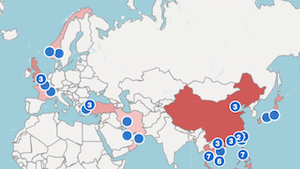
A year ago I described the technique of blocking inbound international calls presenting a domestic number as the leading ‘method with no name’ in a review of all the methods being proposed for call validation. Australia had already enjoyed considerable success at reducing scam and spam calls by being the first country to implement the method, and other countries like the UK, Oman and Saudi Arabia were in the early stages of implementing equivalent controls. A lot has changed since I presented that analysis. I have now lost track of all the countries that have emulated this particular method with no name. The rate of adoption appears to be accelerating as more national regulators seek to reproduce the successes of their neighbors. Telcos and regulators around the world have praised the results. Even countries which have been reluctant to adopt the method in full are reporting success with variations of it. For example, German telcos indicate there has been a substantial fall in spam and scam complaints as a result of no longer presenting customers with the CLIs of international calls using spoofed domestic numbers, even though these calls are still connected.
There is an important reason to dwell on the fact that this method has no name. It has no name because nobody is selling it, nobody is standardizing it, nobody is trying to monopolize the global market for delivering it and nobody is turning it into a new source of prestige. It has no name because nobody invents names for methods that represent fundamental common sense and which others can copy without needing to worry about patents. This highlights a problem with those countries that receive enormous numbers of unwanted calls that originate overseas but which are choosing to focus all their efforts on other mitigations. This method with no name is cheap, simple and effective, but that may not be enough to motivate its adoption in countries where regulators are mostly influenced by salesmen and lobbyists.
Having squandered half a billion dollars on the unproductive implementation of STIR/SHAKEN, the USA now looks like it will bet on artificial intelligence as the next anti-robocall wonder technology. To the one-third of Commsrisk’s global audience in North America, I beg you to challenge the intransigence and arrogance of the FCC and CRTC for the sake of ordinary phone users. The US and Canadian regulators have signed bilateral robocall memorandums of understanding with other countries but seem incapable of learning from them, even though other national regulators are very obviously copying each other. Australia has enjoyed dramatic success in tackling scam calls without implementing STIR/SHAKEN or praying for AI to save them; the Australian and US comms regulators signed their anti-robocall agreement in May 2021. So why has the USA not copied more of Australia’s methods? Or to put it another way, what does anybody expect AI will deliver if nobody can devise a method that tells which international calls are only pretending to have a domestic origin?
It is possible to reduce nuisance calls and messages without spending a fortune on doing it. Sweden is joining a growing list of countries that block inbound international calls which present domestic CLIs because this technique has a proven track record of reducing unwanted calls. National regulators that ignore off-brand methods of reducing unwanted calls are making a terrible mistake, although the people who pay for those mistakes are ordinary phone users.