
There is very little output from the Federal Communications Commission (FCC), the US comms regulator, during the week between Christmas and the new year, so draw your own conclusions as to why they published a ‘transparency report’ on December 29. The report would naturally be of interest to many people because it lists illegal calls that were traced back to comms providers between June 1 and September 30. Many of the telcos named on the list will be familiar to the public as well as readers of this website. Big telcos including T-Mobile, Twilio, Bandwidth, Orange, Tata and Deutsche Telekom feature alongside numerous here-today-gone-tomorrow minnows that will be reincarnated with new names if they are ever forced to close down. That does not mean every telco mentioned in the report has done something wrong; they may have carried a bad call that originated with another telco, begging a question about how many bad calls a customer can originate before they should be told they are no longer welcome. This nuance is a reason to provide more information to the public so they can interpret this report correctly; it is telling that the FCC leans the other way.
The report is essentially a table, but is circulated as a PDF to further complicate the process of analyzing the data, and the contents of the rows and columns are supported by conveniently minimal explanation. My guess is that it exists not to provide information to you and me, but to satisfy a request from some elected politician, such as Senator Ron Wyden. Even so, the previous quarter revealed that more bad calls had been traced to Deutsche Telekom than any other major telco. So what did we learn from the data for the third quarter of 2023?
- There were 972 unique serial numbers for traced calls in a report where the highest serial number was 1,214 higher than the lowest. Serial numbers are created on a sequential basis. This suggests at least 242 (20%) of the calls traced during the period were omitted from the report because they were ultimately found to be legal. This is consistent with the 21% of traced calls excluded from the previous quarterly report.
- Some of the telcos who featured most prominently in the Q2 quarterly report were still being identified as the origin of calls traced in July and August. This undermines FCC rhetoric about rapidly responding to known sources of bad traffic.
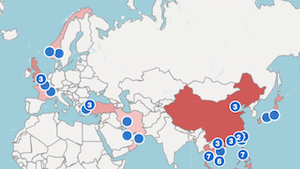
- The FCC and its know-nothing sycophants habitually seek to blame foreigners for the bulk of bad calls received by Americans but five times as many calls were traced to an originator in the USA (572, 59%) than the number traced to a foreign originator (114, 12%).
- The big name US-domiciled telcos that originated the most traced calls were: Twilio (27), Vonage (15) and Sinch (9). T-Mobile was identified as the originator of two calls in the sample. Quantumtell (58) and Sipphony (57) originated more of the traced calls than any other providers.
- More calls were traced to Infobip (14), Deutsche Telekom (9) and Orange (9) than any other big name foreign telcos. A ‘virtual’ Hong Kong provider named Talk2all was the biggest single foreign source of traced calls during the quarter (22).
- 286 (29%) of the calls could not be definitively traced to their origin because a telco did not provide the information that was requested from them. The telcos which ignore these requests will often be small and scumbag businesses but it was notable that a subsidiary of Greece’s main telco, OTE, did not respond to two traceback requests during the quarter.
I like this report because it tells me far more about the illegal robocalls received by Americans than page after page of diplomatically-worded guff issued by the people who run the US traceback consortium. That is why I read the report even though it never gets mentioned in any of those press releases that the FCC likes to issue. It highlights the divide between the topics people want to talk about and the results they actually obtain. For example, why does the traceback crew keep discussing trends in complaints data when it is not their job to collect nor scrutinize that data? Meanwhile, they provide almost no analysis of the data they actually collect. The consortium mostly parrots the politicians who run the FCC, probably because they want to hold on to their unique position within the industry hierarchy. They talk about leveraging the implementation of STIR/SHAKEN, whose supposed benefit was going to be the rapid tracing of calls to their origin. The reality is that traceback has become so vital to the US strategy because STIR/SHAKEN has delivered so little.
For years the public have been told that the USA and Canada has been working hand-in-hand on STIR/SHAKEN, but the reality is that they are still only at the stage where they are conducting a pilot program on cross-border tracing of calls with Canada. These people pretend to be setting the agenda for whole world, but they are years behind with delivering the most basic extension of their methods to their closest and most compliant neighbor. Meanwhile, they refuse to discuss data which indicates the bulk of bad calls received by Americans are traced to companies incorporated in the USA. Exaggerating the sophistication of fraudsters causes less discomfort for the US comms regulator than admitting the root cause of problems rests with the legal obstacles to taking effective action after a bad actor has been identified. These people will trace, trace and trace again because it is so rare for anyone to do anything useful after the trace has been completed.
You can see the data as a spreadsheet below, or click here to open it in a new window and see various options to download the data in different formats. Do not contact me if you cannot see the spreadsheet; the fault is with your browser or your corporate firewall, not this website. And if you think I am not giving you sufficient support, ask why you have to come here for a government transparency report published by an agency which receives almost USD400mn in public funding. But if you prefer to return to the source then you will find the original here.