James Cleverly, Home Secretary in the UK Government, said he hosted the first Global Fraud Summit in London this week because:
We must do more to work together across the world. We need to share more data and intelligence internationally, raise global standards, and make tackling fraud an international priority. Different countries’ law enforcement teams already collaborate, but we need to redouble our efforts.
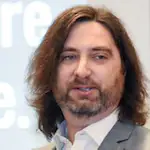
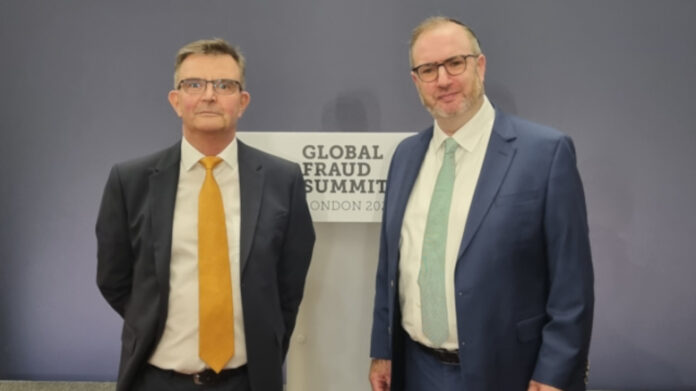
These are fine words that we can all support. But how effective was the summit? I asked a few of the attendees who were there to represent the international telecoms community. Philippe Millet, Chairman of the i3Forum (pictured left) was effusive about the event.
What struck me most was that it was genuine. The reception was truly an impressive collective show of cohesion and eagerness to fight the dark side at a very senior, global level.
The i3Forum was an obvious choice to involve in the summit because it is an association of international wholesale telecoms carriers, but Philippe was also there because of the formation of the One Consortium, which is creating a meeting place for national regulators to agree common standards for call validation. It comes as no surprise that Philippe was enthused by the opportunity to advise decision-makers about practical steps to reduce fraud.
The appetite for global cooperation is real, genuine, and all recognize the key role that international telecommunication providers must play. They need us to come forward with proposals and ideas.
Another familiar face at the summit was Eli Katz, CEO of XConnect (pictured right). He told me:
It was a true recognition for a co‑ordinated global response — at all levels, by government and industry.
There was plenty to like about the statements made by UK government ministers in the run-up to the event, and in the communiqué that was published halfway through the first full day of proceedings. Cleverly wrote in The Telegraph:
I am excited to announce that our National Crime Agency, the FBI, United States Secret Service and America’s Homeland Security Investigations will be working together to tackle call centre frauds across the world, sharing their world-class expertise and stepping up the fight back against fraudsters. This is the kind of co‑operation we need to defeat a truly evil crime. And we know it works.
The Global Fraud Summit will go further again by bring (sic) together government ministers and representatives from the UK, Australia, Canada, France, Germany, Italy, Japan, New Zealand, Singapore, South Korea, and the United States. More than 200 representatives from across the banking, tech and telecommunications sectors will be there too, along with civil society organisations such as Victim Support.
I particularly liked the part of the communiqué which hinted at forcing countries to arrest fraudsters, even if those fraudsters only target victims outside of their country’s borders.
We recognise that we are collectively being targeted by criminal networks operating from specific jurisdictions. We support stronger coordination of law enforcement operations in these jurisdictions and will continue to explore further avenues to bolster collaboration, including via sanctions or other mechanisms, as may be appropriate.
Perhaps my natural pessimism is the reason I remain unconvinced. I am not the sort of person that gets invited to these events, as best explained by observing how the UK government exclusively focused on working with big tech companies to stop fraud, as if smaller businesses have nothing to offer. One might question if the biggest tech firms really know all that much about fraud if a man like Elon Musk can purchase Twitter for USD44bn only to later discover they were losing USD60mn a year because fraudsters used bots to artificially generate SMS messages. More importantly, the headline talent for this event was not comprised of A‑listers like Musk, but a string of deputies, including:
- the Deputy Commissioner of Japan’s National Police Agency;
- a Deputy Assistant Attorney General from the USA;
- the Deputy Under Secretary in the US Homeland Security Office of Strategy, Policy and Plans; and
- Australia’s Assistant Treasurer and Minister for Financial Services.
These people are very senior, but it is also true that deputies are not free to make decisions without needing to check with their bosses first. This makes me question how many substantive policy decisions will result from this event. Neither the UK government nor the mainstream media had much to say about that. They preferred reciting the principles that should be followed and the goals to be achieved in future. It is encouraging to hear government ministers emphasizing the importance of tackling fraud, but everybody reading Commsrisk already knows why it is important to tackle fraud. We need to hear what governments intend to do about fraud, and there was very little mention of that.
The UK government branded their Global Fraud Summit as the first of its kind. In many respects they were copying from the same playbook used for another ‘first of its kind’ summit hosted by the UK just a few months earlier, the AI Safety Summit held in November 2023. Participants in the latter event included: Elon Musk; Ursula von der Leyen, President of the European Commission; Giorgia Meloni, Prime Minister of Italy; Wu Zhaohui, Chinese Vice-Minister of Science and Technology; Sam Altman, CEO of OpenAI; and King Charles III. President Biden of the USA did not take part, but obviously felt his own role as a global leader was sufficiently threatened that he pre-empted the event by issuing a ‘landmark’ Executive Order on AI Safety just a few days before, and by having Vice-President Kamala Harris appear instead.
Even pop star will.i.am felt it necessary to attend the AI Safety Summit, though nobody seemed to know why, whilst the biggest celebrity at the Global Fraud Summit was Princess Anne, 17th in line to the British throne, who was press-ganged into giving the opening address. This backfired spectacularly when Kate Middleton, Princess of Wales and the spouse of the William who is first in line to the throne, completely overshadowed coverage of Princess Anne’s speech. Instead of talking about governments and businesses tackling fraud, mainstream journalists were fixated on the very different ‘fraud’ that occurred when Kate gave the press a manipulated photograph of herself with her children, forcing its near-immediate retraction and a lot of apologies about not intending to deceive anyone.
At least the distraction caused by Kate’s photograph was unintentional. It is not so clear whether the same can be said of Tom Tugendhat, the Minister of Security who received almost equal billing as the host of the Global Fraud Summit alongside Home Secretary James Cleverly. The UK government recently launched an advertising campaign to promote awareness of fraud, which is almost certainly one of the least effective ways to reduce fraud, and which is quite probably an underhanded way of using public money to advertise a key message of the current government in advance of the general election to be held this year. Free advertising on big mainstream news channels is better than paid advertising, and the approach of this UK government is to schedule live interviews between ministers and the biggest broadcasters in three sets per week, with the idea that each set of interviews will coincide with announcements that promote the work being done by government. Tom Tugendhat was the obvious choice to perform the media round of interviews on Monday morning, whilst Cleverly was standing outside the actual summit, welcoming important guests as they arrived. But if you watch the interviews, Tugendhat hardly speaks about the Global Fraud Summit, even though that would have been the reason his party’s media handlers selected him on this date.
It can be argued that an interviewee cannot be blamed for the choice of questions put to him by an interviewer. But if an interviewee chooses to say something that will attract a lot of attention, it is not surprising that they will be asked about it soon afterwards. Tugendhat’s live television interview with Good Morning Britain, the biggest of the shows scheduled for this media round, did not mention the fraud summit once. The interview instead concentrated on a LinkedIn article co-written by Tugendhat that challenges current government policy by calling for a more rapid increase in military spending to counter the threat posed by Russia. An ambitious politician like Tugendhat must have anticipated that publishing an article like this on social media on a Friday would inevitably prompt questions during interviews scheduled for the following Monday morning. Publishing the article on social media, a rarity for Tugendhat, also gave him the opportunity to sidestep the requirement to first gain approval from the top of his Conservative Party for the wording of any articles published in the mainstream media.
Tugendhat’s live interview with LBC, the most popular independent British radio station, did acknowledge the Global Fraud Summit before rapidly switching the conversation to military budgets and some other comments that Tugendhat had made about Islam and extremism. LBC presenter Tom Swarbrick began by stating: “it is extraordinary that this is the first ever global fraud summit,” but I find it easy to see why politicians do not devote more time to fraud prevention if the media thinks the public only needs to hear 90 seconds of bland platitudes about fraud within a 9-minute interview. Tugendhat’s live interview with GB News was the most generous in devoting time to the summit, before it pivoted to other topics. However, GB News is a newer and relative niche television channel that overtly leans to the right in its political coverage, so this might explain why they were more willing to indulge the Conservative Party’s adoption of fraud prevention as a key campaign message ahead of this year’s election.
Politics is a cynical business, and I am a cynical man, so my guess is that Tugendhat realized the limited international turnout at the Global Fraud Summit would not help him boost his public profile so he wanted interviews during the summit to concentrate on other subjects. Demanding more military expenditure when there is a growing fear of war is a good way for Tugendhat to position himself for another bid to become Leader of the Conservative Party, if they lose the next general election, as is widely expected. His previous leadership run concentrated on traditional Conservative positions relating to national security and the maintenance of law and order. He fell short of victory, but still benefited by being promoted to Minister for Security. If his gambit is that he is the right man to revamp security and introduce the tough new law enforcement policies that the country needs, he will not want his opponents implementing those policies ahead of him. Opinion polls heavily suggest Labour will soon replace the Conservatives in government. This might further explain why the Global Fraud Summit did not result in a string of policy announcements.
Whatever we think of the sincerity of politicians, the current government was likely disappointed by the absence of some of the countries that need to be involved in a genuinely global program to tackle fraud. The only really major news released in conjunction with this event was Cleverly’s promise that law enforcement agencies in both the UK and USA would work together to tackle scam call centers. That is needed, but it illustrates the significance of India choosing not to send senior representatives to this event.
Cleverly also correctly drew attention to the scale of scam operations in countries like Cambodia, and how they are staffed by people who are trafficked and forced to work as slaves. He is right that international collaboration is needed to fight this truly evil crime, but when he said ‘it works’, I was left wondering about the examples he might have been referring to. China is collaborating with South East Asian countries with the result that literally thousands of people are being repatriated from scam compounds. That has an impact worldwide, because Mandarin-speakers who live in Britain and the USA also get targeted by scammers. There are no similar stories about US and UK law enforcement being involved in the closure of such large-scale scam outfits. If there were such stories, then Cleverly and Tugendhat would be the first to publicize them. As leading US fraud expert Tom Walker has observed, China is the effective world leader at cross-border fraud prevention. However, China was another of the countries that chose not to send a senior delegate to this summit.
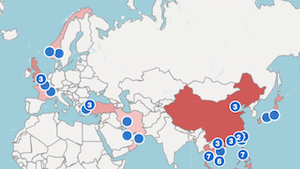
A careful examination of the countries which supported the summit shows a clear bias: they are all countries that are mostly on the receiving end of international fraud. The summit did not benefit from the support of countries where scam compounds are housed. There is a limit to what can be accomplished by talking about co‑operation if the conversation does not involve the legislators and law enforcers in the regions where frauds begin. Given the low levels of media attention given to this event in the UK, I would be surprised if the Global Fraud Summit receives much coverage elsewhere, even amongst countries that participated. This will not help with persuading more countries to combine their anti-fraud efforts in future. I would be glad to be proven wrong by any Commsrisk readers who did see coverage of this event by mainstream news providers serving audiences outside the UK.
We can hope that good will eventually come of this event because of the additional connections made by private sector participants who tend to be more proactive than governments anyway. That is why I do not wish to be too downbeat about this summit, and would be keen to know when and where the second Global Fraud Summit will occur. If governments commit to keep talking to each other, and to their partners in the private sector, then they eventually have to move beyond principles and start discussing delivery. That is the experience from other international challenges, like climate change, where fine words need to be backed by action. And just like climate change, we also need the public to put pressure on governments. That is why it is such a shame that the actual priorities of politicians like Tom Tugendhat appear divorced from their official responsibilities, leading him to waste a unique opportunity to push fraud prevention higher up the news agenda. In the meantime, good people in the private sector will keep making progress without much thanks or reward. They have done it before, and they will have to do it again.