
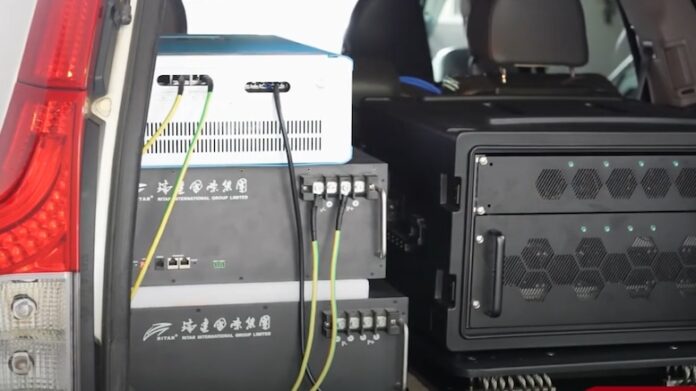
It is often said that new technology will reduce telecoms crimes. It is often said that consumer awareness campaigns will reduce scams. If both of these propositions are true, then why does nobody talk about the need to prevent the spread of information about telecoms technologies used by criminals? Many readers of Commsrisk will be aware of the extent to which the enablers of crime exploit social media networks like LinkedIn to promote the sale of services and tools that enable fraud. Simboxes are openly sold on the internet despite their predominant use for fraud and the threat they pose to national security. Governments are rightly concerned that ‘SIM farms’ may become an increasingly important mechanism for both sending scam messages and evading controls that look for anomalous traffic patterns indicative of scam robocalls, but they may not have prohibited the online sale of equipment used in SIM farms. Even YouTube is used by the criminal fraternity to showcase equipment that is very rarely purchased for legitimate reasons. Earlier this year Commsrisk publicized a YouTube video which showed how a backpack IMSI-catcher could be used to secretly gather data about hundreds of people in a shopping mall. Since then, police in Bangkok have arrested Hong Kong citizens for walking around the city’s busiest shopping malls with an IMSI-catcher backpack, in exactly the same fashion as that depicted in the YouTube advert. Now there is a new YouTube video which shows how a ‘high power’ IMSI-catcher can be installed in an ordinary car (a screenshot is pictured above). However, ordinary people do not purchase IMSI-catchers and there should always be strict legal limits on who can use surveillance equipment of this type.
Just a few days ago, British police announced they arrested two men in connection with the use of an SMS blaster to send thousands of fraudulent messages. The messages impersonated banks and other reputable organizations. The police described the crime as ‘the first of its kind’ within the UK. Does this seem likely, when this kind of equipment has been advertised for use in the UK by a video that was posted to YouTube in January 2022? (Hat tip to Lee Scargall for finding this video and monitoring other internet channels so he can advise his clients about fraud.)
The message that this equipment can be used for crime is amplified by the description attached to the video.
4G LTE SMS Broadcaster/blasting in UK
This is frank from UAI COMMUNICATIONS ,we are manufacturer to sell for the new 4G sms broadcaster machine… it is the best product for local sms marketing…
main function :
1: send bulk sms by free cost,no need sim card, no need internet.
2 : the sender can be letters or alphanumeric both.
3: sending speed : upto 1000 sms per minute
4: customized machine ,no need frequency phone ,no need set ARFCN.
5: support 2G ,3G,4G without jammer ,850/900, 1800/1900 ALL frequency。
6: send free sms to all 2 KM distance mobile phones
7: control someone phone
8: imei/imsi catcher(Option)
9: it can send more than 1000 characters in one sms
10:No need to know mobile numbers list advanced
11: sms broadcaster to all operators cellphone phones in the same time
The description also contains contact details for the business selling the SMS blaster. It has been viewed over 2,000 times and there were several comments from individuals who were apparently interested in purchasing the device. So why would it be a surprise that such a device is being used for crime in Britain two years later? The real question is how long have SMS blasters like this already been used for crime without the police noticing, and how many of them are currently in circulation.
A lot is said by politicians about the need to censor content in order to protect the public. It is easy to become cynical when you look at some of the arbitrary choices over which messages are censored and which are not. Not many people are interested in purchasing a portable radio device that blasts SMS messages at any phone within range, and the ones who are interested pose a threat to the rest of society. That is why censoring adverts for equipment of this type is not a free speech issue. There is a sound justification for curtailing the promotion of products used for crime. However, most of the governments and social media networks that claim to be protecting us from harm show no interest in tackling sales of equipment that cause lots of harm because they invade privacy or enable scams. Those governments and internet platforms are too obsessed with getting the public’s attention instead of serving the public’s needs. If many voters complain about something, then they act. If many customers complain, then they act. And if those voters and customers cannot join the dots to the root causes of an explosion of crime, as has been occurring over networks, then they sit idly by and allow the problem to fester, because who cares if 25 more IMSI-catchers get sold to crooks because they were promoted on YouTube? They think the issue is small because only a small number of people see the adverts and only a small number of sales are consequently made. They fail to see that the issue is huge because of the hundreds of thousands of people that may be harmed because of the misuse of each one of those IMSI-catchers.
Some countries are waking up to the need for a more holistic approach to tackling telecoms crime. They are extending their law enforcement strategies to controls on the import and sale of certain kinds of equipment. Just recently the Philippines government backed the fight to identify and stop illegal imports of IMSI-catchers. In Thailand, customs officials have been working with police to track down the people using imported simboxes to enable scam operations. But most other countries remain blind to the threat. For example, Europe remains complacent about the dangers, even though French police identified a Chinese arms dealer as the person who sold the IMSI-catcher equipment used for a massive drive-by smishing fraud campaign that reached hundreds of thousands of Parisians.
The failure to understand all the consequences of a laissez-faire policy towards the sale and advertising of dangerous communications equipment is symptomatic of a more general malaise affecting the communications industry and all phone users. The best way to protect the public from fraud need not always involve purchasing more anti-fraud gizmos. If the authorities think it is their responsibility to raise the public’s awareness of scams, they should also take responsibility for preventing criminals from learning about where they can buy the equipment they need. Let us not be seduced by the modern obsession with choosing what we say and do based on how much attention we will receive. Banning the advertising of products used by comms criminals would make a significant contribution to reducing crime, even if the contribution is made quietly. Or do you really believe devices like the one in the following video are being used for legitimate business purposes?