Mobile World Congress (MWC) has been an unusually successful trade fair for telco people and the people who want to meet them. However, the problem with trade fairs during a period of upheaval is that any kind of trade relies on shared assumptions, such as prolonged freedom from punitive tariffs, or the absence of security threats that would make satisfying a contract impossible. None of the previous MWC events occurred at a time when relations between the USA, Europe and China have been so difficult. It would be folly to pretend current tensions will have no impact on the global comms industry, or that there is no need to plan for further turmoil.
The art of writing Commsrisk involves identifying issues that should be so obvious that everyone can appreciate the difficulties we face, but which are so uncomfortable that few want to address them. For example, Cold War 2 began years ago. Like the first Cold War, there will be decades of international hostility signified by heightened military spending, espionage and proxy wars. Cold War 2 trends monitored by this website include:
- increasingly frequent damage to undersea communications cables;
- mass cyber disruption of networks and the services that rely upon them;
- new censorship tools that prevent citizens seeing foreign propaganda/the truth;
- subversion of networks by foreign spies;
- the relaxation of laws and the failure to enforce laws governing the privacy of communications;
- the spread of spyware on phones;
- nation-state demands for backdoor access to networks and encrypted data; and
- laws that prohibit the purchase of network equipment or comms services from foreign companies.
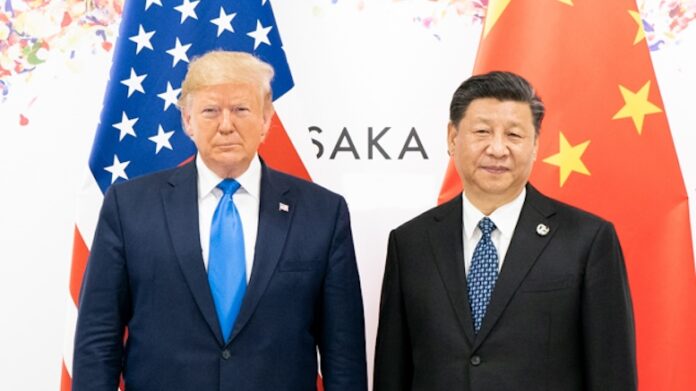
Whilst it is tempting to repeat platitudes about everybody needing to collaborate to solve problems, we should be realistic about the world we live in. If there is no cooperation between Donald Trump and Xi Jinping (pictured, left to right) then other people will find it difficult to cooperate. Meanwhile, European leaders struggle to work together in ways that help businesses to overcome shared problems, despite increased threats from nations to their East and West. Obstacles to cooperation can double in size when the goal is security. The GSMA will try to avoid being consumed by this maelstrom, but diplomatic language will not disguise the fundamental challenges to what is usually described as the ‘international rules-based system’.
APIs are the shiniest tools in the GSMA’s toolbox for cooperation. They can provide a conduit for information that will stop certain kinds of crime, including some crimes committed by nation-states. SIM swap APIs are the most popular low-level example; it is pleasing to see how many countries and telcos are using them. Standardized anti-fraud APIs help to familiarize governments and businesses with the key concepts, but the big money is betting on APIs that will open up networks to other businesses like banks. Attitudes to such APIs may differ greatly between privacy-conscious Europeans, American captains of industry and the Central Committee of the Chinese Communist Party. It will be fascinating to see how the GSMA and the businesses in the vanguard for network APIs try to navigate a fractured geopolitical landscape.
I am making the unusual decision to attend MWC this year because of my interest in the particular subset of APIs associated with GSMA Call Check. Whilst others concentrate on preventing networks from becoming battlefields, or creating methods to tempt phone users into consuming more crap, I just want to see the rapid adoption of a quick, simple method of detecting CLI spoofing that works both within countries and across borders without ever compromising the privacy of phone users. My main worry is that methods of protecting the public which are cheap and easy to implement also tend to be overlooked by businessmen who have their eyes on bigger prizes. However, I know this topic is of interest to very many Commsrisk readers because of the continued high levels of traffic for the article about GSMA Call Check that I published in January. Hopefully I will return from Barcelona with news about the progress of a method that could stop all CLI spoofing this year, if telcos and regulators are willing to use it cooperatively.
If you are going to MWC Barcelona then get in touch so we can arrange to meet. There are many challenges to talk about, but also some solutions too.