There has been a considerable backlash to a new law that recently began requiring Brits to prove they are 18 or over to access certain kinds of content through the internet. The Online Safety Act makes it harder to access pornography as well as content relating to suicide, self-harm or eating disorders. Opinion polls suggest the majority of Brits support legal limits on internet access for children below 18. However, half a million people have signed a petition to repeal the law. There has also been a massive surge in the adoption of virtual private network (VPN) services that can work around the age checks implemented by services like Discord. VPNs render the UK’s age controls impotent by simply redirecting the user’s traffic so it appears to come from a different country. Reports about the increased use of VPNs have been unambiguous.
- Proton VPN said there had been a 1,400% increase in new signups, and described the rise as ‘sustained’.
- Nord Security, providers of the popular NordVPN, reported a 1,000% increase in the purchase of paid subscriptions.
- VPNs dominated the charts for the most popular downloads from Apple’s App Store.
The news prompted speculation that the government might also seek to ban VPNs to shore up the effectiveness of the new age controls. The credibility of these claims rested on the observation that members of the ruling Labour Party had supported an amendment to the Online Safety Bill while they were in opposition. This amendment would have required ‘solutions’ if VPNs were found to be adversely impacting the objectives of the age controls. Labour MP Sarah Champion spoke in parliament about why she proposed the amendment, which was ultimately voted down by fellow MPs:
During the Bill’s evidence sessions, Professor Clare McGlynn said that 75% of children aged 16 and 17 used, or knew how to use, a VPN, which means that they can avoid age verification controls. So if companies use age assurance tools, as listed in the safety duties of this Bill, there is no guarantee that they will provide the protections that are needed. I am also concerned that the use of VPNs could act as a barrier to removing indecent or illegal material from the internet. The Internet Watch Foundation uses a blocking list to remove this content from internet service providers, but users with a VPN are usually not protected through the provisions they use. It also concerns me that a VPN could be used in court to circumnavigate this legislation, which is very much based in the UK. Have the Government tested what will happen if someone uses a VPN to give the appearance of being overseas?
My new clause 54 would require the Secretary of State to publish, within six months of the Bill’s passage, a report on the effect of VPN use on Ofcom’s ability to enforce the requirements under clause 112. If VPNs cause significant issues, the Government must identify those issues and find solutions, rather than avoiding difficult problems.
The current Labour government line is that there are no plans to restrict VPNs. During his media rounds, Peter Kyle MP, who had responsibility for the law when he was Secretary of State for Science, Innovation and Technology, said in an interview with Times Radio that the government is “not considering a VPN ban” and he told the BBC that banning VPNs “is not on the cards”. This is consistent with the message from the official government press release which emphasizes that VPNs remain legal although the Online Safety Act has made it illegal to promote the use of VPNs as a tool to work around age controls.
While Virtual Private Networks (VPNs) are legal in the UK, according to this law, platforms have a clear responsibility to prevent children from bypassing safety protections. This includes blocking content that promotes VPNs or other workarounds specifically aimed at young users.
We can also assume some of Britain’s current crop of parliamentarians would oppose a ban on VPNs because they have purchased commercial VPN services and recharged them to taxpayers. Sarah Champion is one of the MPs that submits expense claims for VPN services despite her doubts about others being allowed to use them. However, the slide towards restricting VPN usage in the UK has already begun. The Children’s Commissioner for England, Rachel de Souza, told the BBC that age checks should also become mandatory for VPN providers. As a government appointee, de Souza is able to influence policy, both through the reports her organization writes and through her appearances on mainstream media. Age restrictions for VPNs were not included in the Online Safety Act, a lengthy and complex piece of legislation that received a lot of parliamentary scrutiny and considerable input from organizations like the Children’s Commission before it was passed in October 2023. However, the Commission is already pushing for changes to the Act through a new report issued on August 19, just a short while after the enforcement of age controls for websites.
This could be achieved by amending the Online Safety Act to bring in an additional provision which would require VPN providers in the UK to put in place Highly Effective Age Assurance to screen underage users and prevent them from accessing pornographic sites.
Kyle’s position as the supreme cheerleader for internet access controls would be less contentious if he had not chosen to equate opposition to the Online Safety Act with support for Jimmy Savile, an infamous British pedophile. It is a peculiar analogy because Savile’s crimes had nothing to do with the internet. Savile was able to rape numerous teenage girls because prominent British institutions like the BBC and NHS provided him with easy access to his victims, then covered up his crimes. The BBC were such willing enablers of Savile’s abuse that he could literally grope teenage girls while presenting one of the BBC’s most popular live TV programs and still not be challenged about his behavior while he was alive.
A recent poll shows that a majority of the British public think it is inappropriate to equate opposition to the Online Safety Act with support for Savile. Even a majority of Labour voters think Kyle went too far. But instead of being punished for the gratuitous slur, Kyle was rewarded by Prime Minister Keir Starmer with a promotion to Secretary of State for Business and Trade during a major cabinet reshuffle prompted by the departure of former Deputy Prime Minister and Housing Secretary Angela Rayner. Rayner quit her role after the government’s ethics advisor concluded she had breached the ministerial ethics code by failing to pay GBP40,000 (USD54,000) of tax on the purchase of a GBP800,000 (USD1.08mn) apartment in Hove, a town 265 miles from Rayner’s constituency in Ashton-under-Lyne. Ironically, Kyle is the Member of Parliament for Hove.
I find it natural for people to question the wisdom of giving the British state increased control over the information that people can see because of the history of sex crimes committed by members of the elite as well as the more general sense that those in power are guilty of double standards. There is a very long list of former MPs who have engaged in sexual impropriety, ranging from the 1979 trial of former Liberal leader Jeremy Thorpe over the attempted murder of his lover, to the recent arrest of Labour MP Dan Morris, who is currently accused of rape and child sex offenses. Some claims made against prominent politicians have subsequently been proven to be false but it is understandable that ordinary folk have lost confidence in the country’s leadership after the authorities in various parts of the country actively covered-up the grooming and rape of underage girls by racial minority gangs because of a concern that openly enforcing the law would legitimize a backlash against the communities to which the rapists belong.
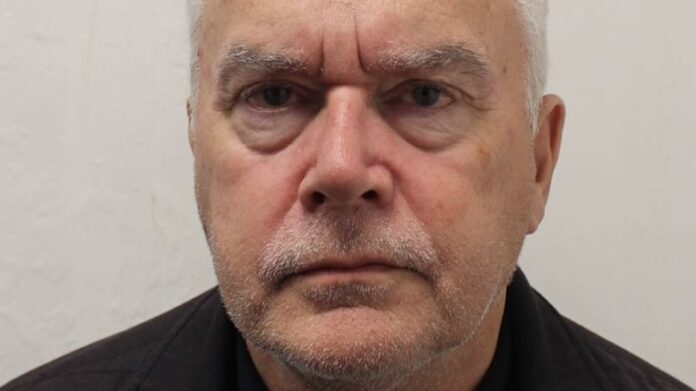
Concerns over censorship are also natural when there is a loss of trust in supposedly reputable sources of information. The BBC has played a particularly detrimental role by enabling a range of abusers. They include convicted sex felons Stuart Hall, Rolf Harris, Dave Lee Travis and most recently Huw Edwards (pictured), who had previously been lauded for his integrity as the BBC’s highest-paid news journalist. When Edwards disappeared following accusations he had paid for sexual photographs from a 17 year old boy, his allies in the mainstream media immediately used their position to suggest he was the innocent victim of a smear campaign orchestrated by rival news providers. They had less to say when Edwards was convicted and given a suspended 6-month prison sentence for making indecent images of children that were shared using the internet. The BBC continued to pay Edwards’ near half-million pound salary even though he stopped working several months before his trial because he was said to be suffering from poor mental health. All of this reinforces a commonly-held belief that Britain is a two-tier country where different rules apply depending on whether you are favored or despised by those in power.
And let us not be naive about the people who work in cybersecurity too. Some of them want to make the world a better place. Others learn about controls so they can defeat them. Many readers of this website will have known the British telecoms cybercrime expert who was convicted in 2013 of a child sex offense and of possessing extreme pornography. I remember him being treated like a rock star within industry circles because of his deep understanding of how to detect crime. Skills like those can also be used to hide crime. If technology experts advocate for controls that only place limits on those members of society with the least technological understanding, and which can be easily circumvented by others, then this will inevitably prompt cynicism from the general public. However, most British cybersecurity experts that have expressed an opinion about the Online Safety Act have spoken disapprovingly about it. I expect many of them have signed the petition to repeal it.
The irony here is that the government which is defending new controls over the content that 16 and 17 year olds can see on the internet is also planning to change the law so the same 16 and 17 year olds can vote in future elections. Are we going to treat 16 and 17 year olds as competent to make decisions like adults or not? As Champion pointed out, most 16 and 17 year olds know how to use VPNs. They will typically know a lot more about navigating the internet than most adults, and that includes knowing how to circumvent controls. There has been a spate of reports about British kids defeating age verification checks by using their avatars from video games.
Kids are fluent at evading tech controls because they are adept at using the internet to learn from each other. That is why the pages of Commsrisk have documented case after case where teenagers commit cybercrime, sometimes as members of transnational gangs. Encouraging increased VPN use may have severe unintended consequences if 16 year olds that just want to see some porn get drawn into far more insidious activities. Access to internet porn was not the reason that scumbags like Sir Jimmy Savile OBE, Sir Peter Morrison MP and Sir Cyril Smith MBE MP became serial sexual abusers of children. We all need to be skeptical about the values of a society that chose to cover up their crimes. It would be a shame if misguided attempts to restrict porn leads some children to much darker places on the internet.