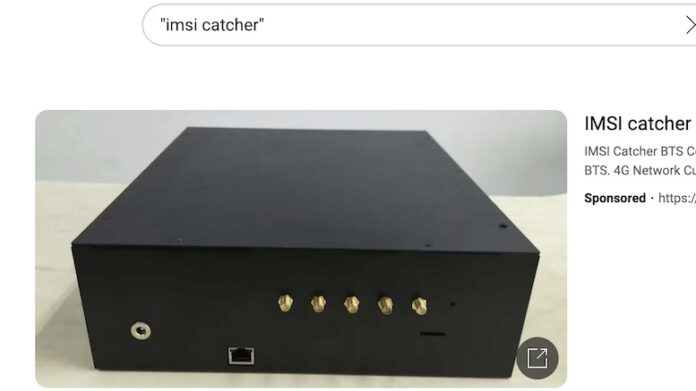
Very few people have a legitimate reason to use an IMSI-catcher. It is not the sort of device that an average visitor to YouTube would want to buy, or could legally operate. But as previously pointed out on Commsrisk (see here and here), YouTube keeps displaying blatant adverts for equipment that represents a threat to the public. This reckless situation has now evolved to the point where Commsrisk draws attention to an advert for an IMSI-catcher, and only then is the advert removed. YouTube has revenue of USD33bn a year; Commsrisk’s revenue is rather less. So why does a USD33bn corporation owned by one of the world’s leading technology groups need anyone else’s help with identifying this dangerous content? And why do they keep putting up new adverts for IMSI-catchers all the time? The following screen grab shows the top result from a recent search on YouTube.
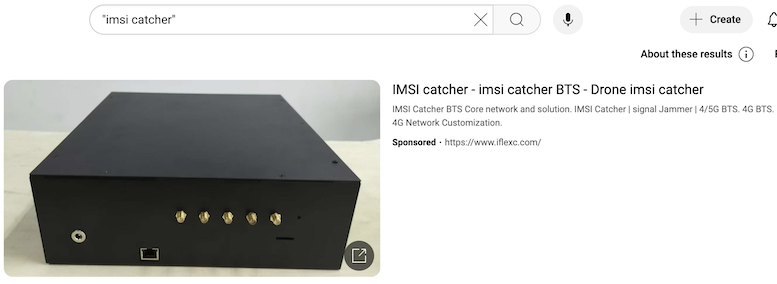
Following the link from this sponsored result leads to a website offering products that promise, in broken English, the kinds of features that appeal to criminals:
The device is a locating and catching product for cell phome (sic). When it works, the target cell phone will be backdown to GSM mode. The cellphone service will be tracked in real time.
Support Efficient catch of both outgoing and incoming call in real time. Monitors outgoing and incoming SMS. Control cellphone outgoing call. Direction finder for mobile target position. Fake caller Id to outgoing call. Can monitor muti-target (sic) simultaneously.
But never fear, the following disclaimer means no criminal will ever be able to use the device for nefarious purposes!
THIS DEVICE CAN INTERCEPT SMS, IT IS ONLY PROVIDED FOR USE BY ‘SPECIAL DEPARTMENTS AND COMPANIES OFFICIALLY AUTHORIZED BY LAW’, AND OTHER COMPANIES OR INDIVIDUALS ARE NOT ALLOWED
It is an outrage the YouTube profits from advertising dangerous products like these. No law enforcement agency would purchase specialized spy equipment by searching for it on YouTube. However, YouTube have demonstrated they will continue to recklessly endanger the public unless governments and regulators start pressuring them to behave more responsibly.